Career changes can spark both excitement and uncertainty. When you crave deeper purpose but feel trapped between obligations and unfulfilled ambitions, it is easy to lose direction. The journey to a more meaningful life begins with honest self-reflection and mapping out your true strengths and passions. This guide will walk you through practical steps for clarifying what energizes you, connecting your talents to real goals, and aligning daily habits with authentic values—all inspired by the clarity found in Japanese philosophy.
Table of Contents
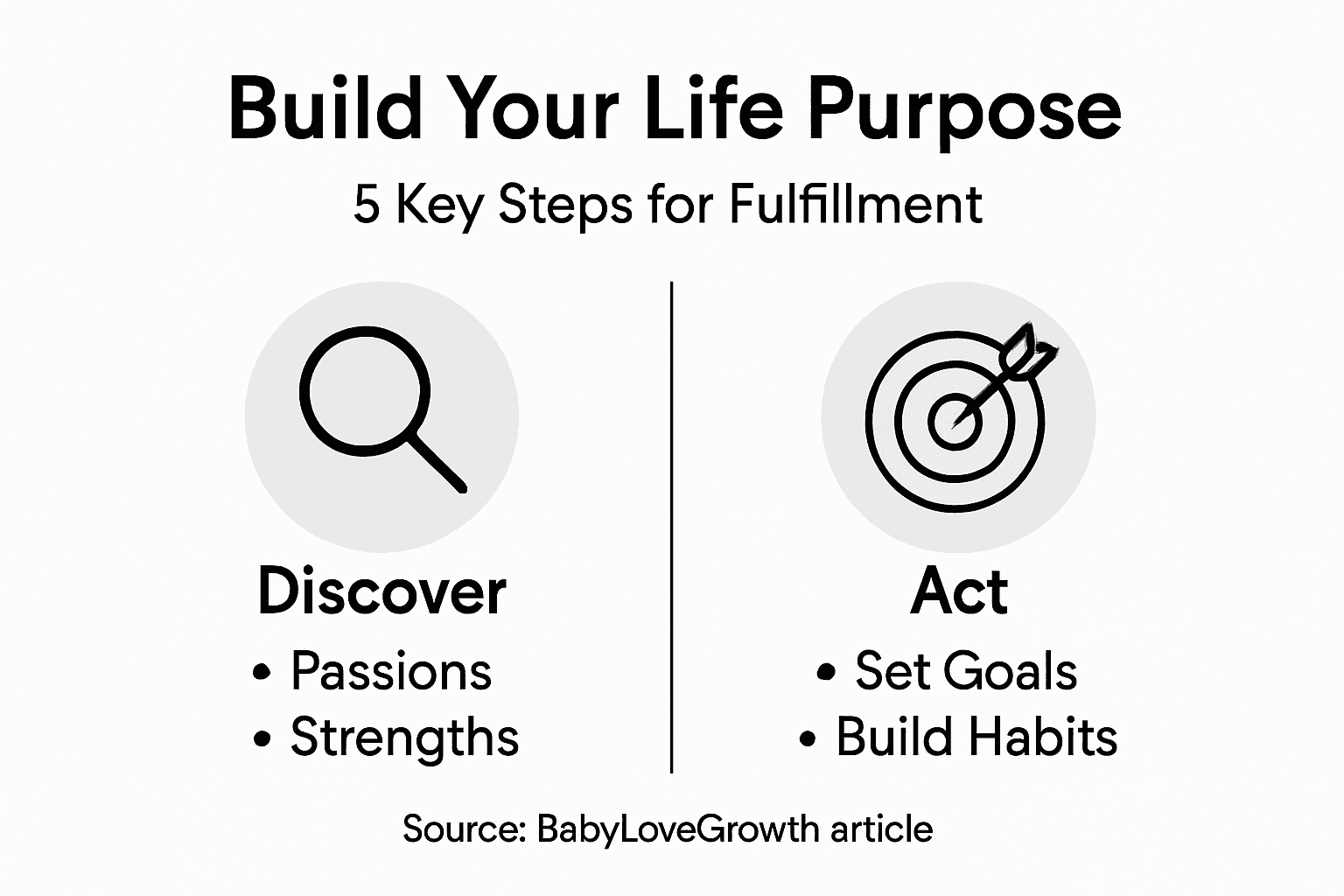
- Step 1: Identify Your Core Passions And Strengths
- Step 2: Clarify Your Personal Values And Beliefs
- Step 3: Connect Your Talents To Meaningful Goals
- Step 4: Implement Purposeful Habits In Daily Life
- Step 5: Evaluate Your Progress And Refine Direction
Quick Summary
| Key Point | Explanation |
|---|---|
| 1.Identify Passions and Strengths | Reflect on activities that energize you and document your skills for clarity. |
| 2.Clarify Personal Values | Determine your core values and how they guide your life and decisions. |
| 3.Connect Talents to Goals | Set specific, meaningful goals that leverage your strengths and values. |
| 4.Implement Purposeful Habits | Establish daily habits that align with your purpose for consistency. |
| 5.Evaluate Progress Regularly | Reflect on your journey quarterly to adjust goals and improve direction. |
Step 1: Identify your core passions and strengths
This step forms the foundation of your purpose journey. You’re going to move beyond vague ideas about what you like and actually map out the concrete strengths you possess and the activities that energize you. This requires honest self-reflection and a willingness to look at evidence of your capabilities rather than relying on assumptions.
Start by thinking about moments when you lose track of time. These are powerful indicators. When do you become so absorbed in something that three hours feel like thirty minutes? Maybe you’re deep in a project at work, helping a friend solve a problem, creating something, or learning about a specific topic. Write these moments down. Don’t filter or judge them yet. Include both professional and personal activities. Someone might get lost in spreadsheet analysis while also losing themselves in restoring vintage motorcycles. Both reveal something about your wiring.
Next, identify what you’re genuinely good at by gathering evidence. Professional assessment frameworks suggest looking at five key categories: study or learning skills, mindset strengths, communication abilities, practical skills, and technical capabilities. Think about feedback you’ve received from managers, colleagues, friends, or mentors. What do people repeatedly ask you for help with? What comes naturally to you that others seem to struggle with? If people constantly ask you to organize events or mediate conflicts or explain complex concepts, you’ve found clues about your strengths. Write down specific examples where you’ve delivered results. Numbers matter here. Did you increase sales by 40 percent? Help three friends transition careers? Complete a difficult project ahead of schedule? These concrete outcomes reveal patterns.
Now cross reference your passions with your strengths. The sweet spot lies where these overlap. You might love painting but recognize that graphic design, not fine art, aligns with both your passion and your actual skillset. You might enjoy problem-solving conversations and possess strong listening abilities combined with analytical thinking. This intersection is where your genuine potential lives. It’s not where everyone tells you that you should excel. It’s where your authentic abilities meet authentic interests.
Consider also the contexts where these strengths shine brightest. Some people excel in collaborative team environments while others thrive working independently. Some need structure and clear directives while others flourish with creative freedom. Your strengths don’t exist in a vacuum. They perform differently depending on circumstances. A natural communicator might feel energized leading presentations but drained by constant small talk. Document these environmental factors because they’ll matter later when you evaluate career paths or roles.
Finally, distinguish between skills you’ve developed and natural talents. A skill is something you’ve built through effort and practice. A talent feels more intuitive. Both matter for understanding yourself. You might have developed strong writing skills through years of practice in roles you didn’t love. Simultaneously, you might have a natural talent for connecting with people emotionally. Your purpose often aligns more closely with natural talents because they require less energy to maintain and create more genuine fulfillment.
Here’s a comparison of natural talents versus developed skills to help clarify how each impacts your sense of purpose:
| Aspect | Natural Talents | Developed Skills |
|---|---|---|
| Energy Requirement | Feels intuitive and energizing | May require sustained effort |
| Fulfillment Level | Often creates lasting fulfillment | Can bring satisfaction short-term |
| Acquisition Process | Inherent or quick to learn | Built through practice and time |
| Career Alignment | Suits roles needing instinctive ability | Matches roles requiring mastered techniques |
Pro tip: Create a simple two column list right now: write “Passions” on the left and “Strengths” on the right, then spend fifteen minutes filling each side with specific examples before moving forward. This tactical clarity prevents the self-reflection from staying abstract.
Step 2: Clarify your personal values and beliefs
This step digs deeper than passions and strengths. You’re now identifying the core principles that guide your decisions and shape how you want to live. Your values act as an internal compass. When they align with your work and life choices, you experience genuine fulfillment. When they conflict, you feel constant friction regardless of external success.
Begin by reflecting on moments when you felt genuinely satisfied or conversely, deeply frustrated. What made those situations feel right or wrong? When you helped someone in need, did that satisfaction stem from your belief in community responsibility? When you felt trapped in a role focused purely on profit margins, was it because you value meaningful impact? These emotional reactions point directly to your values. Think about the people you admire. What qualities do they possess? What principles do they seem to live by? Your heroes reveal what you secretly wish to embody. Consider also times you’ve made difficult choices. What did you choose and what did you sacrifice? Your actual decisions, not your idealized version of yourself, expose your real values.
Understanding personal values requires moving beyond surface level answers. Take time to rank your values rather than simply listing them. This matters because conflicts arise when you try to optimize for multiple values simultaneously. You might value both family time and ambitious career growth. Both are legitimate. But which takes priority when you face a job opportunity requiring sixty hour weeks? Knowing your hierarchy prevents paralysis when tough decisions arrive. Create a working list first. Write down ten to fifteen values that resonate with you. Think about integrity, adventure, security, creativity, autonomy, service, excellence, learning, connection, growth, balance, authenticity, independence. Include both familiar values and those that challenge you slightly.
Next, test each value against your real life. Does your calendar reflect this value? Do your relationships support it? Does your career path align with it? Brutal honesty matters here. You might believe you value balance, but if you consistently work weekends and skip vacations, that’s not truly a top value. It’s aspirational. There’s nothing wrong with aspirational values, but you need to distinguish them from your operating values. Your operating values are what actually guide your behavior. Both matter for building purpose. Operating values keep you grounded in reality. Aspirational values inspire growth toward who you want to become. Document both categories.
Consider also how your values might have shifted. The values that drove you at twenty-five may differ from those at thirty-five. Career ambition might have seemed paramount. Now connection with your children feels more essential. Or maybe financial security dominated your thinking, and you’re now craving creative expression. Values evolve as circumstances change, relationships deepen, and you gain experience. This isn’t failure. It’s maturation. Your purpose at this life stage builds on your current values, not outdated versions of yourself.
Finally, identify where your values intersect with the world’s needs. Some of your values point inward: personal growth, autonomy, adventure. Others point outward: service, justice, teaching, healing. The most satisfying purpose often emerges at the intersection. You want work or a life direction that honors what matters to you while contributing something meaningful beyond yourself. This is where your personal fulfillment and broader impact align.
Pro tip: Write down three to five core values that feel non-negotiable, then test each one by asking: “If I had to choose between this value and financial security, what would I choose?” Your honest answers reveal which values truly matter versus which you think should matter.
Step 3: Connect your talents to meaningful goals
Now comes the pivotal moment where you translate self-awareness into direction. You’ve identified your passions, strengths, and values. This step bridges that inner clarity to outer action by creating goals that leverage your talents while honoring what matters to you. Without this connection, your strengths remain potential rather than purpose.
Start by looking at the intersection of your talents and your values. If you’re naturally analytical and value problem-solving, you might set a goal around becoming a research specialist or strategy consultant. If you’re skilled at communication and value helping others grow, you might pursue training, mentoring, or coaching. The goal doesn’t have to be a job title. It could be mastering a skill, building a business, creating a community project, or developing expertise in a specific domain. What matters is that the goal genuinely excites you when you imagine pursuing it. Not the version of the goal that impresses others. The version that makes you eager to wake up and work on it.

Setting professional development goals requires specificity and connection to your deeper purpose. Vague aspirations like becoming successful or finding fulfillment won’t guide daily decisions. Instead, transform your self-knowledge into concrete objectives. If your strength is analytical thinking and your passion involves technology, your goal might be to transition into a data analyst role at a company focused on sustainable energy within eighteen months. That’s specific. It uses your talent. It connects to your values. It has a timeframe. Notice the difference between “I want a better job” and “I want to apply my analytical skills to work I believe in within a defined timeframe.” One is wishful thinking. The other is a goal that will actually shape your actions.
Break each major goal into smaller milestones. If your goal is transitioning careers, the milestones might include completing a certification, building a portfolio project, updating your resume, and applying to five target companies. These milestones make the goal feel manageable rather than overwhelming. They also create momentum. You’ll experience small wins along the way instead of waiting months or years to know if you’re on track.
Consider the feedback loop. Set goals that produce measurable outcomes so you can track progress. Did you complete the course? Have you started the side project? Did you secure informational interviews with people in your target field? These are verifiable. They tell you whether you’re actually moving forward or spinning in place. Goals without measurement become abandoned resolutions. Goals with clear indicators become catalysts for change.
Think also about the timeframe. Some goals require one year. Others demand three to five years. Be honest about what’s realistic given your current circumstances. A parent with young children pursuing a certification that demands twenty hours weekly is setting themselves up for frustration. Finding a program requiring ten hours weekly with flexible scheduling aligns with their reality. Your goals should stretch you without snapping you.
Finally, revisit your goals quarterly. Do they still resonate? Has your understanding of yourself evolved? Have external circumstances shifted? A goal that felt perfect six months ago might need adjustment. That’s not failure. It’s responsiveness. Your purpose isn’t static. It grows as you grow.
Pro tip: Write your primary goal in one clear sentence, then identify the top three obstacles preventing you from achieving it. Now brainstorm one specific action you can take this week to overcome each obstacle, and schedule those actions in your calendar immediately.
Step 4: Implement purposeful habits in daily life
Knowing your purpose is one thing. Living it daily is another. This step anchors your purpose into concrete habits that become the invisible infrastructure of your life. Habits are powerful because they require minimal willpower once established. They simply happen. When your daily practices align with your purpose, you stop fighting yourself and start flowing toward your goals naturally.
Begin by identifying the three to five habits that would most directly support your purpose and goals. If your purpose involves creative expression, a daily writing or art practice matters more than a perfect morning routine someone else prescribed. If your goal is transitioning into mentoring work, a habit of reflecting on conversations and seeking feedback becomes essential. Intentional daily practices like goal clarity, consistent routines, and reflection create the structure necessary for meaningful progress. Think about what time investment would move you toward your goals without overwhelming your current life. Thirty minutes daily adds up to 182 hours yearly. That’s substantial. Two hours weekly is more realistic for some people right now. The point isn’t finding the mythical perfect amount of time. It’s committing to something sustainable that you’ll actually do.
Next, design your habits with specificity. Instead of “read more about my field,” commit to reading one article from a specific publication every Tuesday morning before work. Instead of “network more,” commit to having one informational coffee conversation the second Thursday of each month. The specificity matters because vague intentions crumble under real life friction. A specific habit with a defined time and place becomes something your brain can execute on autopilot. You’re not deciding whether to do it. You’re simply following your own system.
Attach your new habits to existing routines. Want to meditate daily but never remember? Meditate right after your morning coffee. Want to journal about your progress? Journal right after dinner. Psychologists call this habit stacking, and it works because you’re leveraging an existing neural pathway rather than creating something from zero. Your brain already knows what happens after coffee or after dinner. You’re just adding one more action to that sequence.
Expect the first two to three weeks to feel awkward and require willpower. That’s normal. You’re building new neural pathways. By week four, the habit typically requires far less conscious effort. By week eight, it often feels strange not to do it. Don’t abandon a habit in week two because it doesn’t feel natural yet. That’s precisely when it’s working hardest to become automatic. Track your habit completion visually. Use a calendar and mark an X for each day you complete the habit. Seeing the chain of consecutive days creates motivation to keep it alive. When you miss a day, that’s fine. One missed day doesn’t destroy a habit. But two or three missed days often signals the habit is slipping back into voluntary effort territory rather than automatic behavior.
Review your habits monthly. Are they supporting your actual goals or have they become disconnected? Have your circumstances changed enough that a different habit would serve you better now? A morning workout might have been perfect when you had flexible hours. Now with a demanding job, an evening practice might work better. Habits aren’t sacred. They’re tools. Use them when they serve you. Adjust them when they don’t. Your purpose is the constant. Your habits are the vehicle that carries you toward it. Keep them aligned.
Pro tip: Choose one single habit to build first and commit to it for thirty days before adding another. Building habits sequentially creates momentum and prevents the overwhelm that comes from trying to change everything simultaneously.
Step 5: Evaluate your progress and refine direction
Purpose isn’t something you discover once and then coast on forever. It’s a living thing that evolves as you grow, learn, and experience new challenges. This step teaches you how to assess what’s working, celebrate genuine progress, and make informed adjustments when your direction needs refinement. Regular evaluation prevents you from drifting unconsciously toward someone else’s definition of success instead of your own.
Schedule dedicated reflection time quarterly. Mark it on your calendar like any important meeting. This isn’t casual thinking. It’s structured assessment. During this time, review the goals you set and the habits you committed to. Ask yourself concrete questions. Did you take consistent action toward your meaningful goals? What obstacles appeared and how did you respond? Which habits stuck and which fell away? What surprised you? What felt easier than expected and what proved harder? Write your answers down. Don’t just think about them. The act of writing forces clarity. Vague thoughts remain vague. Written observations become tangible insights you can work with.
Next, celebrate what actually worked. This matters more than you might think. Your brain remembers failures more readily than successes due to negativity bias. If you transition careers successfully, land a meaningful role, or complete that certification you committed to, acknowledge that. You did something difficult. Don’t minimize it by immediately jumping to the next goal. Spend a moment genuinely recognizing the effort, courage, and persistence that got you here. This isn’t arrogance. It’s the feedback loop that motivates continued action. People who never pause to acknowledge progress eventually burn out.
Reflective self-assessment and goal evaluation are critical tools for sustained growth. After celebrating, identify specific areas where your direction or approach needs adjustment. Maybe your goal still resonates but your strategy isn’t working. The career transition you’re pursuing still excites you, but the certification program you chose isn’t a good fit. The solution isn’t abandoning your purpose. It’s finding a better path toward it. Other times, your environment shifts. The job that felt purposeful becomes misaligned with your values when leadership changes. Your personal circumstances evolve. A goal that made sense when you were single looks different when you have family responsibilities. This isn’t failure. It’s adaptation.
Consider also whether your understanding of yourself has deepened. You might have pursued a goal around technical mastery only to discover you care more about mentoring others than being the expert yourself. That’s valuable information. It points you toward different opportunities. You thought you valued independence but found you thrive in collaborative environments. That changes which roles and environments to target. Your self-knowledge improves through action and reflection, not through thinking alone. You learn who you really are by doing things and observing your actual responses.
During this reflection, adjust your goals and strategies based on real experience. If a habit isn’t serving you anymore, replace it with something better aligned to your current situation. If a goal no longer resonates, set a new one. If your values have shifted, your direction should shift with them. This fluidity isn’t inconsistency. It’s responsiveness. Your purpose deepens when you honor what you’re actually learning rather than rigidly adhering to old decisions.
Finally, use this reflection to identify what to focus on in the next quarter. Don’t try to fix everything simultaneously. Choose one to three areas where intentional effort will move you forward most meaningfully. The combination of regular evaluation, honest adjustment, and focused effort creates momentum that sustains purpose over years and decades.
Use this summary to quickly understand how measuring progress can support purpose-driven growth:
| Measurement Focus | Benefit to Purpose | Examples |
|---|---|---|
| Consistent Action | Tracks momentum | Weekly habit log |
| Milestones | Marks achievements | Certification completion |
| Reflection | Refines direction | Quarterly self-assessment |
| Adjustment | Supports adaptability | Updating goals as needed |
Pro tip: Schedule your quarterly reflection as a two hour block with no distractions, using a simple template: what went well, what didn’t, what I learned about myself, and what I’ll focus on next quarter. Consistency in this practice compounds into remarkable clarity over time.
Discover Your True Ikigai and Build Lasting Fulfillment
Finding your life purpose can often feel overwhelming when you face conflicting values and unclear goals. This article highlights how aligning your passions, strengths, and personal values is key to creating meaningful direction. If you are seeking clarity on where your unique talents intersect with what truly matters to you, Ikigain.org offers a proven path forward. Our comprehensive personality test draws from the Japanese philosophy of Ikigai to deliver personalized insights that help you define purposeful goals grounded in your authentic self.

Take control of your journey today by uncovering your core drivers and translating them into actionable steps. Visit Ikigain.org to start your assessment and receive tailored guidance to refine your life purpose. Begin living a life energized by intentional habits and values that support your lasting fulfillment.
Frequently Asked Questions
How can I identify my core passions and strengths to build my life purpose?
To identify your core passions and strengths, reflect on activities that energize you and moments when you lose track of time. Write down specific examples of both your professional and personal interests, then gather feedback from others about your natural talents and skills.
What steps can I take to clarify my personal values and beliefs?
Start by reflecting on situations that brought you satisfaction or frustration to reveal your core values. Write a list of ten to fifteen values, then rank them to understand their importance in your life and decision-making process.
How do I connect my talents to meaningful goals?
Begin by looking at the intersection of your skills and values to create goals that genuinely excite you. Transform vague aspirations into specific objectives with measurable outcomes, such as aiming to achieve a new job title or completing a certification within a defined timeframe.
What habits should I implement in my daily life to support my purpose?
Identify three to five habits that align with your goals, focusing on ease of integration into your current routine. Structure these habits with specific details, such as committing to a daily writing session at a set time, to ensure they become automatic.
How often should I evaluate my progress in building a life purpose?
Schedule dedicated reflection time quarterly to assess your goals, habits, and progress. Use this time to celebrate achievements, identify areas for adjustment, and focus on one to three meaningful areas of improvement for the next quarter.
What are the essential components of a living purpose?
A living purpose is made up of evolving goals, consistent habits, and ongoing self-assessment. Use your experiences to refine your direction, ensuring that your purpose grows with you through each stage of your life.