Searching for deeper meaning in your fast-paced city life can leave you feeling stuck between ambition and fulfillment. Many young professionals worldwide are realizing that true satisfaction comes from aligning personal values, passions, and work, rather than just chasing titles or promotions. By exploring Japanese philosophy like Ikigai and using structured self-discovery tools, you can uncover the powerful intersections of purpose, skill, and happiness that lead to a more authentic and rewarding career journey.
Table of Contents
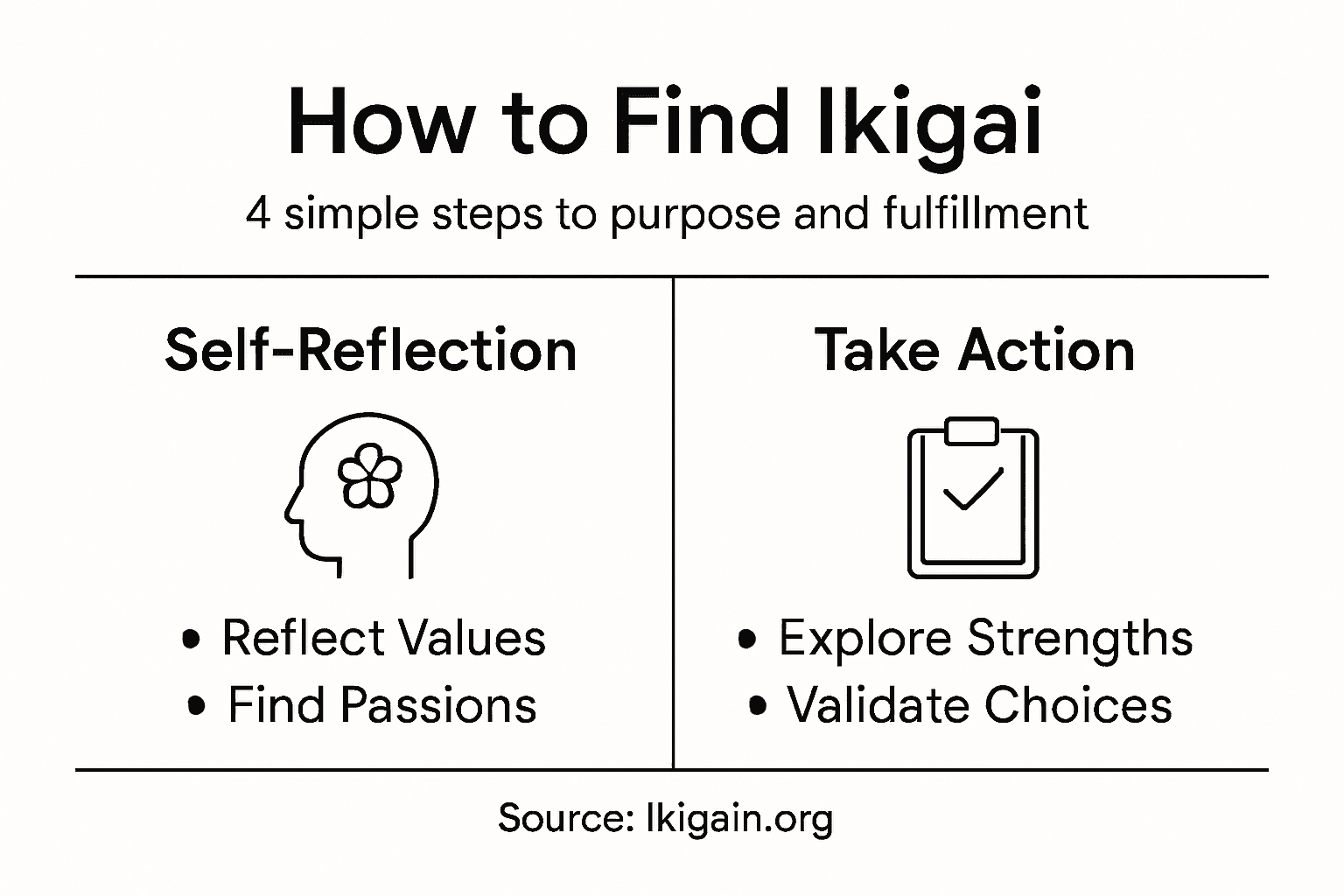
- Step 1: Prepare By Reflecting On Values And Passions
- Step 2: Explore Core Strengths Using Self-Discovery Tools
- Step 3: Connect Career Choices To Personal Purpose
- Step 4: Validate Your Ikigai With Action And Feedback
Quick Summary
| Key Insight | Explanation |
|---|---|
| 1. Reflect on Values | Begin your Ikigai journey by deeply reflecting on your core values, passions, and motivations to uncover your sense of purpose. |
| 2. Identify Strengths | Assess your unique skills and talents through systematic self-discovery to understand your exceptional capabilities. |
| 3. Align Career Choices | Ensure your career path aligns with your personal values and passions for enhanced meaning and fulfillment in your work. |
| 4. Validate with Action | Actively experiment with your insights by implementing small changes and seeking feedback to confirm your Ikigai. |
Step 1: Prepare by Reflecting on Values and Passions
Discovering your Ikigai begins with deep personal reflection about your core values, passions, and motivations. This step will help you uncover the fundamental elements that drive your sense of purpose and fulfillment.
To start this journey, consider engaging in structured self-reflection activities that systematically explore your inner landscape. These techniques will help you map out the critical components of your personal and professional identity. Here are some powerful methods to guide your exploration:
- Journaling: Write freely about moments when you felt most alive and engaged
- Brainstorming: Create mind maps connecting your skills, interests, and potential impact
- Values Assessment: List core principles that genuinely matter to you
- Professional Ethics Check: Evaluate how your current work aligns with your deeper beliefs
Deep reflection requires patience and honesty. Personal values worksheets can provide structured guidance in this process, helping you identify intersections between what you love, what you’re good at, what the world needs, and what could potentially generate income.
Your Ikigai emerges at the meaningful intersection of passion, profession, mission, and vocation.
The four Ikigai dimensions work together for holistic fulfillment:
| Dimension | What It Covers | Why It Matters |
|---|---|---|
| Passion | Activities you love | Sparks deep enjoyment |
| Profession | Skills you excel at | Enables sustainable success |
| Mission | Serving societal needs | Adds meaning and impact |
| Vocation | Earning potential | Ensures financial stability |
The goal is not just to list attributes but to understand how these elements interconnect and create a holistic picture of your potential purpose. Pay attention to patterns, recurring themes, and moments of genuine excitement or fulfillment.

Pro tip: Schedule dedicated reflection time in a quiet space without digital distractions, allowing your authentic thoughts and feelings to surface naturally.
Step 2: Explore Core Strengths Using Self-Discovery Tools
Unlocking your Ikigai requires a comprehensive understanding of your unique strengths and capabilities. In this step, you’ll systematically identify and assess the skills and talents that make you truly exceptional.
Begin by exploring your innate skills and talents through a structured self-assessment process. This involves creating a detailed inventory of your abilities, both professional and personal. Consider using these strategic approaches:
- Professional Skills Audit: List technical and soft skills from your current and past roles
- Natural Talent Mapping: Identify abilities that come effortlessly to you
- Feedback Collection: Ask trusted colleagues and friends about your standout strengths
- Personal Achievement Review: Analyze moments where you felt most competent and confident
Self-discovery frameworks can provide valuable guidance in this exploration, helping you document insights and connect your skills with broader life purposes. These tools encourage a holistic approach to understanding your core competencies.
Your unique combination of skills represents the foundation of your potential Ikigai.
Remember that identifying strengths is not about perfection but about recognizing genuine capabilities and areas of natural aptitude. Pay attention to skills that energize you and activities where time seems to flow effortlessly.
Pro tip: Create a personal skills journal where you regularly document emerging strengths, challenges overcome, and moments of genuine professional satisfaction.
Step 3: Connect Career Choices to Personal Purpose
Transforming your career into a meaningful journey requires intentionally aligning your professional path with your deeper personal values and passions. This step will help you bridge the gap between your current work and your authentic life purpose.
Strategies for career alignment involve a comprehensive approach to understanding how your professional trajectory intersects with your core values. Consider these critical methods for creating meaningful vocational connections:
- Values Assessment: Map your personal principles against your current career
- Skills Resonance Check: Evaluate how your talents contribute to broader societal needs
- Passion Inventory: Identify work elements that genuinely energize you
- Impact Exploration: Understand how your professional skills can create meaningful change
The goal is to craft a professional narrative that seamlessly integrates your skills, passions, and societal contributions. Balancing career elements requires careful consideration of all four Ikigai dimensions: what you love, what you’re good at, what the world needs, and what you can be paid for.
Your career is not just a job, but a pathway to expressing your most authentic self.
Remember that connecting career choices to personal purpose is an ongoing process. It requires continuous reflection, openness to change, and a willingness to align your professional journey with your deeper motivations.
Pro tip: Conduct quarterly personal purpose reviews to ensure your career remains aligned with your evolving Ikigai and personal growth trajectory.
Step 4: Validate Your Ikigai with Action and Feedback
Discovering your Ikigai is not a passive process but an active journey of continuous experimentation and refinement. This critical step transforms your insights into real-world action, allowing you to test and validate your emerging sense of purpose through deliberate engagement and honest reflection.
Practical validation strategies involve intentionally implementing small, meaningful changes in your daily life and carefully observing their impact. Consider these systematic approaches to testing your Ikigai:
- Experimental Actions: Design short-term projects aligned with your discovered purpose
- Feedback Collection: Seek input from trusted friends, mentors, and colleagues
- Personal Impact Assessment: Track your energy levels and emotional resonance during activities
- Iterative Adjustment: Regularly recalibrate your approach based on real-world experiences
Worksheets and goal-tracking methods can provide structured support in this validation process, helping you document your journey and maintain accountability. The key is to remain flexible and open to continuous learning and adaptation.
Validation is not about perfection, but about progressive alignment with your authentic self.
Remember that Ikigai is a dynamic concept that evolves with your personal growth. Approach this validation stage with curiosity, compassion, and a willingness to experiment without judgment.
Pro tip: Create a monthly reflection journal to systematically track your Ikigai experiments, documenting insights, challenges, and moments of genuine fulfillment.
Here’s a summary of how each Ikigai discovery step deepens your purpose journey:
| Step | Main Focus | Outcome |
|---|---|---|
| Reflect on Values | Clarify passions and motivations | Reveal personal drivers |
| Identify Strengths | Assess talents and skills | Recognize unique capabilities |
| Align Career | Connect work to core values | Enhance meaning and direction |
| Validate in Action | Test purpose in real life | Refine and confirm Ikigai |
Discover Your Ikigai with a Personalized Approach
Finding your Ikigai is about more than just reflection and self-assessment. It requires clarity on your passions, strengths, and how your career aligns with your purpose. If you feel overwhelmed by where to start or struggle to connect your values with actionable steps, you are not alone. The challenge is identifying and validating the intersection of what you love, what you are good at, what the world needs, and what you can be paid for. This can often feel like a complex puzzle.
At Ikigain.org, we provide a comprehensive personality test designed to help you bridge this gap with clear, actionable insights. Our digital platform blends the timeless Japanese philosophy of Ikigai with modern self-discovery methods to guide you gently yet effectively toward understanding your unique purpose. With our tools you will gain confidence in your career choices and embrace a lifestyle rooted in meaning and fulfillment.

Start your journey today and experience how structured guidance can transform confusion into clarity. Visit Ikigain.org to take the first step toward aligning your life with your Ikigai and unlock a path of lasting fulfillment.
Frequently Asked Questions
What is Ikigai and why is it important?
Ikigai is a Japanese concept that represents the intersection of passion, profession, mission, and vocation. It’s important because finding your Ikigai can lead to a deeper sense of purpose and fulfillment in your personal and professional life. Start exploring your own Ikigai by reflecting on what you love and what you’re good at to uncover meaningful insights.
How can I start reflecting on my values to find my Ikigai?
Begin by engaging in structured self-reflection activities such as journaling or values assessments. Take at least 30 minutes in a quiet space to think deeply about your core principles and what truly matters to you.
What tools can I use to identify my strengths for finding Ikigai?
Utilize self-discovery tools like a professional skills audit and feedback collection from trusted colleagues. Create a strengths inventory to document what skills come naturally to you, focusing on 3-5 key abilities that energize you.
How can I align my career choices with my personal purpose?
To align your career with your personal purpose, assess your current job against your core values and skills. Map out how your professional activities contribute to societal needs and rewrite your professional narrative to ensure it reflects your true self.
What steps should I take to validate my Ikigai?
Validation of your Ikigai involves taking practical actions and seeking feedback. Implement small experimental projects aligned with your purpose and track how these experiences impact your energy and fulfillment over time, allowing for adjustments based on your reflections.
How often should I revisit my Ikigai journey?
Aim to conduct quarterly reviews of your personal purpose to ensure your career remains aligned with your evolving Ikigai. Regularly reflect on your values, strengths, and career choices to stay on track with your journey toward fulfillment.