Rushing from one meeting to the next, many young professionals in cities like Toronto, New York, and San Francisco feel their days blur together without a clear sense of meaning. In the middle of juggling work deadlines and social obligations, it is easy to lose sight of what genuinely motivates and inspires you. Defining your core values and passions is more than a self-help trend—it is a practical way to create sustainable satisfaction and direction in both your personal and career journey.
Table of Contents
- Step 1: Define Your Core Values And Passions
- Step 2: Align Your Daily Routines With Your Ikigai
- Step 3: Set Intentional Goals For Personal And Career Growth
- Step 4: Track Your Progress Toward Meaningful Fulfillment
- Step 5: Reflect And Adjust Your Practices Regularly
Quick Summary
| Main Insight | Explanation |
|---|---|
| 1. Discover Your Core Values | Engage in deep self-reflection to identify what truly motivates you and aligns with your daily life. |
| 2. Align Routines with Purpose | Integrate your defined values into daily activities to create a more fulfilling and energized life. |
| 3. Set Intentional Goals | Develop clear, actionable goals that reflect your passions and support personal and career growth. |
| 4. Track Progress Thoughtfully | Implement a holistic progress tracking system to evaluate your alignment with core values and overall satisfaction. |
| 5. Regularly Reflect and Adjust | Schedule time to review and adapt your practices for continued alignment with your evolving sense of purpose. |
Step 1: Define your core values and passions
Discovering your core values and passions is the foundational first step in practicing Ikigai. By understanding what truly motivates and inspires you, you can align your daily life with meaningful pursuits that bring genuine satisfaction.
To begin this introspective journey, start by conducting a personal inventory of your interests, experiences, and emotional responses. Japanese cultural insights on purpose.pdf) suggest reflecting deeply on what genuinely moves you. Ask yourself critical questions that reveal your authentic self:
- What activities make time fly by?
- When do you feel most energized?
- What challenges are you naturally drawn toward?
- What contributions would make you feel proud?
The process of defining your core values requires honest self-examination. Break down your life experiences into meaningful patterns. Look for consistent themes that emerge across different contexts - professional achievements, personal relationships, and individual pursuits.
Utilizing frameworks like the Johns Hopkins University Ikigai resource can help you systematically map your passions. Consider creating a four-quadrant diagram that intersects what you love, what you’re good at, what the world needs, and what you can be paid for. This visual approach helps clarify your unique purpose.
Your core values are the compass that guides your life’s most meaningful decisions.
Remember that defining your values is not a one-time event but an ongoing process of self-discovery. Be patient with yourself and remain open to evolving insights about your true motivations.
Pro tip: Keep a reflective journal to track your insights and document the subtle shifts in your understanding of personal purpose.
Step 2: Align your daily routines with your ikigai
Transforming your daily life to reflect your Ikigai requires intentional planning and consistent effort. This step is about weaving your core values and passions into the fabric of your everyday experiences, creating a sense of purpose that energizes and sustains you.
Japanese cultural insights on mindful practice emphasize the importance of integrating meaningful actions into your routine. Start by analyzing your current daily schedule and identifying opportunities to align your activities with your core values:
- Audit your current time allocation
- Identify activities that drain versus energize you
- Find small ways to incorporate your passions
- Eliminate or minimize low-value tasks
Create intentional micro-moments throughout your day that connect to your deeper purpose. This might mean dedicating 15 minutes to a skill you’re passionate about, volunteering for a cause you care about, or simply practicing mindfulness that reinforces your core values.
Utilizing Harvard Medical School’s approach to daily purpose, focus on building consistent, small efforts that compound over time. Break down your broader life purpose into actionable daily habits that feel both meaningful and sustainable.
Small, consistent actions aligned with your purpose create profound life transformation.
Remember that aligning your routines with Ikigai is an evolving process. Be patient with yourself and remain flexible, allowing your understanding of purpose to grow and shift as you gain more insights.

Pro tip: Create a daily tracker that connects each activity to one of your core values, helping you visualize how closely your routine aligns with your true purpose.
Step 3: Set intentional goals for personal and career growth
Setting intentional goals is a critical step in transforming your Ikigai from a philosophical concept into a lived reality. This process involves crafting objectives that not only align with your core values but also propel you toward meaningful personal and professional development.
Career counseling frameworks for goal setting suggest developing goals that transcend traditional metrics and incorporate holistic life satisfaction. Begin by mapping out your objectives using a comprehensive approach:
- Align goals with your core passions
- Consider both personal and professional dimensions
- Incorporate social contribution elements
- Balance skill development with economic sustainability
Create a multi-dimensional goal framework that addresses different life domains. This means developing objectives that speak to your professional aspirations, personal growth, community involvement, and financial well-being.
Utilizing strategic goal-setting techniques from career development research, break down your broader life vision into specific, actionable goals. Focus on creating objectives that are:
- Measurable and time-bound
- Aligned with your core values
- Flexible enough to adapt to changing circumstances
- Connected to your larger life purpose
Meaningful goals are not just destinations, but transformative journeys of personal growth.
Remember that goal setting is an iterative process. Regularly review and adjust your objectives, allowing your understanding of purpose to evolve and expand as you gain new insights and experiences.
Pro tip: Create a quarterly review system where you assess your goals against your core values, making intentional adjustments to ensure continuous alignment with your Ikigai.
Step 4: Track your progress toward meaningful fulfillment
Tracking your progress is crucial in transforming Ikigai from a theoretical concept into a tangible life practice. This step involves creating a systematic approach to monitoring your personal growth, ensuring that your daily actions consistently reflect your core values and life purpose.
Reflective practices for personal development suggest implementing a structured self-assessment strategy. Begin by establishing clear metrics that go beyond traditional success indicators and instead focus on holistic life satisfaction:
- Measure emotional resonance with your activities
- Track alignment between actions and core values
- Assess personal growth and learning
- Evaluate your sense of meaningful contribution
Develop a comprehensive progress tracking system that captures both quantitative and qualitative aspects of your journey. This means creating a framework that allows you to reflect on your experiences, not just count achievements.
Consider using a quarterly reflection journal where you document:
- Significant personal and professional milestones
- Moments of genuine fulfillment
- Challenges that tested your values
- Areas of potential growth and adaptation
Progress is not about perfection, but about consistent alignment with your authentic self.
Remember that tracking is a dynamic process. Your understanding of fulfillment will evolve, so your tracking methods should remain flexible and responsive to your personal growth.
Pro tip: Create a digital or physical dashboard that visually represents your progress, using color-coded indicators to quickly assess your alignment with your Ikigai.
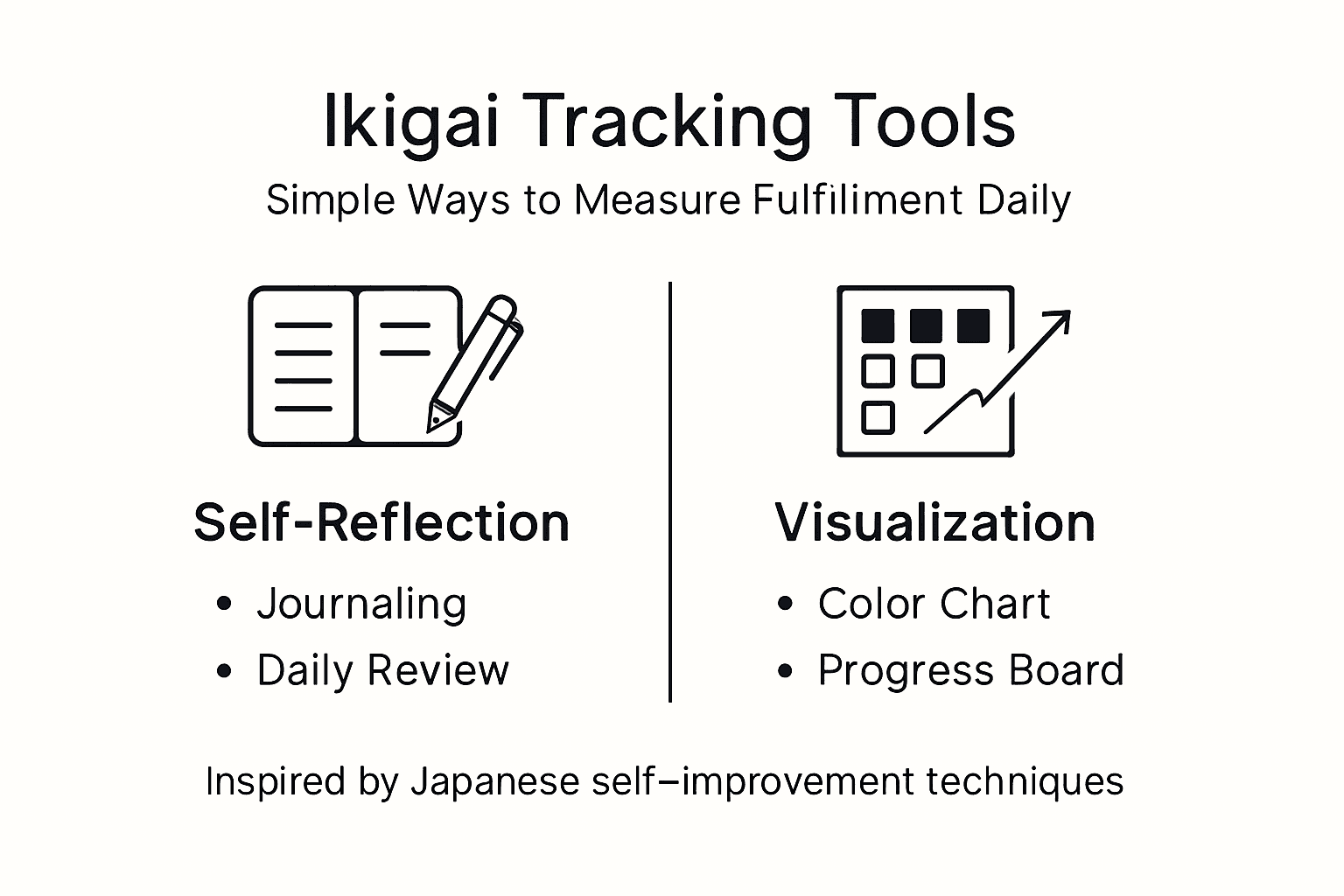
Compare these approaches for tracking your personal progress and fulfillment:
| Method | Data Type | Visualization | Best For |
|---|---|---|---|
| Quarterly reflection journal | Qualitative insights | Written entries | Deep self-exploration |
| Digital dashboard | Quantitative and visual | Color-coded charts | Quick progress overview |
| Life compass template | Mixed qualitative/visual | Mapping multiple domains | Holistic progress review |
Step 5: Reflect and adjust your practices regularly
Reflection and adaptation are fundamental to living your Ikigai, transforming it from a static concept into a dynamic, responsive approach to life. This step ensures that your journey remains authentic, flexible, and aligned with your evolving understanding of purpose.
Structured coaching models for continuous growth emphasize the importance of regular self-assessment. Develop a deliberate reflection practice that allows you to critically examine your progress and make meaningful adjustments:
- Schedule quarterly personal review sessions
- Analyze the emotional and practical impact of your current practices
- Identify emerging passions and shifting priorities
- Recognize areas requiring recalibration
Implement a systematic reflection framework that goes beyond surface-level assessment. This means creating a holistic evaluation process that considers multiple dimensions of your life and personal growth.
Utilizing iterative goal reassessment techniques, design a reflection method that captures both quantitative progress and qualitative experiences. Your reflection process might include:
- Reviewing written goals from previous periods
- Documenting unexpected insights and learnings
- Assessing emotional energy and motivation levels
- Identifying potential pivots or refinements
Personal growth is not linear, but a continuous spiral of learning and adaptation.
Remember that reflection is not about criticism, but about compassionate understanding and intentional realignment. Your practices should serve as a supportive framework, not a restrictive system.
Here’s a quick summary of how each step builds a comprehensive Ikigai practice:
| Step | Focus Area | Main Action | Long-term Benefit |
|---|---|---|---|
| Step 1 | Discover values | Self-reflection and pattern analysis | Personal clarity and direction |
| Step 2 | Daily alignment | Shaping routines to match purpose | Increased energy and fulfillment |
| Step 3 | Intentional goals | Setting multi-dimensional goals | Sustainable personal and career growth |
| Step 4 | Progress tracking | Monitoring actions and emotional impact | Evidence-based adaptation |
| Step 5 | Reflect and adjust | Regular evaluation of practices | Ongoing alignment with evolving purpose |
Pro tip: Create a digital or physical “life compass” template that allows you to visually map your progress, challenges, and insights across different life domains.
Discover Your Ikigai and Transform Daily Challenges into Lasting Fulfillment
If you are seeking practical ways to define your core values and align your daily life with meaningful purpose this article reveals how to practice Ikigai with intention and reflection. Common struggles like unclear passions setting intentional goals and tracking progress can feel overwhelming. But you do not have to face this journey alone. At Ikigain.org we offer a comprehensive personality test designed to help you uncover your true passions strengths and values. This personalized insight empowers you to create daily routines and goals that resonate deeply with your authentic self.

Take control of your purpose-driven life now by using scientifically-backed tools inspired by Japanese philosophy. Experience how small consistent actions aligned with your Ikigai can bring profound personal and career growth. Start your transformation today at Ikigain.org and explore resources that support your self-discovery and ongoing reflection toward meaningful fulfillment.
Frequently Asked Questions
How can I discover my core values and passions for practicing Ikigai?
To discover your core values and passions, conduct a personal inventory by reflecting on what activities make you feel energized and fulfilled. Create a list of experiences that resonate with you and identify consistent themes that emerge across different areas of your life.
What are some effective ways to align my daily routines with my Ikigai?
To align your daily routines with your Ikigai, analyze your current activities and identify those that energize you versus those that drain you. Make intentional adjustments by incorporating small actions that connect to your passions, like dedicating 15 minutes a day to a skill you love.
How do I set intentional goals that reflect my Ikigai?
Set intentional goals by first mapping them to your core values and passions, ensuring they address both personal and professional growth. Break down these goals into specific, actionable steps that are measurable and time-bound to keep your progress visible and focused.
What methods can I use to track my progress toward my Ikigai?
Track your progress by developing a comprehensive system that captures qualitative and quantitative insights about your journey. Consider using a quarterly reflection journal or a digital dashboard to record significant milestones and assess how your daily actions align with your core values.
How often should I reflect and adjust my practices in relation to my Ikigai?
You should reflect and adjust your practices regularly, ideally on a quarterly basis. Use this time to assess the emotional impact of your current practices, identify areas for growth, and make necessary recalibrations to stay aligned with your evolving understanding of purpose.
Recommended
- Positive Words - Ikigai Word Wheel | Ikigain
- Positive Words - Ikigai Word Wheel | Ikigain
- Blog Article - Ikigai Insights | Ikigain
- The Achiever - Ikigai Personality Type | Ikigain
- How Can I Discover My Purpose as I Get Older? – Real Healthy Haven
- The Repose You Need: A Guide to Mental Health Journaling Prompts, Goals, and Gifts - Home Remedies