Career burnout can feel like running on empty, with each day drained of genuine meaning. For Millennial professionals, the search for deeper fulfillment prompts a serious look at what truly matters in life and work. By focusing on core values as the foundation for authentic passion and purpose, you set the stage for realignment. Discover practical ways to reconnect with your inner compass and move toward a more satisfying, intentional path inspired by timeless Japanese wisdom.
Table of Contents
- Step 1: Clarify Your Core Values and Passions
- Step 2: Align Your Daily Actions with Life Purpose
- Step 3: Evaluate Progress Toward Meaningful Fulfillment
Quick Summary
| Main Insight | Description |
|---|---|
| 1. Clarify Your Core Values | Reflect on your life to identify values that guide your decisions and contribute to your fulfillment. |
| 2. Align Daily Actions with Values | Regularly audit your habits to ensure your daily actions reflect your core values and passions. |
| 3. Evaluate Progress Towards Fulfillment | Track metrics related to your well-being to assess whether you’re moving toward a fulfilling life. |
| 4. Make Adjustments as Needed | Be open to changing your habits and approaches based on your evaluations to maintain alignment with your values. |
| 5. Celebrate Small Wins | Recognize and celebrate progress, regardless of size, to reinforce your commitment to living authentically. |
Step 1: Clarify Your Core Values and Passions
Your core values form the foundation of everything else in your life. They’re the principles that matter most to you, the non-negotiables that guide your decisions. Understanding them is the first critical step toward living with purpose.
Start by examining what you already know about yourself. Think about moments when you felt genuinely fulfilled, not just happy or successful. What were you doing? Who were you with? What made those moments stick with you?
Next, identify patterns in your life. Look at:
- Times when you felt energized versus drained
- Decisions you’re proud of versus ones that haunted you
- Work or activities that made you lose track of time
- Values you’ve seen modeled by people you respect
Write down the values that emerge from this reflection. Common ones include creativity, autonomy, helping others, excellence, family, health, or making an impact. Don’t overthink it—your gut usually knows what matters.
Now connect these values to your passions. Values serve as the foundation for passions and purpose, meaning your passions naturally flow from what you believe in. If you value creativity, you might be passionate about design, writing, or problem-solving. If you value helping others, you might be drawn to coaching, mentoring, or community work.
Here’s how core values influence the expression of passions:
| Core Value | How It Shapes Passion | Example Activity |
|---|---|---|
| Creativity | Drives innovation focus | Writing fiction |
| Autonomy | Prefers self-direction | Freelance work |
| Helping Others | Seeks impact on people | Mentoring youth |
| Health | Prioritizes well-being | Running groups |
| Excellence | Aims for mastery | Skill competitions |
| Family | Values close relationships | Family dinners |
Your passions without your values are just hobbies. Your values without your passions are just principles. Together, they become your compass.
Create a simple list: “My Core Values” and “My Passions.” Be specific. Instead of “helping people,” write “mentoring young professionals in tech” or “volunteering with at-risk youth.” Specificity matters because it clarifies where you actually want to invest your energy.
The goal isn’t to find one perfect answer. It’s to recognize the themes that keep showing up. These themes reveal what authentically matters to you, separate from external expectations or what you think you “should” care about.
Pro tip: Review your responses after a few days with fresh eyes. Sometimes your first instinct is accurate, but distance helps you spot whether you’re chasing genuine passion or inherited expectations from family or culture.
Step 2: Align Your Daily Actions with Life Purpose
Knowing your values and passions is just the beginning. The real transformation happens when you align your daily habits with what matters most. Small, consistent actions compound over time into a life that feels authentically yours.

Start by auditing your current week. Write down how you spent your time across work, relationships, personal growth, and rest. Be honest about where your energy actually goes, not where you think it should go.
Now compare this to your core values and passions from Step 1. Do your days reflect what you said matters most? If you value creativity but spend eight hours in meetings with no creative work, that’s a signal. If you value family but rarely have uninterrupted time with loved ones, that’s worth examining.
Identify which habits serve your purpose:
- Activities that energize you and align with your values
- Work tasks that contribute to your meaningful goals
- Relationships and communities that support your growth
- Learning or skill-building that moves you toward what you want
Daily habits aligned with life purpose foster fulfillment through consistent, small actions connected to what genuinely matters. The goal isn’t a complete life overhaul. Instead, adjust your routine strategically. If you value health but skip exercise, add a 20-minute walk three times weekly. If you value creativity but never write, block 30 minutes on your calendar.
Purpose isn’t something you find and then live. It’s something you live into through repeated, intentional choices.
Prioritize ruthlessly. You can’t pursue everything at once, and trying wastes energy on competing goals. Choose three to five habits that directly connect to your core values and passions. Make these non-negotiable. Everything else is secondary.
Track your progress visibly. Use a simple calendar, app, or journal to mark when you follow through. This creates accountability and shows you what’s actually possible when you commit.
Pro tip: Stack new purpose-aligned habits onto existing routines. If you already drink coffee each morning, use that time for journaling about your goals. If you already commute, use that time for learning through podcasts related to your passion.
Step 3: Evaluate Progress Toward Meaningful Fulfillment
You’ve clarified your values, aligned your habits, and now you need to measure what’s actually working. Progress evaluation isn’t about judgment; it’s about gathering honest data so you can adjust your approach and stay on track.
Start by defining what fulfillment looks like for you personally. This goes beyond career success or income. Consider your psychological well-being, emotional satisfaction, and sense of meaning. Are you sleeping better? Feeling less resentful about your work? Enjoying deeper conversations with people you care about?
Create simple metrics across these dimensions:
- Energy levels throughout your day
- Quality of relationships and connections
- Progress on meaningful goals or projects
- Stress levels and overall mental health
- Sense of purpose in your work and life
Systematic evaluation and reflective practices support continuous improvement and help align activities with personal meaningfulness. Use a simple journal or spreadsheet to track these areas monthly. Rate each on a scale of one to ten. Over three to six months, patterns emerge that reveal whether your adjustments are working.
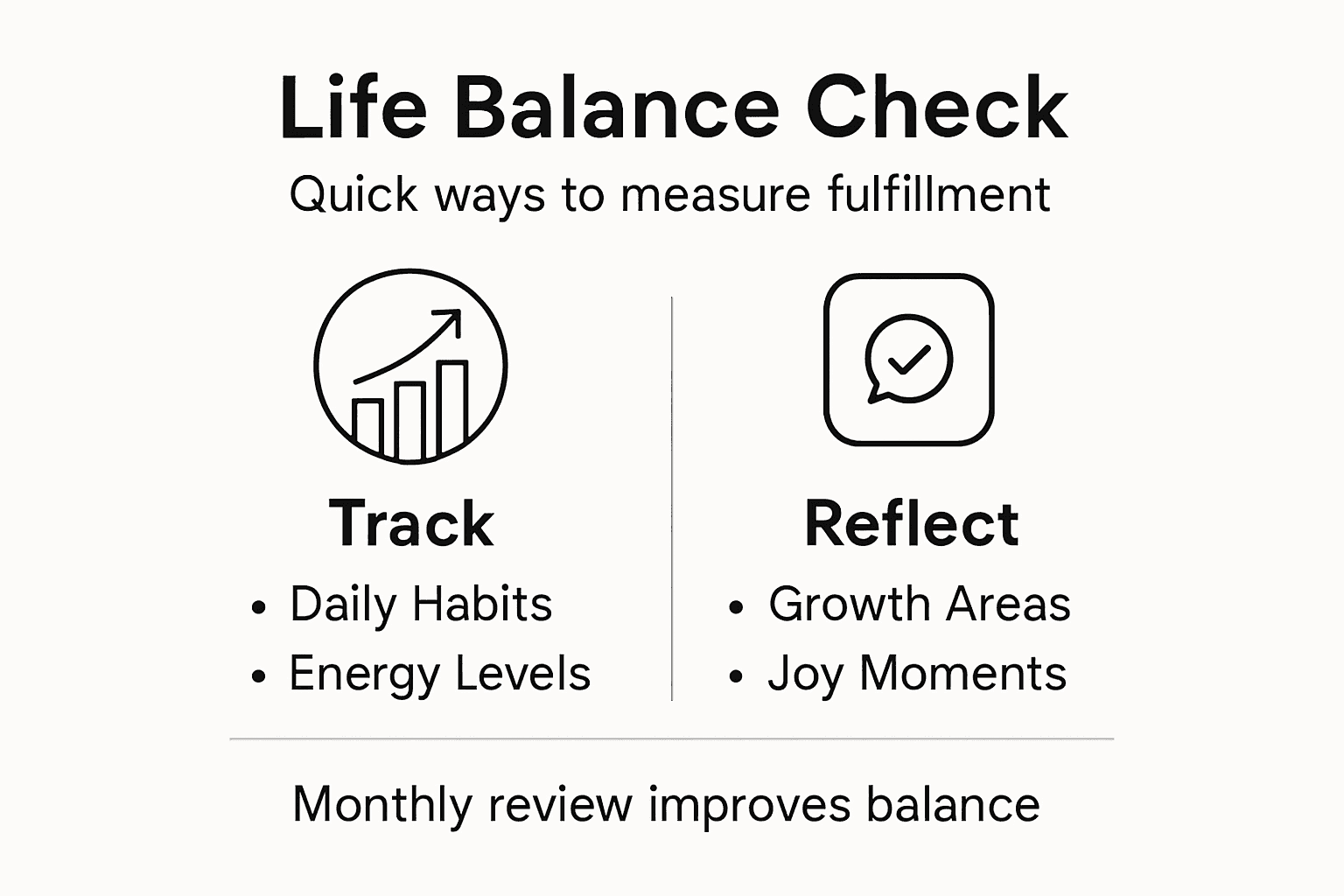
This summary shows how progress metrics guide continued fulfillment:
| Progress Metric | What It Measures | When to Adjust |
|---|---|---|
| Energy Level | Daily motivation | Frequent fatigue |
| Goal Progress | Achievement of key aims | Lack of forward movement |
| Relationship Quality | Strength of connections | Ongoing tension or distance |
| Stress Level | Emotional pressure | Persistent overwhelm |
| Purpose Sense | Meaning in routine | Feeling aimless |
Fulfillment isn’t a destination you reach once. It’s a direction you keep moving toward, and measurement helps you stay honest about whether you’re moving in it.
When progress stalls, investigate why. Did a new habit become a chore instead of energizing? Is someone else’s expectation creeping back in? Did you overcommit and lose focus on what matters most? These questions point toward real obstacles worth addressing.
Be willing to pivot. Purpose-driven living isn’t rigid. If mentoring young professionals energized you but a new job kills that opportunity, explore different ways to mentor. If daily running became a burden, try walking or cycling instead. The core value stays the same. The expression changes.
Celebrate progress, even small wins. When you notice you’re consistently making time for something that matters, acknowledge it. These wins build momentum and reinforce that your life is genuinely shifting toward authenticity.
Pro tip: Schedule a monthly review on the same day each month. Spend 20 minutes reflecting on your metrics, patterns, and what needs adjustment. This one habit creates accountability and keeps your purpose-driven life intentional rather than accidental.
Discover Your True Purpose With Ikigain.org
The article highlights a common challenge many face: aligning daily habits and decisions with core values and passions to achieve meaningful life balance. If you find yourself struggling to clarify your unique passions or wondering how to measure true fulfillment, you are not alone. This guide makes it clear that purposeful living requires intentional steps based on self-knowledge and consistent reflection.

Unlock your personal path to fulfillment by taking the comprehensive personality test at Ikigain.org. Our scientifically-backed tool helps you identify your core passions, values, and strengths rooted in the deep Japanese philosophy of Ikigai. When you combine the insights from this test with the practical steps described in the Purpose-Driven Living Guide, you gain a clear roadmap to transform your life with authentic purpose. Start today and take control of your journey to meaningful living by visiting Ikigain.org.
Frequently Asked Questions
How can I identify my core values and passions?
To identify your core values and passions, reflect on past experiences that made you feel fulfilled. Write down values like creativity or autonomy, and connect them to specific activities that excite you, such as writing or freelance work.
What steps can I take to align my daily actions with my life purpose?
To align your daily actions with your life purpose, start by auditing how you currently spend your time. Identify three to five habits that connect directly to your core values and passions, and make them non-negotiable to gradually shift your daily routine.
How should I evaluate my progress toward achieving a meaningful life balance?
You can evaluate your progress by defining what fulfillment looks like for you and creating metrics to track areas like energy levels and relationship quality. Regularly review these metrics to identify patterns and make adjustments as needed.
What should I do if I find my progress toward purpose-driven living is stalling?
If your progress stalls, analyze potential obstacles and adjust your approach. Be willing to pivot or change habits that no longer serve your goals to maintain alignment with what genuinely matters to you.
How can I ensure that I am making time for activities that align with my values?
To ensure you are making time for value-aligned activities, schedule specific time blocks dedicated to these pursuits in your calendar. Start small, like committing to 30 minutes weekly for writing or mentoring, and increase the time as you build habits.
Recommended
- Role of Purpose in Life – Impact on Wellbeing
- 7 Key Japanese Philosophy Principles for Life Purpose
- Why Discover Your Purpose: Unlocking Fulfillment
- Why Choose Ikigai Method for Lasting Fulfillment
- Why Join Dance Classes: Transform Your Confidence and Health
- The Advantages and Disadvantages of Van Life – Skyenergi