Facing a major life shift can feel like watching your favorite mug slip from your hands and shatter. The tradition of kintsugi, which means “golden joinery” in Japanese, offers a powerful lesson: visible cracks can become sources of beauty and meaning. By celebrating imperfections, kintsugi transforms breakage into proof of resilience and authentic history. This article reveals how Japanese philosophy and the art of repairing with gold can reshape your outlook on setbacks, career changes, and personal healing.
Table of Contents
- Defining Kintsugi and Its Origins
- Philosophy Behind Repairing With Gold
- Types of Kintsugi and Their Distinct Methods
- Personal Experience: Building a Kintsugi Kit
- Practical Steps and Modern Applications
Key Takeaways
| Point | Details |
|---|---|
| Significance of Kintsugi | Kintsugi transforms broken ceramics into art by celebrating imperfections and history rather than concealing them. |
| Philosophical Impact | The practice encourages viewing setbacks as valuable experiences, aligning with personal growth and resilience. |
| Techniques of Repair | Different kintsugi methods, like Tomotsugi, Yobitsugi, and Makienaoshi, cater to varying types of damage, each providing unique aesthetic outcomes. |
| Modern Applications | Kintsugi principles extend to art therapy and personal healing, promoting mindfulness and the acceptance of flaws in both objects and life experiences. |
Defining Kintsugi and Its Origins
Kintsugi means “golden joinery” in Japanese—a technique where broken ceramics are repaired using lacquer mixed with powdered gold, silver, or platinum. Rather than hiding the damage, this method celebrates it.
The practice emerged in Japan during the late 15th century, born from dissatisfaction with crude metal staples imported from China. Japanese artisans developed a more elegant solution that transformed broken objects into art.
At its core, kintsugi operates on a philosophical principle: breakage and repair tell a story. The visible seams aren’t flaws to conceal—they’re proof of the object’s journey.
How Kintsugi Works
The technique uses specific materials and processes:
- Urushi: A natural lacquer applied to join broken ceramic pieces together
- Rice or flour glue: Mixed with the lacquer to strengthen the bond
- Metal powder: Gold, silver, or platinum dust sprinkled over the wet lacquer to highlight repairs
- Patience: Each layer must cure before the next application
The result is a ceramic piece that looks stronger and more beautiful than before it broke.
The philosophy treats damage as history, not tragedy—transforming broken objects into testimonies of resilience.
The Connection to Tea Culture
Japanese tea ceremony vessels became the primary canvas for kintsugi artistry. These bowls and cups were treasured not despite their repairs, but because of them. Each golden seam represented centuries of use, respect, and care.
While kintsugi originated in Japan, artisans eventually applied the technique to Chinese and Korean ceramics as well, spreading its influence across East Asia.
Why This Matters Beyond Ceramics
Kintsugi transcends pottery repair. It represents a fundamentally different way of viewing imperfection—one that aligns perfectly with the personal growth philosophy behind ikigai. Just as broken ceramics gain beauty through repair, your life gains meaning through acknowledging and integrating your setbacks.
This mindset shift is exactly what makes kintsugi relevant to anyone facing career transitions or working through past failures.
Pro tip: Next time you experience a setback, ask yourself: “How can I highlight this experience rather than hide it?” Your scars become your story.
Philosophy Behind Repairing With Gold
The gold in kintsugi isn’t decorative—it’s symbolic. It transforms a simple repair into a statement about value, acceptance, and transformation. When you fill cracks with gold, you’re saying: “This break matters. This history matters.”
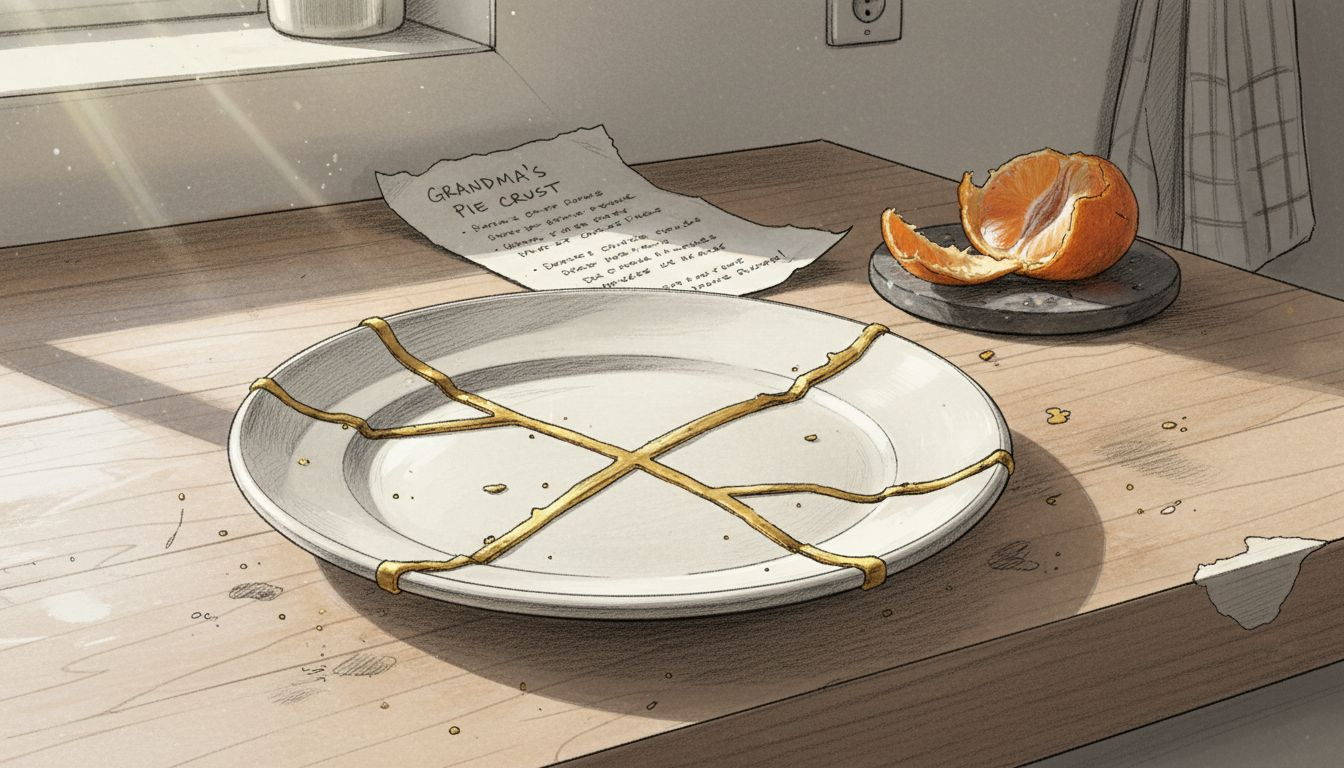
This philosophy stands in sharp contrast to how most cultures treat broken things. We hide damage, replace the broken part, pretend it never happened. Kintsugi does the opposite.
What the Gold Really Represents
The gold serves multiple purposes beyond aesthetics:
- Visibility: The repair becomes impossible to ignore or forget
- Value: Gold elevates the broken object to something more precious than before
- Acceptance: The crack is embraced as part of the object’s story
- Care: Each golden seam shows that someone invested time and skill in healing
When you repair something with gold, you’re declaring that imperfection deserves celebration.
The golden veins represent care relations that bind objects—and people—anew through attentive healing.
Personal Rebirth Through Repair
Kintsugi philosophy extends far beyond pottery. It symbolizes personal transformation after trauma. When you experience a significant setback, you’re broken like that ceramic bowl. But instead of staying shattered or being discarded, you get repaired with gold.
Your scars become marks of singularity. They prove you survived. They prove you were worth the effort to heal.
This directly mirrors the ikigai journey. Finding your purpose often requires first confronting your breaks—the career failures, the wrong turns, the moments you doubted yourself.
Why Imperfection Becomes Strength
Kintsugi celebrates imperfection and highlights the narrative of repair by refusing to hide flaws. This transforms broken pottery into unique art that no unbroken piece could ever achieve.
Your life works the same way. The polished, untested version of you isn’t stronger than the version that’s been broken and repaired. The repaired version has depth. Resilience. Authenticity.
Pro tip: Write down one past failure or setback. Now reframe it: What gold did this experience add to your character? How did it make you more valuable?
Types of Kintsugi and Their Distinct Methods
Kintsugi isn’t one-size-fits-all. Different damage requires different approaches. Artisans have developed several distinct methods, each tailored to the specific nature of the break and the desired aesthetic outcome.
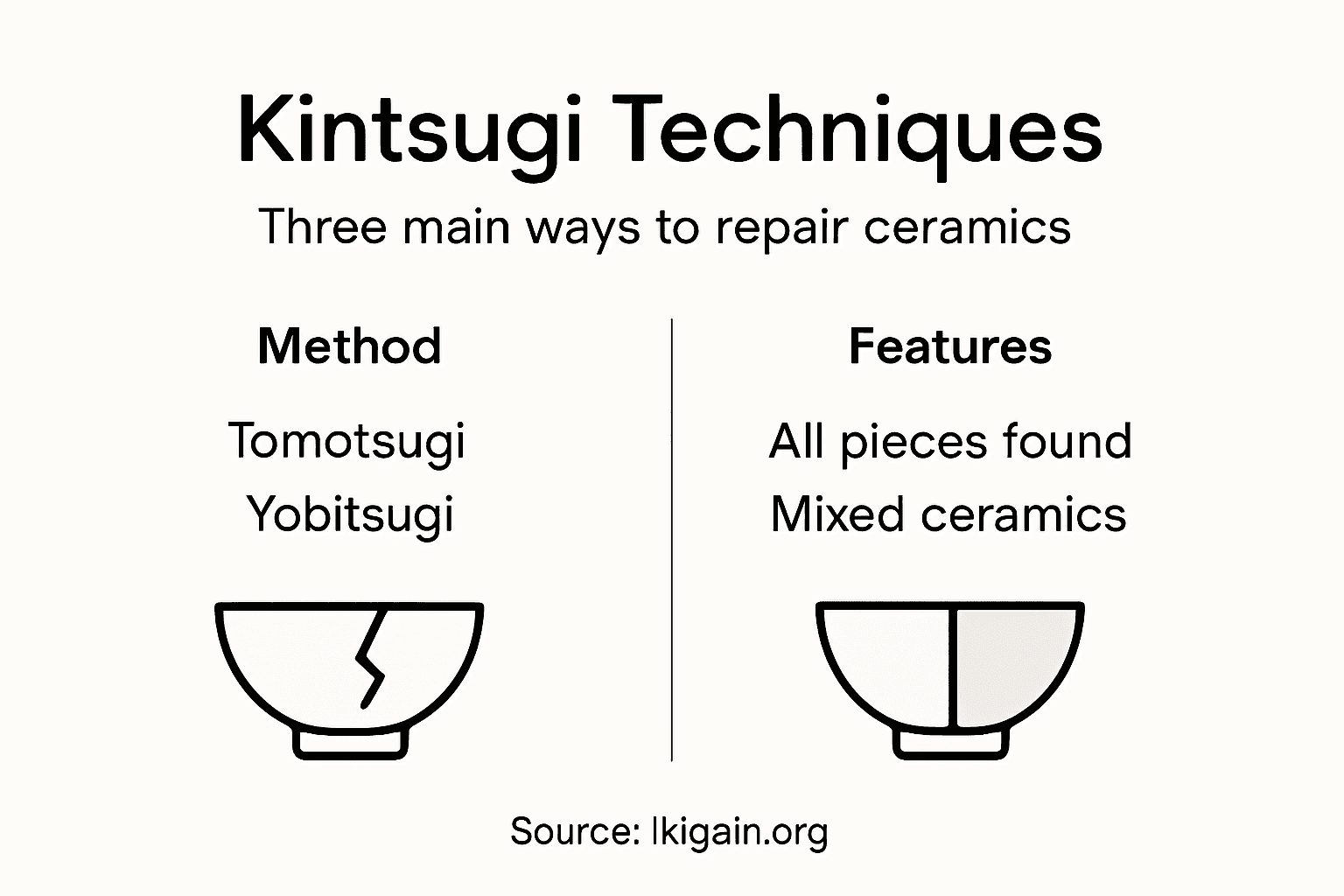
Understanding these variations helps you appreciate how kintsugi responds to unique challenges—much like how your healing journey requires personalized approaches rather than generic solutions.
The Three Primary Methods
Kintsugi practitioners use three main techniques:
- Tomotsugi: Joining broken pieces together using urushi lacquer and metal powder, ideal for clean breaks
- Yobitsugi: Combining parts from different ceramics or sewing sections together to create something entirely new
- Makienaoshi: Filling large gaps or cracks with a paste made from lacquer and clay powder
Each method uses urushi as the foundation but differs significantly in execution and final appearance.
Here’s a concise comparison of the primary kintsugi repair methods and their unique benefits:
| Method | Ideal Scenario | Key Benefit | Artistic Result |
|---|---|---|---|
| Tomotsugi | Clean fractures, all pieces | Structural integrity | Seamless golden lines |
| Yobitsugi | Missing pieces, mismatched | Creative reinvention | Asymmetrical visual flow |
| Makienaoshi | Large gaps, extensive loss | Restoration of function | Bold, reconstructed areas |
Different repair methods depend entirely on the nature and extent of damage, ensuring varied aesthetic and structural outcomes.
When to Use Each Method
Tomotsugi works best when you have all the original pieces and clean fracture lines. The broken edges align, the lacquer bonds them together, and gold powder highlights the seam.
Yobitsugi applies when pieces are missing or when you want to blend ceramics from different sources. This method celebrates asymmetry and creates entirely unique compositions.
Makienaoshi handles extensive damage where large sections are gone. Artisans reconstruct missing extensions like handles using layered cloth and lacquer, building up the missing area entirely before finishing with gold.
The Skill Factor
All three methods require patience and precision. The lacquer must cure between layers. The gold powder must be applied at exactly the right moment. One mistake early on affects the entire piece.
This mirrors personal healing. There’s no rushing transformation. Each layer of growth builds on the previous one.
Pro tip: Identify which “type” of break you’re experiencing: a clean fracture (tomotsugi), a composite challenge (yobitsugi), or a major void (makienaoshi). Your repair strategy should match your specific damage.
Personal Experience: Building a Kintsugi Kit
Five years ago, I developed my own kintsugi kit and started selling it on Amazon. What began as a personal project to make this ancient art accessible became a journey that transformed how I understood healing and imperfection.
I realized traditional kintsugi required materials that weren’t practical for most people: urushi lacquer takes weeks to cure, authentic gold powder is expensive, and the process felt intimidating. I wanted to democratize the practice.
Why I Created the Kit
My goal was simple: help people experience kintsugi’s healing metaphor without barriers.
- Accessibility: Use materials people could find at home or order affordably
- Speed: Eliminate long drying times that discourage beginners
- Safety: Avoid toxic fumes from traditional lacquer
- Meaning: Preserve the philosophy even with simplified materials
The kit included epoxy resin instead of urushi, gold-colored paint instead of precious metal powder, and clear instructions for beginners.
To better understand how traditional and modern kintsugi practices differ, see below:
| Aspect | Traditional Kintsugi | Modern DIY Kits |
|---|---|---|
| Materials | Urushi lacquer and real gold | Epoxy resin and gold paint |
| Drying Time | Weeks to months | Less than one day |
| Accessibility | Requires specialized skill | Designed for beginners |
| Safety | Requires careful handling | Low toxicity, easy cleanup |
Modern kintsugi kits simplify traditional methods by using epoxy resin and gold-colored paint, enabling personal engagement with the art without specialized materials or long curing times.
What I Learned From Customers
Selling the kit taught me something unexpected: people didn’t just want a craft project. They wanted a ritual. Users connected the technique with meditation and therapy, emphasizing recovery and mindful creativity.
Customers shared stories about repairing broken bowls while processing job losses, relationship endings, and personal failures. The act of physically mending something became a practice for mending themselves.
The Connection to Your Ikigai Journey
Building that kit forced me to confront my own breaks. I’d left a comfortable career to pursue something more authentic. The kit represented that choice—accepting the crack rather than hiding it.
Now I understand: your ikigai journey requires the same philosophy. The detours, the failures, the pivots—they’re not interruptions to your purpose. They’re the gold seams that make your path uniquely yours.
Pro tip: Start with something broken you actually own. A mug, a plate, a tile. The emotional connection matters more than perfection—your first kintsugi is about the process, not the product.
Practical Steps and Modern Applications
Kintsugi isn’t locked in museums or reserved for ceramics experts. Today, the practice extends far beyond pottery repair into art therapy, mindfulness practices, and personal healing. Understanding both the traditional process and modern adaptations helps you apply kintsugi philosophy to your own life.
Whether you’re working with ceramics or using kintsugi as a metaphor for personal recovery, the fundamental approach remains the same: acknowledge the break, repair with intention, and celebrate the result.
The Traditional Repair Process
If you’re repairing actual ceramics, here’s what’s involved:
- Clean the fragments: Remove dust and debris from broken edges
- Prepare urushi lacquer: Mix with glue or adhesive (note: raw urushi is poisonous and requires careful handling)
- Join pieces carefully: Apply lacquer mixture to edges and align fragments
- Allow proper drying: This takes weeks or months in high humidity environments
- Apply metal powder: Sprinkle gold, silver, or platinum dust while lacquer is still wet
- Final curing: Let the piece set completely before use
Each step demands patience. There’s no rushing the process.
Kintsugi philosophy extends beyond ceramics into art, design, and healing practices, applying its principles to modern areas including personal recovery and aesthetic appreciation.
Modern Applications Beyond Pottery
Contemporary uses adapt kintsugi principles into art therapy and mindfulness, emphasizing beauty in imperfection and preservation over discarding.
You can apply kintsugi thinking to:
- Journaling: Write about your breaks and how they shaped you
- Visual art: Create collages or paintings that highlight past struggles
- Career transitions: Reframe job changes as golden seams in your professional narrative
- Relationships: Acknowledge conflict as part of your connection story
The medium changes. The philosophy remains constant: visible repair is more beautiful than pretended wholeness.
Bridging Craft and Consciousness
Whether you’re holding an actual ceramic bowl or thinking metaphorically about your life, kintsugi demands mindfulness. You must slow down. You must pay attention. You must accept imperfection.
This is exactly the consciousness shift required for discovering your ikigai. Purpose doesn’t emerge from a flawless trajectory. It emerges when you integrate your entire history—breaks included.
Pro tip: Start with the metaphor before attempting actual ceramics. Journal about one significant break in your life. How would you repair it? What gold would it add? This internal work makes the physical practice more meaningful.
Embrace Your Breaks and Discover Your Ikigai
The art of Kintsugi teaches us to see value in our cracks and transformations. If you have faced setbacks or moments of self-doubt, you are not alone. This ancient philosophy reminds us that the journey through brokenness leads to unique strength and resilience. Now imagine combining this insight with a modern tool designed to help you uncover your deepest passions, values, and strengths.

At Ikigain.org, we invite you to explore your personal Ikigai — your reason for being — by taking our comprehensive personality test. This carefully designed digital assessment guides you through understanding how your life experiences, including challenges and growth, shape your purpose. By integrating timeless Japanese wisdom with practical self-discovery techniques, you can celebrate your own golden seams and build a fulfilling path forward.
Take the first step toward transforming your story and finding meaning in your setbacks. Visit Ikigain.org now and begin your journey to purposeful living with tools inspired by philosophies like Kintsugi. Your unique narrative deserves to shine with strength and intention.
Frequently Asked Questions
What is kintsugi?
Kintsugi is a Japanese art form that involves repairing broken ceramics with lacquer mixed with powdered gold, silver, or platinum. It emphasizes the beauty in imperfections and celebrates the object’s journey rather than hiding its damage.
What materials are used in the kintsugi process?
Key materials for kintsugi include urushi lacquer, which is used to bond the broken pieces, rice or flour glue for added strength, and metal powder like gold or silver to highlight the repair. Patience is crucial, as each layer needs to cure before applying the next.
How does kintsugi relate to personal healing and resilience?
Kintsugi symbolizes personal transformation after trauma. Just as broken ceramics are repaired with gold to become more beautiful, individuals can find meaning in their setbacks and allow their experiences to shape their growth and resilience.
What are the different methods of kintsugi?
There are three primary kintsugi methods: Tomotsugi (for clean breaks), Yobitsugi (for combining different pieces), and Makienaoshi (for filling large gaps). Each method addresses specific types of damage and results in unique artistic outcomes.