Choosing the right path can feel overwhelming when every job description and role demands different strengths. Understanding your unique behavioral patterns and psychological traits through standardized personality assessments gives you an edge in both your career and personal growth. These tools highlight how your values and passions influence your decision-making, helping you move beyond guesswork as you seek clarity and confidence on your professional journey.
Table of Contents
- Defining Personality Tests And Key Concepts
- Types Of Personality Tests And Core Distinctions
- How Personality Tests Deliver Insight And Guidance
- Real-World Uses For Personal And Career Growth
- Risks, Limitations, And Common Misconceptions
Key Takeaways
| Point | Details |
|---|---|
| Understanding Personality Tests | Personality tests explore individual behavior and psychological traits, allowing for self-reflection and insight into personal tendencies. |
| Diverse Assessment Models | The Big Five and MBTI are prominent models, each providing unique approaches to understanding personality for personal and professional development. |
| Guidance for Growth | These assessments can help align career paths, improve team dynamics, and identify areas for personal growth based on psychological insights. |
| Caution in Interpretation | Test results should be viewed as exploratory tools rather than definitive judgments, emphasizing the dynamic nature of human personality. |
Defining Personality Tests and Key Concepts
Personality tests are sophisticated psychological instruments designed to explore and measure individual behavioral patterns, psychological traits, and characteristic responses. Standardized assessment tools enable professionals and individuals to gain deeper insights into personal tendencies and potential behavioral dynamics across various contexts.
At their core, these assessments represent systematic approaches to understanding human complexity. Psychological research investigates individual differences through carefully constructed questionnaires and evaluation techniques that reveal intricate aspects of personality. Modern personality tests move beyond simplistic categorizations, recognizing that human behavior emerges from nuanced interactions between personal characteristics and environmental influences.
Typical personality tests examine fundamental psychological dimensions such as:
- Emotional stability
- Extraversion and introversion
- Openness to experience
- Conscientiousness
- Interpersonal relationship patterns
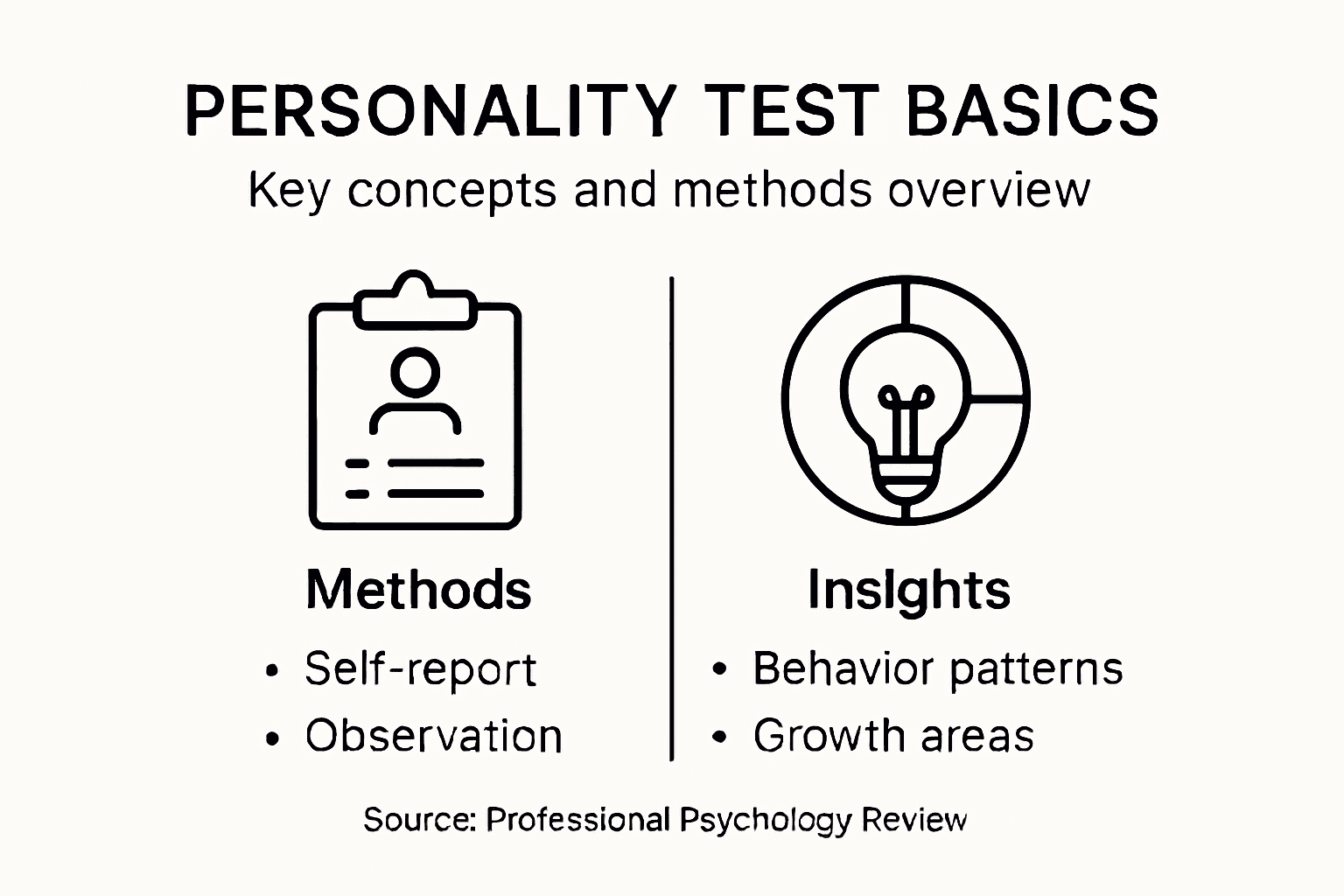
These assessments utilize multiple methodological approaches, including self-reporting inventories, behavioral observations, and scientifically validated psychological frameworks. By providing structured opportunities for self-reflection, personality tests help individuals understand their inherent strengths, potential growth areas, and unique psychological blueprints.
Pro tip: When taking a personality test, approach it with genuine self-reflection and answer questions honestly to receive the most accurate insights about your psychological profile.
Types of Personality Tests and Core Distinctions
Personality assessments represent diverse methodological approaches to understanding human psychological characteristics. Two prominent personality models dominate contemporary psychological research: the Myers-Briggs Type Indicator (MBTI) and the Big Five framework, each offering unique perspectives on individual differences.
The Big Five Model, also known as the OCEAN framework, provides a comprehensive approach to personality assessment. Psychometric research highlights its robust ability to classify personality across five critical dimensions:
- Openness: Creativity, intellectual curiosity, and willingness to explore
- Conscientiousness: Organizational skills, reliability, and goal-oriented behavior
- Extraversion: Social engagement, energy levels, and interpersonal interactions
- Agreeableness: Empathy, cooperation, and interpersonal warmth
- Neuroticism: Emotional stability, stress response, and psychological resilience
The Myers-Briggs Type Indicator represents a different approach, categorizing individuals into 16 distinct personality types based on cognitive preferences. Unlike the Big Five’s dimensional approach, MBTI uses a typological method that classifies people into specific personality categories determined by four core dichotomies: extraversion/introversion, sensing/intuition, thinking/feeling, and judging/perceiving.
Each personality test model offers unique insights, with some focusing on predictive capabilities for professional performance, while others emphasize personal growth and self-understanding. The selection of an appropriate test depends on specific objectives, whether for career development, personal insight, or psychological research.
Here’s a comparison of major personality test models and their strengths:
| Model Name | Assessment Approach | Ideal For | Unique Insight |
|---|---|---|---|
| Big Five (OCEAN) | Dimensional trait analysis | Academic research, workplace fit | Measures broad psychological traits |
| MBTI | Categorical type assignment | Personal growth, team dynamics | Reveals cognitive style profiles |
| StrengthsFinder | Strength-based identification | Leadership, career planning | Identifies key strengths for improvement |
| DISC | Behavior-driven typology | Communication training | Focuses on interpersonal methods |
Pro tip: Consider taking multiple personality tests from different models to gain a more comprehensive understanding of your psychological profile and personal characteristics.
How Personality Tests Deliver Insight and Guidance
Personality tests serve as powerful tools for self-discovery, offering individuals deep insights into their psychological makeup and behavioral tendencies. Psychological research demonstrates that these assessments provide more than superficial categorizations, instead offering nuanced perspectives on personal strengths, potential growth areas, and unique cognitive patterns.
These assessments go beyond simple trait identification, capturing behavioral distinctions that illuminate how individuals approach challenges, interact with others, and navigate complex social environments. By understanding these intricate psychological dimensions, people can make more informed decisions about career paths, personal relationships, and individual development strategies.
The key insights delivered by personality tests typically include:
- Identifying core personal strengths
- Understanding natural communication preferences
- Recognizing potential areas for personal growth
- Revealing motivational triggers
- Explaining typical stress response patterns
Beyond individual application, personality assessments have significant implications for professional development. Employers and educational institutions increasingly use these tools to create tailored environments that maximize individual potential, align team dynamics, and design targeted development programs.
Pro tip: Approach personality test results as dynamic insights rather than fixed labels, using them as starting points for continuous personal growth and self-understanding.
Real-World Uses for Personal and Career Growth
Personality tests play a crucial role in transforming personal and professional development strategies. These sophisticated assessments provide individuals with data-driven insights that extend far beyond simple categorization, offering practical guidance for career navigation and personal growth.

Career achievement research demonstrates that understanding one’s personality traits can significantly impact professional success and workplace effectiveness. By mapping individual characteristics to potential career paths, these tests help people make more informed decisions about their professional trajectories.
Key real-world applications of personality tests include:
- Career Alignment: Identifying roles that match individual strengths
- Team Dynamics: Understanding interpersonal communication styles
- Leadership Development: Recognizing natural leadership potential
- Personal Branding: Crafting authentic professional narratives
- Skill Development: Targeting areas for personal improvement
Beyond professional contexts, personality assessments offer profound insights into personal relationships, educational choices, and individual growth strategies. They provide a nuanced framework for understanding personal motivations, communication preferences, and potential blind spots that can hinder personal and professional development.
Pro tip: Treat personality test results as a dynamic roadmap, using insights to continuously refine your personal and professional approach rather than viewing them as unchangeable definitions.
This reference table summarizes how personality test results can guide personal and career actions:
| Application Area | How Test Results Help | Example Outcome |
|---|---|---|
| Career Planning | Aligns strengths to job roles | Improved job fit decision |
| Communication | Reveals preferred interaction style | Enhanced teamwork effectiveness |
| Leadership | Identifies natural leadership qualities | Tailored leadership programs |
| Self-Improvement | Spots areas for personal growth | Focused development strategies |
Risks, Limitations, and Common Misconceptions
Personality research challenges traditional assessment methods, revealing that human personality is far more complex than simple trait categorizations. These sophisticated psychological instruments offer valuable insights, but they are not infallible diagnostic tools that can completely define an individual’s entire psychological landscape.
Contemporary studies question the robustness of self-reported personality assessments, highlighting several critical limitations that individuals should understand before placing excessive weight on test results. The fundamental challenge lies in the nuanced nature of human personality, which cannot be fully captured by standardized questionnaires or reductive categorical frameworks.
Common misconceptions about personality tests include:
- Absolute Determinism: Believing test results are unchangeable life sentences
- One-Size-Fits-All: Assuming tests work identically for all individuals
- Universal Accuracy: Thinking tests provide complete psychological profiles
- Static Interpretation: Viewing personality as fixed rather than dynamic
- Professional Prescription: Treating test results as definitive career guidance
Moreover, personality assessments should be viewed as exploratory tools rather than definitive judgments. They provide potential insights and patterns, but cannot predict with absolute certainty an individual’s potential, behaviors, or future performance. Responsible interpretation requires understanding the nuanced, contextual nature of human psychological experiences.
Pro tip: Approach personality test results with curiosity and critical thinking, using them as conversation starters for self-reflection rather than absolute statements about your identity.
Discover Your True Purpose with a Personality Test That Guides You Toward Fulfillment
Personality tests unlock valuable insights into your strengths, communication style, and personal growth areas as this article explains. If you have ever felt uncertain about which career direction fits your natural traits or struggled to connect your values with daily purpose, you are not alone. These challenges can create confusion and frustration but also open the door to meaningful self-discovery when approached with the right tools. Understanding concepts from models like the Big Five or MBTI is a great start, but integrating these insights with a culturally rich framework can elevate your journey.
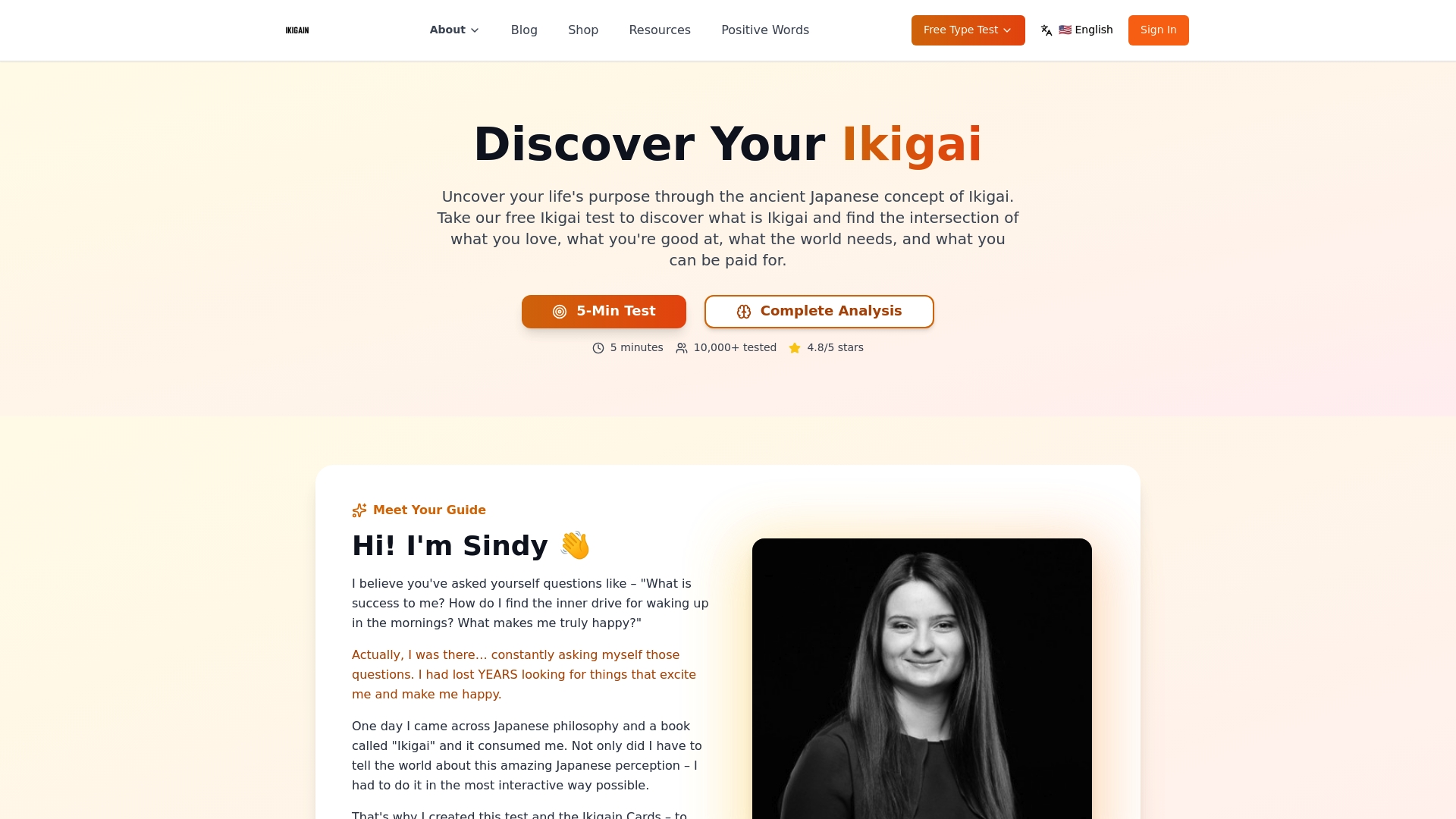
At Ikigain.org, we blend scientifically backed personality assessments with the ancient Japanese philosophy of Ikigai to help you find lasting purpose in your life. Our comprehensive personality test goes beyond surface traits by revealing your core passions, values, and strengths so you can take decisive steps in career planning, personal development, and well-being. Unlike generic tests, our approach respects the dynamic nature of personality discussed in the article and encourages growth rather than fixed labels. Don’t wait to transform confusion into clarity. Visit Ikigain.org to take your personalized assessment today and start aligning your unique psychological profile with meaningful life goals.
Frequently Asked Questions
Why should I take a personality test?
Taking a personality test can provide valuable insights into your behavioral patterns, strengths, and areas for growth. This self-awareness can guide personal development, career choices, and improve interpersonal relationships.
What are the main types of personality tests available?
The main types of personality tests include the Big Five Model (OCEAN), the Myers-Briggs Type Indicator (MBTI), StrengthsFinder, and DISC. Each offers unique approaches to understanding personality traits and behaviors.
How can personality tests benefit my career?
Personality tests can align your strengths with potential career paths, enhance team dynamics, and identify areas for professional development. They help make informed decisions about roles that best fit your natural traits.
Are personality test results definitive and unchangeable?
No, personality test results are not definitive. They provide insights and patterns relevant to your psychological traits, but human personality is dynamic and can evolve over time. It’s essential to view results as a starting point for self-reflection rather than fixed labels.
Recommended
- Ikigai Test - Discover Your Life Purpose | Ikigain
- What is Ikigai? - The Japanese Secret to Life Purpose | Ikigain
- Ikigai Test - Discover Your Life Purpose | Ikigain
- Ikigai Shop - Purpose-Driven Products | Ikigain
- Motivation beim Schwimmabzeichen Sammeln verstehen
- To Accomplish Your Dreams, Don’t Drift Through Life - Luxury Apartments for Rent in Boca Raton | Premium Boca Raton Apartments | Aapartments Boca Raton