Finding genuine purpose in a world saturated with self-help advice can feel overwhelming. You want sustainable personal growth, not quick fixes that fade by next month. Ikigai, a Japanese philosophy centered on life’s daily meaningful pleasures, offers an authentic path forward. Unlike Western productivity frameworks that prioritize external success, Ikigai emphasizes the emotional experience of living well. This guide teaches you how to embrace Ikigai authentically in 2026, helping you discover deeper fulfillment through practices rooted in centuries of wisdom. You’ll learn to recognize what truly brings you joy and how to build a life around those moments.
Table of Contents
- Understanding The Authentic Ikigai Philosophy
- Preparing For Your Ikigai-Based Self-Discovery Journey
- Executing Ikigai Practices For Sustainable Personal Growth
- Verifying Progress And Overcoming Common Challenges
- Discover Personalized Ikigai Tools And Resources
Key takeaways
| Point | Details |
|---|---|
| Life satisfaction boost | Practicing Ikigai increases life satisfaction by 20-30% when combined with sustainable living habits. |
| Daily joy focus | Authentic Ikigai centers on everyday small pleasures like gardening or tea, not just career achievements. |
| Work and life engagement | Ikigai predicts higher engagement and wellbeing across all life domains, including professional settings. |
| Cultural authenticity | Japanese Ikigai differs fundamentally from Western Venn diagram models that overemphasize external success markers. |
Understanding the authentic ikigai philosophy
The Japanese word Ikigai combines ‘iki’ (living) and ‘gai’ (value or worth), emphasizing life’s intrinsic worth rather than achievement. This philosophy represents the emotional experience of feeling your life has value through everyday activities. When you tend your garden, share a meal with loved ones, or watch sunrise over your morning coffee, you’re experiencing Ikigai. It’s not about finding one grand purpose but recognizing the collection of small moments that make living feel worthwhile.
Western interpretations have unfortunately distorted this concept. You’ve probably seen the Venn diagram showing Ikigai at the intersection of what you love, what you’re good at, what the world needs, and what you can be paid for. This model doesn’t appear in Japanese literature about Ikigai and fundamentally misrepresents the philosophy by centering career and monetary success. The authentic concept has little to do with professional achievement or finding your perfect job title.
True Ikigai aligns with ‘seikatsu’ or daily life, focusing on meaningful pleasures rather than grand ambitions. Consider these authentic examples:
- Preparing and savoring a carefully brewed cup of tea
- Tending to plants and watching them grow season by season
- Walking the same neighborhood path and noticing subtle changes
- Creating handmade objects with attention and care
- Sharing stories with friends during regular gatherings
These activities might seem mundane through a Western productivity lens, but they represent the heart of what is ikigai. Each brings a sense of vitality and connection to the present moment. The philosophy teaches that life’s worth emerges from accumulating these experiences, not from achieving external validation or career milestones.
Understanding ikigai meaning and personal fulfillment requires shifting from achievement-oriented thinking to appreciation-based awareness. You’re not searching for one defining purpose that will suddenly make everything clear. Instead, you’re learning to recognize and cultivate the activities, relationships, and moments that already make your life feel valuable. This subtle but profound distinction separates authentic Ikigai practice from Western self-help approaches.
Pro Tip: Start noticing which daily activities make you lose track of time or leave you feeling energized rather than depleted. These often point toward your authentic Ikigai, even if they seem insignificant by conventional success standards.
Preparing for your ikigai-based self-discovery journey
Before diving into Ikigai practices, you need the right mindset and tools. Self-discovery isn’t a weekend project but an ongoing process requiring patience and honest reflection. Approaching this journey with sustainable intentions rather than quick-fix expectations sets the foundation for meaningful growth. Your preparation phase determines whether Ikigai becomes a transformative practice or just another abandoned self-help experiment.
Adopt a mindset open to incremental change. Western culture often promotes dramatic transformation stories, but authentic personal growth happens through small consistent shifts. You’re not trying to overhaul your entire life by next month. Instead, you’re gradually becoming more aware of what genuinely brings you joy and worth. This sustainable approach prevents burnout and creates lasting change rather than temporary enthusiasm.
Reflect honestly on your current daily life before making changes. Ask yourself these questions:
- Which activities during your typical day bring genuine pleasure versus obligation?
- What moments make you feel most alive and present?
- When do you experience flow states where time seems to disappear?
- Which relationships energize you versus drain your emotional resources?
- What values guide your decisions when no one else is watching?
Your answers reveal patterns pointing toward your authentic Ikigai. Supporting Ikigai development promotes engagement and wellbeing across life domains, including work, but only when rooted in honest self-awareness. Lying to yourself about what truly matters wastes time and energy.
Prepare practical tools to support your journey. A simple journal dedicated to daily reflections helps track insights over time. Consider acquiring Ikigai self-discovery cards that prompt deeper questions about your values and joys. These physical tools create ritual and intention around your practice. Digital apps work too, but many people find handwriting more conducive to genuine reflection.
Create an environment supporting mindfulness and routine reflection. Designate a specific space in your home for quiet contemplation, even if it’s just a comfortable chair by a window. Set a consistent time for daily reflection, whether morning coffee or evening wind-down. Environmental cues trigger habits, so linking your Ikigai practice to existing routines increases sustainability. Understanding why choose ikigai method helps clarify how this preparation differs from other self-improvement approaches.

Pro Tip: Start with just five minutes of daily reflection rather than ambitious hour-long sessions. Consistency matters more than duration, and small commitments are easier to maintain when life gets hectic.
Executing ikigai practices for sustainable personal growth
Transforming understanding into action requires specific daily practices. Ikigai isn’t something you find once and check off your list. It’s a living practice requiring ongoing attention and cultivation. The following steps help you embody Ikigai principles while supporting sustainable growth aligned with your authentic values.
-
Practice mindful appreciation each morning by identifying three small things you’re grateful for before checking your phone. This trains your attention toward life’s positive aspects rather than problems demanding immediate solutions. Your gratitude items should be specific and sensory based, like the warmth of sunlight through your window or the texture of your favorite blanket.
-
Engage in one activity daily purely for the joy it brings, not for productivity or self-improvement. This might be playing an instrument badly, doodling in a sketchbook, or preparing an elaborate meal. The activity’s value comes from the experience itself, not any outcome or product.
-
Create sustainable habits reducing environmental impact while aligning with personal values. Studies show a 20-30% increase in life satisfaction scores among those practicing Ikigai combined with sustainable lifestyles. This might include growing herbs on your windowsill, composting kitchen scraps, or choosing walking routes over driving for short trips.
-
Use self-discovery prompts or cards weekly to explore deeper questions about your passions and strengths. These tools prevent your practice from becoming stale routine by introducing fresh perspectives. Rotate between different question types focusing on values, relationships, creativity, and contribution.
-
Connect regularly with others who share your interest in meaningful living. Community support sustains practices that might otherwise fade. This doesn’t require joining formal groups; even occasional conversations with like-minded friends provide valuable reinforcement.
Different Ikigai practice techniques suit different personalities and lifestyles. The following comparison helps you choose approaches matching your preferences:
| Technique | Best For | Time Investment | Primary Benefit |
|---|---|---|---|
| Mindfulness meditation | Those seeking present-moment awareness | 10-20 minutes daily | Reduces anxiety, increases life appreciation |
| Gratitude journaling | People who process through writing | 5-10 minutes daily | Shifts attention toward positive experiences |
| Routine crafting | Individuals valuing structure | 30 minutes weekly planning | Creates sustainable habit frameworks |
| Social connection | Extroverts energized by relationships | Variable, 2-3 hours weekly | Provides community support and accountability |
Your Ikigai practice should feel nourishing rather than obligatory. If daily journaling feels like homework, try voice memos instead. If meditation seems impossible, try mindful walking. The philosophy emphasizes finding what works for your unique temperament and circumstances. Learning to align passions and career with ikigai extends these practices into professional contexts when appropriate.
Integrate Ikigai awareness into existing routines rather than creating entirely new schedules. Notice which parts of your current life already contain elements of joy and meaning. Amplify those aspects while gradually reducing activities driven purely by obligation or external expectations. This sustainable approach prevents the overwhelm that derails many self-improvement efforts.
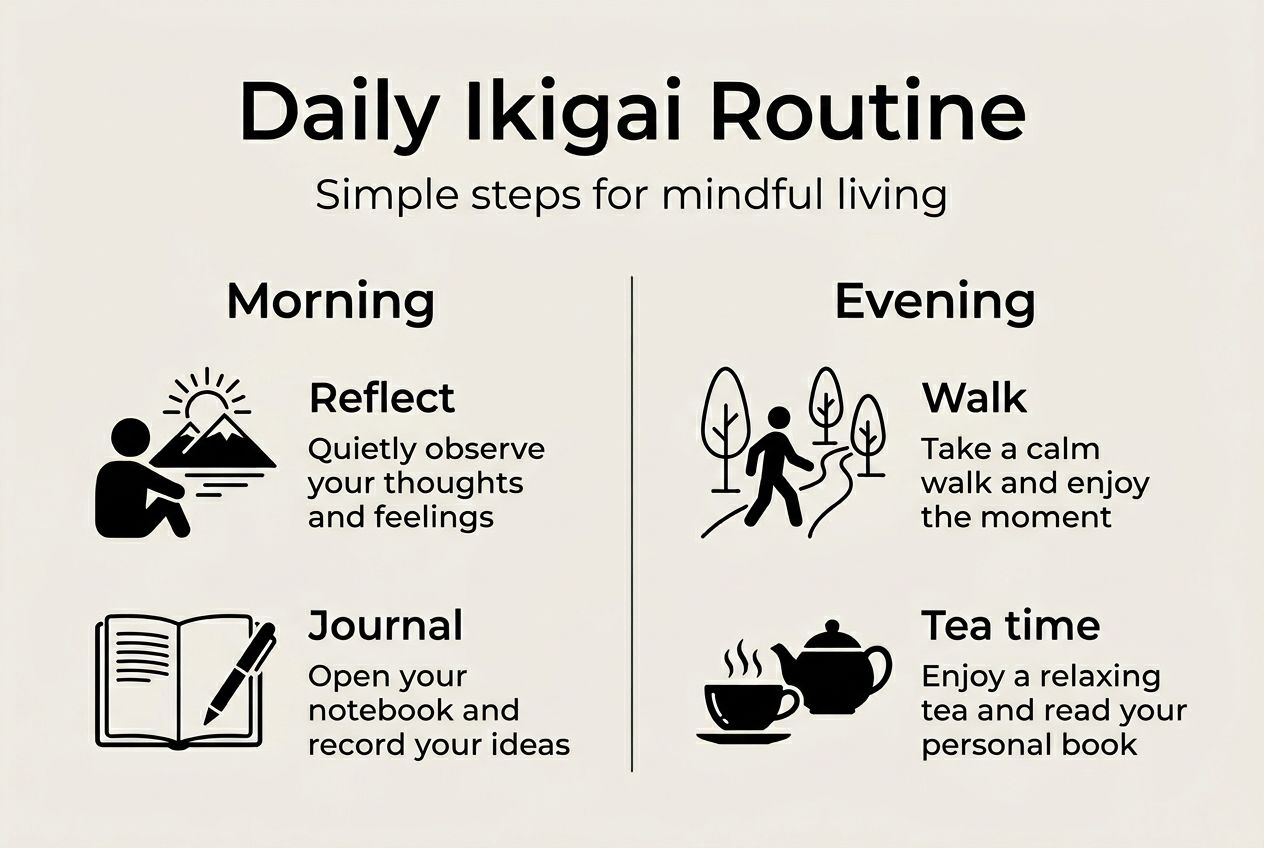
Pro Tip: Track your energy levels throughout the day for one week, noting which activities energize versus deplete you. This data reveals where to invest more time and what to minimize, creating a personalized roadmap for your Ikigai journey.
Verifying progress and overcoming common challenges
Measuring self-discovery progress differs from tracking conventional goals. You’re not aiming for specific metrics like income increases or weight loss. Instead, you’re noticing subtle shifts in how you experience daily life. Authentic progress shows up as increased engagement with ordinary moments, deeper satisfaction with simple pleasures, and greater resilience during difficulties.
Track these indicators suggesting your Ikigai practice is working:
- You find yourself more present during routine activities rather than mentally elsewhere
- Small setbacks don’t derail your entire emotional state as easily
- You feel genuinely excited about parts of your typical day
- Decision making becomes clearer as your values crystallize
- You experience more frequent moments of contentment without needing external stimulation
Ikigai significantly predicts increased engagement and wellbeing, which serve as reliable progress indicators. If you’re not noticing these shifts after several weeks of consistent practice, reassess your approach rather than abandoning the philosophy entirely.
Common challenges derail even committed practitioners. The first obstacle is misunderstanding Ikigai as a career-finding tool rather than a life-appreciation practice. If you’re primarily focused on discovering your perfect job title, you’ve missed the point. Refocus on daily joys unrelated to professional identity. Your work might eventually align with your Ikigai, but that’s a byproduct, not the goal.
Another frequent problem is neglecting small pleasures while chasing bigger purposes. You might convince yourself that your Ikigai must be something impressive or socially valuable. This thinking pattern reflects Western achievement orientation rather than authentic Japanese philosophy. Your Ikigai might be as simple as caring for houseplants or perfecting homemade bread. These activities hold equal validity to more conventionally impressive pursuits.
Overcome these hurdles through specific steps:
-
Reassess your expectations by reviewing what Ikigai actually means versus what you hoped it would provide. Adjust your practice to align with authentic principles rather than Western interpretations.
-
Reconnect with simple pleasures by dedicating one week to noticing small joys without judgment. Don’t evaluate whether these activities are important enough; just notice what genuinely delights you.
-
Seek community support through online forums, local meetups, or even one trusted friend interested in meaningful living. External perspectives help identify blind spots in your practice.
-
Maintain patience by remembering that authentic self-discovery unfolds gradually over months and years, not weeks. Cultural pressure for quick results conflicts with Ikigai’s nature as a lifelong practice.
Some people struggle with guilt about prioritizing personal joy when world problems demand attention. This reflects a false dichotomy. Cultivating your own wellbeing through Ikigai practices actually increases your capacity to contribute meaningfully to others. You can’t pour from an empty cup, as the saying goes. Understanding how to apply ikigai at work helps integrate personal practice with professional contribution.
If progress stalls completely despite consistent effort, consider whether you’re being truly honest in your reflections. Self-deception is the biggest obstacle to authentic self-discovery. You might be recording what you think your Ikigai should be rather than what actually brings you joy. Brutal honesty, even when it reveals uncomfortable truths about your current life choices, is essential for meaningful progress.
Discover personalized ikigai tools and resources
You’ve learned the foundations of authentic Ikigai practice and how to apply them daily. Taking your journey deeper requires personalized guidance tailored to your unique personality and circumstances. Ikigain offers specialized tools designed to accelerate your self-discovery while honoring the philosophy’s Japanese roots.

Explore ikigai personality types to understand how your unique temperament shapes your path to purpose. Different personality patterns experience and express Ikigai in distinct ways. Knowing your type helps you choose practices and activities aligned with your natural strengths rather than fighting against your inherent tendencies.
Take the ikigai type test to receive personalized insights based on your values, passions, and life priorities. This assessment goes beyond generic advice to provide specific recommendations for your situation. You’ll discover which daily practices will resonate most strongly with your personality and which common obstacles you’re likely to encounter based on your type.
Use ikigai self-discovery cards for ongoing reflection and deeper exploration of your purpose. These thoughtfully designed prompts prevent your practice from becoming stale by introducing fresh perspectives regularly. The physical cards create ritual around your reflection time, making the practice feel more intentional and meaningful.
FAQ
What is the main difference between Japanese and Western interpretations of Ikigai?
Japanese Ikigai focuses on everyday small pleasures and the emotional experience of life’s worth, not career success or grand purposes. Western interpretations, particularly the Venn diagram model, incorrectly center professional achievement and external validation. Authentic Ikigai emerges from activities like gardening or tea preparation, not from finding the perfect job title.
How can sustainable living be integrated into Ikigai practices?
Sustainable living aligns naturally with Ikigai by emphasizing mindful consumption and connection to daily activities. Growing your own food, composting, choosing walking over driving, and repairing items rather than replacing them all create opportunities for meaningful engagement. These practices combine environmental responsibility with the joy of hands-on participation in your daily life.
What are simple daily activities to experience Ikigai?
Authentic Ikigai activities include preparing and savoring tea mindfully, tending to plants, taking regular walks in nature, creating handmade objects, and sharing meals with loved ones. The key is full presence and appreciation during the activity rather than rushing through it. Even washing dishes can become Ikigai when approached with attention and care.
How long does it typically take to feel the effects of practicing Ikigai?
Most people notice subtle shifts in life satisfaction and present-moment awareness within three to four weeks of consistent daily practice. Deeper transformation unfolds over several months as new patterns become habitual. Remember that Ikigai is a lifelong practice, not a destination, so benefits continue accumulating over years.
Can Ikigai help reduce anxiety and improve mental wellbeing?
Yes, Ikigai practices significantly improve mental wellbeing by shifting attention from worries about the future to appreciation of the present moment. The philosophy’s emphasis on small daily joys provides accessible anchors during anxious periods. Regular practice builds resilience and helps maintain emotional stability even during challenging life circumstances.