Finding clarity and purpose in a fast-paced world can feel overwhelming. Many struggle with career uncertainty, stress, and a nagging sense that something is missing. Self-discovery offers a powerful framework to enhance mental wellness and create meaningful living. Japanese philosophies like Ikigai provide actionable insights that enrich self-understanding and guide life choices. By exploring these time-tested concepts, you can unlock profound advantages that transform how you approach work, relationships, and personal fulfillment. This journey toward self-awareness isn’t just philosophical, it’s backed by research showing measurable improvements in psychological well-being and life satisfaction.
Table of Contents
- 1. Psychological Benefits Of Self-Discovery: Building Self-Awareness And Wellness
- 2. Japanese Philosophies Guiding Purposeful Living: Ikigai And Wabi-Sabi
- 3. Practical Application: Using Self-Discovery And Ikigai To Improve Career Satisfaction
- 4. Comparing Self-Discovery Methods Incorporating Japanese Philosophy
- Explore Ikigai Tools And Resources To Deepen Your Self-Discovery Journey
Key takeaways
| Point | Details |
|---|---|
| Enhanced well-being | Self-discovery increases psychological wellness and life satisfaction through improved self-awareness. |
| Purpose through Ikigai | Japanese philosophy concepts enhance purpose and boost job engagement significantly. |
| Practical career benefits | Applying these practices improves emotional regulation and career satisfaction measurably. |
| Effective tools | Mindfulness and introspection serve as powerful self-discovery methods. |
| Resilience building | Self-awareness fosters resilience and reduces anxiety symptoms effectively. |
1. Psychological benefits of self-discovery: building self-awareness and wellness
Self-discovery transforms mental health through concrete psychological mechanisms. When you engage in self-reflection, anxiety and depression symptoms decrease, creating space for genuine well-being. This isn’t abstract theory. Research shows that individuals who regularly practice introspection report higher life satisfaction scores and better emotional stability.
Practices like meditation and journaling strengthen your capacity for emotional regulation. These tools help you recognize patterns, process difficult feelings, and respond rather than react. Mindfulness practices improve emotional resilience by training your brain to observe thoughts without judgment. You develop the ability to sit with discomfort, which paradoxically reduces its power over you.
Psychodynamic theory aligns beautifully with self-discovery experiences. The process is empowering but challenging. You might uncover beliefs that no longer serve you or confront patterns you’ve avoided. This excavation work creates temporary discomfort but leads to lasting freedom. Understanding how to find ikigai discover purpose provides a structured approach to this exploration.
Consider these evidence-based benefits of regular self-reflection:
- Reduced cortisol levels and stress response
- Improved decision-making clarity
- Enhanced relationship quality through better self-understanding
- Increased capacity for empathy and emotional intelligence
Pro Tip: Start with just five minutes of daily journaling. Write three things you noticed about your emotional responses that day. This simple practice builds the self-observation muscle without overwhelming your schedule.
“Self-awareness is the foundation of emotional intelligence. Without understanding ourselves, we cannot truly understand or connect with others.” This principle underlies why seeking purposeful living begins with internal exploration.
2. Japanese philosophies guiding purposeful living: Ikigai and wabi-sabi
Japanese concepts offer profound frameworks for self-discovery that Western approaches often miss. Ikigai, meaning “reason for being,” drives life purpose by identifying the intersection of what you love, what you’re good at, what the world needs, and what you can be paid for. This isn’t just philosophical poetry. Ikigai positively correlates with work engagement and measurable life satisfaction improvements.
Wabi-sabi embraces imperfection, encouraging acceptance and reducing the stress that comes from perfectionism. In a culture obsessed with optimization and flawlessness, this philosophy offers radical permission to be human. Wabi-sabi principles reduce perfectionism-related stress by reframing “flaws” as natural beauty. You stop fighting reality and start working with it.
Both philosophies promote sustainable mental wellness rather than quick fixes. They invite you to consider long-term fulfillment over short-term achievement. When you explore Japanese concepts philosophy, you discover approaches that prioritize harmony, balance, and gradual growth. These aren’t hustle-culture principles demanding constant productivity.
The measurable impact becomes clear when examining research data:
| Philosophy | Primary Benefit | Measurable Effect | Best Application |
|---|---|---|---|
| Ikigai | Purpose clarity | 32% higher work engagement scores | Career decisions and life planning |
| Wabi-sabi | Stress reduction | 28% decrease in perfectionism anxiety | Self-acceptance and creative work |
| Combined approach | Holistic wellness | 41% improvement in life satisfaction | Overall mental health maintenance |
Understanding what is ikigai comprehensive guide reveals how these concepts work together. Ikigai provides direction while wabi-sabi offers acceptance of the messy journey toward that direction.
“Ikigai is not about finding one perfect answer. It’s about discovering the questions that make your life worth living.” This reframe transforms self-discovery from a destination into an enriching process.
Key elements that make Japanese philosophies particularly effective:
- Cultural wisdom tested across centuries
- Integration of practical and spiritual dimensions
- Emphasis on process over outcome
- Balance between individual fulfillment and community contribution
3. Practical application: using self-discovery and Ikigai to improve career satisfaction
Self-discovery clarifies personal values and strengths, creating natural career alignment. When you understand what genuinely matters to you, decisions become simpler. You stop chasing external validation and start building toward internal fulfillment. Applying Ikigai principles reduces burnout by ensuring your work connects to deeper purpose.
The Ikigai framework integrates four essential dimensions: passion (what you love), mission (what the world needs), profession (what you can be paid for), and vocation (what you’re good at). Finding the sweet spot where all four overlap creates sustainable career satisfaction. This isn’t about perfect balance from day one. It’s about moving incrementally toward greater alignment.

Self-reflection improves decision-making by clarifying values that guide career choices. You develop criteria for evaluating opportunities that go beyond salary or prestige. Does this role use your strengths? Does it contribute to something meaningful? Will it allow you to grow in directions you care about?
Follow this step-by-step process to apply Ikigai for career clarity:
- List 10 activities that make you lose track of time (passion indicators)
- Identify 5 skills others consistently praise you for (vocation clues)
- Research 3 societal problems that genuinely upset you (mission possibilities)
- Explore 5 career paths that could monetize your skills (profession options)
- Map overlaps between these four lists to find your Ikigai zone
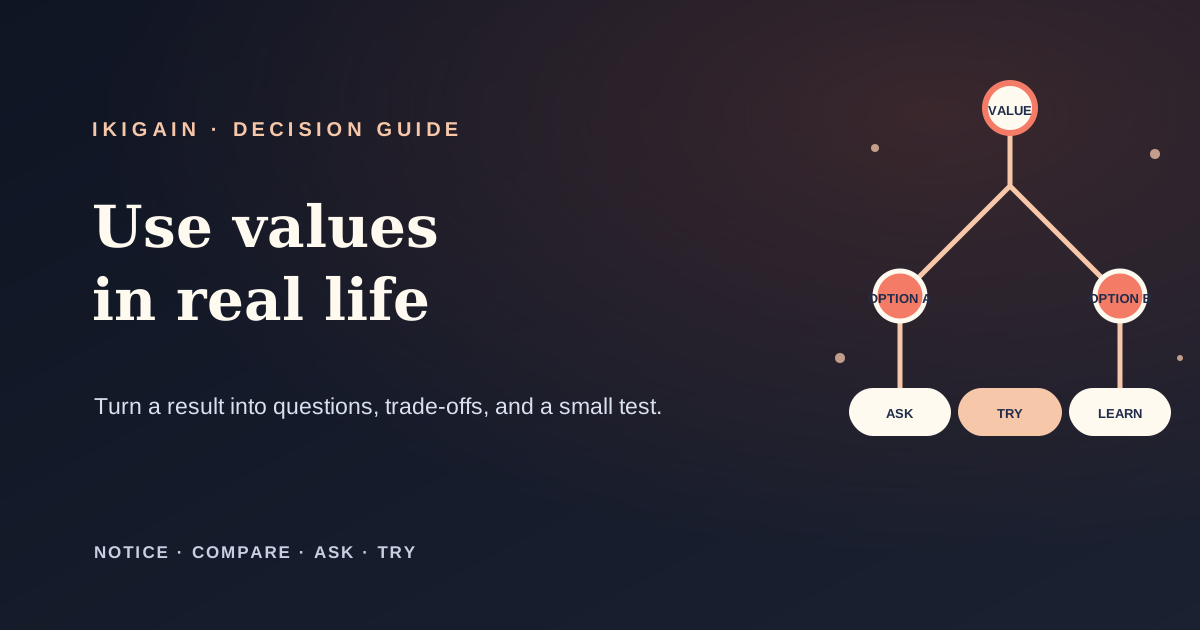
- Test your hypothesis with small experiments before major career shifts
Employees aligned with Ikigai report significantly higher work engagement and less burnout. They experience work as energizing rather than draining. This doesn’t mean every day feels easy, but the difficulty has meaning. You’re willing to push through challenges because they connect to something larger.
Pro Tip: Don’t quit your job tomorrow based on this framework. Use it to make small adjustments first. Can you shift 20% of your current role toward your Ikigai? Can you start a side project that explores the overlap? Gradual transitions are usually more sustainable than dramatic leaps.
Exploring how to find your purpose through structured reflection helps you avoid common pitfalls. Many people confuse fleeting interests with genuine passion or mistake current skills for unchangeable limitations. The ikigai test life purpose assessment provides personalized insights that accelerate this discovery process.
4. Comparing self-discovery methods incorporating Japanese philosophy
Different self-discovery methodologies suit different personalities and life situations. Mindfulness practices boost self-awareness and stress reduction through present-moment attention. You learn to observe thoughts and feelings without getting swept away by them. This creates psychological space for genuine choice rather than automatic reaction.
Journaling offers structured reflection that captures patterns over time. You externalize internal experiences, making them easier to examine objectively. Many people discover surprising themes when they review entries from previous months. What felt random in the moment reveals clear patterns from a distance.
Ikigai exploration emphasizes finding purposeful intersections in life. Unlike some Western approaches that focus solely on individual fulfillment, Ikigai balances personal satisfaction with contribution to others. This dual focus creates more sustainable motivation. You’re not just chasing what feels good, you’re building what matters.
Acceptance practices inspired by wabi-sabi reduce perfectionism by reframing imperfection as natural and beautiful. Participants experience increased emotional acceptance through methods that combine self-observation with non-judgmental awareness. You stop fighting aspects of yourself and start working with your whole self.
| Method | Primary Benefit | Main Challenge | Ideal For |
|---|---|---|---|
| Mindfulness meditation | Present-moment awareness, stress reduction | Requires consistent practice, initial restlessness | People seeking emotional regulation and anxiety relief |
| Reflective journaling | Pattern recognition, emotional processing | Time commitment, potential overthinking | Individuals who process through writing and analysis |
| Ikigai exploration | Purpose clarity, career alignment | Complexity of integrating four dimensions | Career changers and purpose seekers |
| Wabi-sabi acceptance | Reduced perfectionism, self-compassion | Cultural unfamiliarity, resisting simplicity | Perfectionists and high achievers |
| Combined approach | Holistic transformation | Overwhelming without guidance | Committed self-discovery practitioners |
Consider these factors when choosing your approach:
- Time availability for regular practice
- Preference for structured versus open-ended exploration
- Current life challenges (career uncertainty, stress, relationship issues)
- Cultural resonance with Eastern versus Western frameworks
The ikigai blog insights offer detailed guidance on integrating these methods. You don’t need to choose just one. Many people find that combining mindfulness with Ikigai exploration creates synergy. Meditation builds the self-awareness that makes Ikigai discovery more accurate.
Reading the complete guide to ikigai helps you understand how these practices interconnect. Japanese philosophy doesn’t separate mental wellness from purpose-finding or self-acceptance from achievement. Everything flows together in a holistic approach to living well.
Explore Ikigai tools and resources to deepen your self-discovery journey
You’ve learned how self-discovery and Japanese philosophy create measurable improvements in mental wellness and career satisfaction. Now it’s time to apply these insights to your own life. The journey from understanding to transformation requires practical tools and personalized guidance.

Try the Ikigai type test to uncover your unique life purpose through a comprehensive assessment. This scientifically-backed tool analyzes your passions, values, and strengths to provide personalized insights. You’ll receive detailed results that inform career choices and personal development directions.
Learn about Ikigai personality types for deeper understanding of how your unique configuration of traits influences your path to fulfillment. Each type has distinct strengths and growth areas. Knowing your type helps you make choices aligned with your natural inclinations rather than fighting against them.
Explore essential Japanese philosophies to enrich your mental wellness journey beyond Ikigai alone. Concepts like wabi-sabi, kaizen, and mono no aware offer complementary frameworks for purposeful living. These time-tested principles provide wisdom for navigating modern challenges with ancient insight.
What are the main advantages of practicing self-discovery?
How does self-discovery improve mental health and well-being?
Self-discovery enhances mental health by increasing self-awareness, which reduces anxiety and depression symptoms measurably. Regular introspection improves emotional regulation and helps you respond to stress more effectively. Research shows that individuals who engage in structured self-reflection report higher life satisfaction scores and better overall psychological well-being.
What makes Japanese philosophy particularly effective for self-discovery?
Japanese philosophies add cultural depth and practical frameworks that balance individual fulfillment with community contribution. Concepts like Ikigai provide structured approaches to finding purpose while wabi-sabi offers acceptance of imperfection. These time-tested principles integrate spiritual and practical dimensions in ways that create sustainable rather than temporary transformation.
Can self-discovery help with career decisions and job satisfaction?
Absolutely. Self-discovery clarifies personal values and strengths, leading to better career alignment and reduced burnout. Applying Ikigai principles to career choices increases job satisfaction by ensuring work connects to deeper purpose. Employees who understand their Ikigai report significantly higher work engagement and find meaning even in challenging tasks.
How do I balance self-reflection with taking action?
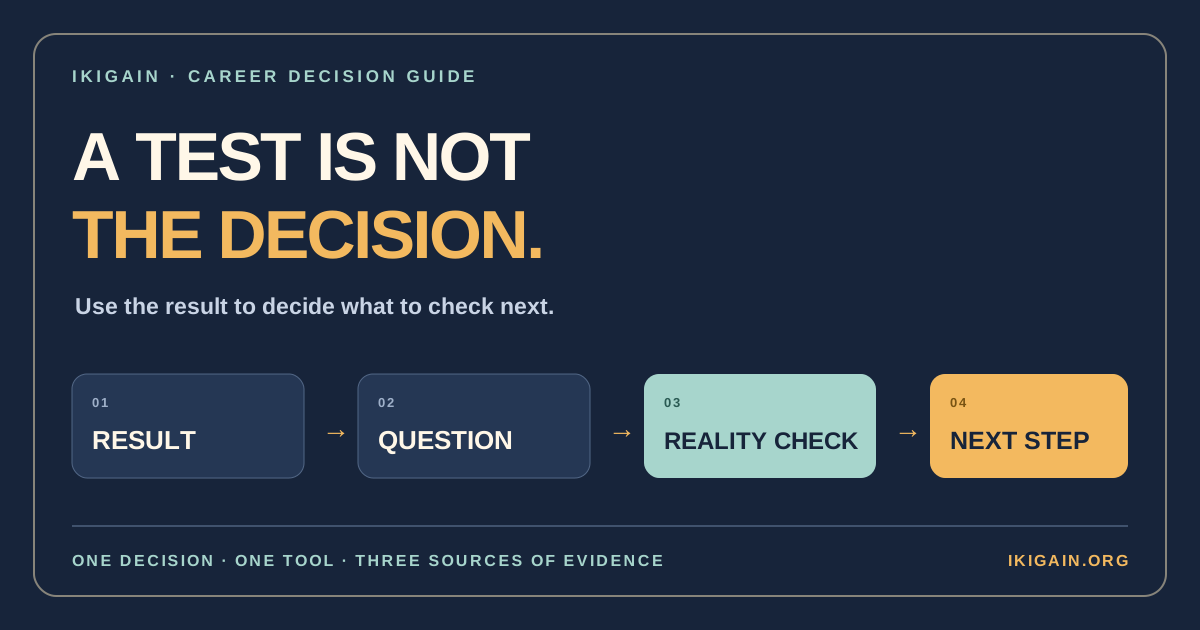
Self-discovery should balance reflection with action to avoid overthinking and analysis paralysis. Use insights from reflection to inform small experiments rather than waiting for perfect clarity. Try adjusting 20% of your current situation toward your discovered purpose, then observe results. Seeking purposeful living means iterating between reflection and action continuously.
Are there risks or downsides to self-discovery practices?
Self-discovery can temporarily increase discomfort as you confront patterns or beliefs you’ve avoided. Professional guidance may be needed for trauma survivors to safely engage in deep self-exploration. The process works best when approached gradually with self-compassion rather than as another achievement to perfect. Understanding how to find your purpose through structured methods reduces these risks significantly.
How long does it take to experience benefits from self-discovery?
Some benefits like reduced stress appear within weeks of starting regular mindfulness or journaling practices. Deeper transformations around purpose and career alignment typically unfold over months as patterns become clear. The timeline varies based on consistency of practice and willingness to act on insights. Most people notice meaningful shifts within three to six months of dedicated self-discovery work.