TL;DR:
- Feeling lost in your 30s is common and signals growth, not failure.
- Core roots include identity exploration, self-efficacy, and purpose.
- Practical tools like Ikigai, mindfulness, and social support aid in self-discovery.
You’re in your 30s, and somewhere between the career milestones, relationship decisions, and social media highlight reels, a quiet panic sets in: Why don’t I feel settled yet? Here’s the thing — you’re not behind, and you’re definitely not broken. Quarter-life crisis affects 40-77% of emerging adults across multiple countries. This guide walks you through the psychology behind feeling lost, the root causes worth addressing, and practical frameworks like Ikigai that can move you from confusion to genuine clarity.
Table of Contents
- Why feeling lost in your 30s is normal
- Understanding the root causes: identity, purpose, and self-efficacy
- The role of spiritual well-being and social support
- Practical tools for self-discovery and personal growth
- A fresh perspective on feeling lost in your 30s
- Ready to find your purpose? Discover practical tools
- Frequently asked questions
Key Takeaways
| Point | Details |
|---|---|
| Most people feel lost | Up to 77 percent of young adults experience a quarter-life crisis of uncertainty. |
| Inner growth is key | Identity exploration, self-efficacy, and spiritual well-being help move you from confusion toward fulfillment. |
| Community matters | Building social support networks makes navigating uncertainty much easier and more effective. |
| Practical tools exist | Self-reflection frameworks like Ikigai and journaling can guide you to your unique path. |
Why feeling lost in your 30s is normal
Let’s start with a term you may have heard: the quarter-life crisis. It’s not a buzzword. It’s a recognized period of psychological uncertainty that typically hits between your mid-20s and mid-30s, marked by questioning your career path, relationships, identity, and overall direction. And it’s far more widespread than most people admit out loud.
Research shows that 40-77% of young adults across eight countries experience this crisis, with the range varying depending on cultural context and how the crisis is measured. That means in a room of ten people your age, up to eight of them are quietly wrestling with the same doubts you are.
“Feeling lost isn’t a sign that something is wrong with you. It’s often a signal that you’re growing beyond a version of yourself that no longer fits.”
Here’s what typically triggers this feeling:
- Career dissatisfaction: You’ve hit a professional milestone but feel hollow about it
- Relationship uncertainty: Wondering if your current path, romantic or social, truly aligns with who you’re becoming
- Identity shifts: The person you were at 22 doesn’t match who you are now, and that gap feels disorienting
- Social comparison: Watching peers appear to “have it together” amplifies your own doubts
- Societal pressure: The unspoken rule that your 30s should look a certain way
One important note: studies show no significant gender differences in who experiences this crisis. It cuts across men, women, and non-binary individuals equally. So this isn’t about your choices being worse than someone else’s. It’s about being human at a particular stage of life.
| Trigger | % of people affected |
|---|---|
| Career dissatisfaction | Among the most common |
| Relationship uncertainty | Frequently reported |
| Identity confusion | Widely documented |
| Social comparison | Amplified by social media |
Exploring life purpose examples from others in similar situations can help you see that confusion at this stage is actually a launchpad, not a dead end.
Understanding the root causes: identity, purpose, and self-efficacy
Feeling lost on the surface often looks like a career problem or a relationship problem. But dig a little deeper and you’ll usually find three interconnected roots: identity exploration, self-efficacy, and purpose.
Identity exploration means actively questioning who you are and what you value, rather than defaulting to the roles others assigned to you. Self-efficacy is your belief in your own ability to take action and create change. Research confirms positive correlations between identity exploration, self-efficacy, and spiritual well-being during periods of quarter-life crisis, meaning that when you actively explore your identity, your confidence and sense of meaning tend to rise together.
Here’s a simple comparison of approaches people take:
| Approach | What it looks like | Long-term result |
|---|---|---|
| Surface-level fix | Job-hopping, new hobbies, constant busyness | Temporary relief, same emptiness returns |
| Root-cause approach | Identity work, value clarification, self-reflection | Lasting direction and self-trust |
The root-cause path is slower. But it actually works. Here’s how to start:
- Name your values. Write down five things that matter most to you right now, not five years ago.
- Audit your energy. Notice which activities leave you feeling drained versus alive.
- Question inherited goals. Ask yourself which of your current ambitions were chosen by you versus handed to you by family or culture.
- Practice small bets. Try low-stakes experiments in areas that interest you before making big commitments.
Pro Tip: When finding life direction feels overwhelming, narrow your focus to just one question: “What would I do more of if I wasn’t afraid of failing?” That single answer often reveals more than months of overthinking.
Uncertainty, when approached with curiosity rather than fear, becomes a genuine launchpad. Tools like ikigai life answers can help you structure that curiosity into something actionable.
The role of spiritual well-being and social support
Here’s where things get interesting. Most self-help advice focuses on productivity systems or mindset hacks. But research points to something deeper: spiritual well-being plays a central role in how well people navigate a quarter-life crisis.
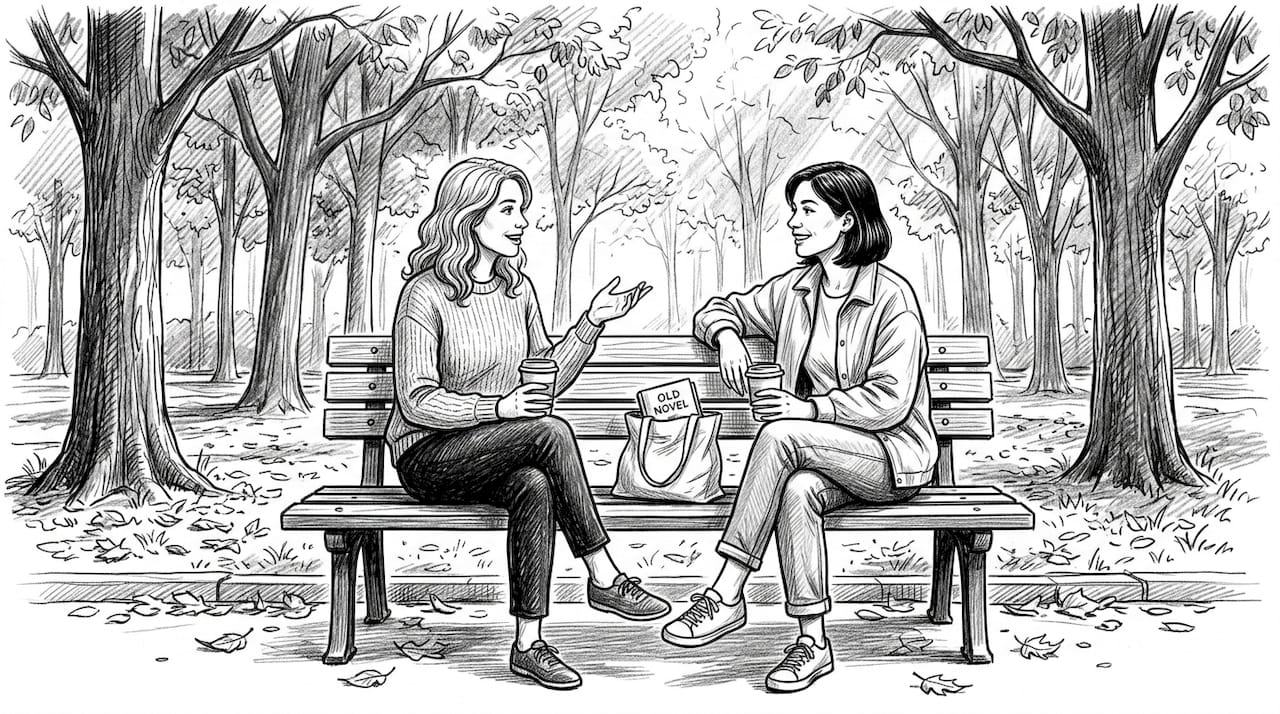
Spiritual well-being doesn’t mean religion, though it can include that. It means having a sense of meaning, connection to something larger than yourself, and inner peace. Think of it as your internal compass.
Studies show that spiritual well-being mediates outcomes between emotion regulation, social support, and quality of life during a quarter-life crisis. In plain terms: people who nurture their inner life bounce back faster and feel more grounded.
“Your inner life isn’t a luxury. It’s the foundation everything else is built on.”
Here are evidence-based actions that support spiritual well-being:
- Mindfulness practices: Even 10 minutes of daily stillness can improve emotional regulation
- Gratitude journaling: Shifts your brain’s attention from what’s missing to what’s present
- Community connection: Belonging to a group with shared values reduces isolation dramatically
- Nature exposure: Regular time outdoors lowers cortisol and improves perspective
- Purposeful reflection: Asking “what matters to me today” rather than “what should I be doing”
Social support matters just as much. Isolation amplifies confusion. When you’re surrounded by people who reflect your values back to you, clarity comes faster. This is why practices rooted in ikigai mindfulness emphasize community alongside personal reflection.
Pro Tip: Don’t wait until you feel ready to reach out. Connection is a tool, not a reward. Start with one honest conversation this week about how you’re actually feeling.
Ignoring your inner life while chasing external solutions is one of the most common mistakes people make. Explore purposeful living principles to understand how these pieces fit together.
Practical tools for self-discovery and personal growth
Understanding the psychology is useful. But you also need a framework you can actually use. This is where Ikigai comes in, and it’s more structured than most people realize.
Ikigai is a Japanese concept that translates roughly to “reason for being.” It’s built around four overlapping circles:
- What you love (your passions and interests)
- What you’re good at (your skills and strengths)
- What the world needs (problems you can solve for others)
- What you can be paid for (sustainable livelihood)
Your Ikigai sits at the intersection of all four. Most people are strong in one or two circles and weak in others. The work is figuring out which circles need attention.
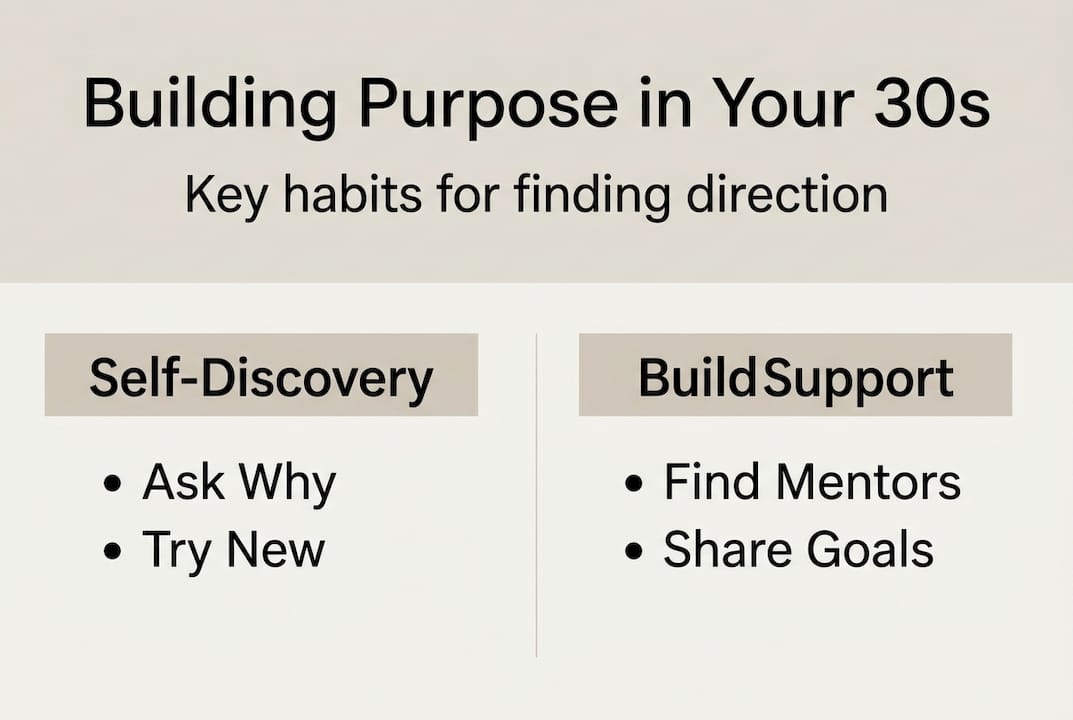
Research backs this up: identity exploration and self-efficacy correlate directly with positive personal change, which is exactly what the Ikigai framework encourages.
Here’s a simple self-discovery routine to start with:
- Morning pages: Write three pages of unfiltered thoughts each morning. No editing, no judgment.
- Weekly review: Every Sunday, ask: “What felt meaningful this week? What felt forced?”
- Ikigai mapping: Draw the four circles and spend 20 minutes filling each one honestly.
- Strength inventory: List 10 things people have thanked you for or complimented you on in the past year.
- Values ranking: From a list of 20 values, pick your top five and notice where your life currently honors or ignores them.
Some helpful tools to support this process:
- Personality assessments that map your strengths
- Guided journaling prompts focused on purpose
- Coaching conversations or peer accountability groups
- Reading about ikigai tips from people who’ve applied the framework
One pitfall to avoid: expecting overnight clarity. Purpose rarely arrives as a single lightning bolt. It builds gradually through consistent reflection and small, brave actions. Progress is the point, not perfection.
A fresh perspective on feeling lost in your 30s
Here’s an uncomfortable truth most articles won’t say directly: the idea that you should have it all figured out by your 30s is a myth we collectively agreed to believe. It’s not based on psychology. It’s not based on how humans actually develop. It’s based on outdated cultural scripts that were written before people lived as long, changed careers as often, or had as many choices as they do today.
We’d argue that feeling lost in your 30s isn’t a failure. It’s a sign of intellectual honesty. You’re no longer willing to perform a life that doesn’t fit. That takes courage, even when it feels like confusion.
Curiosity is a far more powerful compass than certainty. Certainty closes doors. Curiosity opens them. The people who navigate this period best aren’t the ones who found the perfect answer fastest. They’re the ones who stayed genuinely interested in the question.
Redirecting your anxiety into active self-exploration, rather than waiting for clarity to arrive, is the real move. Explore principles for self-discovery and treat this period not as a crisis to escape, but as an invitation to finally build a life that’s actually yours.
Ready to find your purpose? Discover practical tools
If this article resonated with you, the next step isn’t more reading. It’s taking action with tools designed specifically for this kind of self-discovery. Ikigain.org offers a structured Ikigai Test that maps your passions, strengths, and values against the four-circle model, giving you a personalized starting point rather than a generic list of tips.

You can also explore life purpose questions designed to surface insights you haven’t considered yet, or browse Japanese concepts that offer a culturally grounded lens on meaning and fulfillment. These aren’t quick fixes. They’re real tools built for people ready to do the work. If you’re at that point, the resources are waiting for you.
Frequently asked questions
Is it normal to feel lost or uncertain in your 30s?
Yes, 40-77% of young adults face a quarter-life crisis, so feeling uncertain in your 30s is far more common than most people admit.
What are the signs that you might be experiencing a quarter-life crisis?
Common signs include persistent doubt about your career or relationships, anxiety about the future, and a growing sense that your current path no longer fits who you’re becoming.
How can I start finding my direction or purpose?
Begin with daily journaling, map your Ikigai using the four-circle model, and build connections with people who reflect your values, since identity exploration and self-efficacy are directly linked to personal growth.
Does building spiritual well-being really help overcome feeling lost?
Yes, research confirms that spiritual well-being mediates better outcomes in quality of life during a quarter-life crisis, making it a core part of finding direction.
Recommended
- What Should I Do With My Life? A Science-Backed Framework | Ikigain | Ikigain
- Step-by-step purpose discovery: A Japanese-inspired guide | Ikigain
- Why Discover Your Purpose: Unlocking Fulfillment
- 7 Principles of Purposeful Living for Modern Self-Discovery
- Self-improvement routines for men: Build discipline fast
- Inspiration - Candymindset – Dein Weg zu persönlichem Wachstum & Erfolg