Modern mindfulness advice often feels scattered, leaving you uncertain which approach actually works. Japanese mindfulness offers a unique solution by integrating purpose, presence, and acceptance into one coherent system. This article explores the cultural foundations of Japanese mindfulness and reveals how practices like Ikigai, Zen meditation, and Wabi-Sabi can deliver measurable mental wellness benefits, including a 25% boost in psychological well-being.
Table of Contents
- Understanding Japanese Mindfulness: Historical And Cultural Foundations
- Core Practices Of Japanese Mindfulness
- Role Of Ikigai In Japanese Mindfulness And Mental Wellness
- Concepts Embedded In Japanese Mindfulness: Wabi-Sabi And Acceptance
- Comparison With Western Mindfulness Practices
- Common Misconceptions About Japanese Mindfulness
- Practical Applications Of Japanese Mindfulness
- Explore Ikigai And Transform Your Mindfulness Journey
- Frequently Asked Questions About Japanese Mindfulness
Key takeaways
| Point | Details |
|---|---|
| Integrated approach | Japanese mindfulness combines Ikigai, Zen Buddhism, and Wabi-Sabi for balanced mental wellness. |
| Purpose enhances longevity | Ikigai reduces mortality risk by 10-15% and boosts psychological well-being by 25%. |
| Meditation benefits | Zen meditation (Zazen) improves emotional regulation and reduces anxiety significantly. |
| Acceptance reduces anxiety | Wabi-Sabi acceptance practices lower perfectionism anxiety by 25%. |
| Traditional arts cultivate presence | Japanese arts like Ikebana and Sado promote present-moment focus through aesthetic engagement. |
Understanding Japanese mindfulness: historical and cultural foundations
Japanese mindfulness stands apart from other approaches by weaving together three core philosophies. First, Ikigai provides your reason for being and infuses daily life with purpose. Second, Zen Buddhism teaches presence through meditation and moment-to-moment awareness. Third, Wabi-Sabi embraces imperfection and impermanence, helping you accept life’s natural flow.
This integration creates a unique dual mindfulness approach that balances active engagement with passive acceptance. You pursue meaningful goals while simultaneously accepting what you cannot change. This balance prevents burnout and builds mental resilience that supports sustained well-being over decades.
The historical roots trace back centuries to Japanese Buddhist traditions and aesthetic philosophies. Unlike fragmented Western mindfulness that often isolates techniques, Japanese practices form an interconnected system. Each element reinforces the others, creating a comprehensive framework for mental wellness.
Key elements include:
- Purpose-driven living through Ikigai
- Meditation and presence cultivation via Zen practices
- Aesthetic appreciation in daily activities
- Acceptance of impermanence and imperfection
Pro Tip: Start by identifying one area where you can balance action with acceptance. Pursue career growth while accepting setbacks as natural parts of your journey.
This integrated tradition contrasts sharply with approaches that emphasize only present-moment awareness. The advantages of Japanese philosophy become clear when you see how purpose and acceptance work together to reduce stress and enhance life satisfaction.
Core practices of Japanese mindfulness
Zazen, or seated meditation, forms the foundation of Japanese mindfulness practice. You sit in stillness, observing thoughts without judgment for 20 to 40 minutes. Research shows regular Zazen meditation sessions significantly reduce anxiety and stress markers after eight weeks of consistent practice.
Traditional Japanese arts provide another pathway to mindfulness. Ikebana, the art of flower arranging, requires complete focus on form, color, and balance. Sado, the tea ceremony, transforms a simple beverage into a meditation on beauty and presence. Studies indicate engagement in traditional arts reduces stress biomarkers by 15% after three months of regular practice.
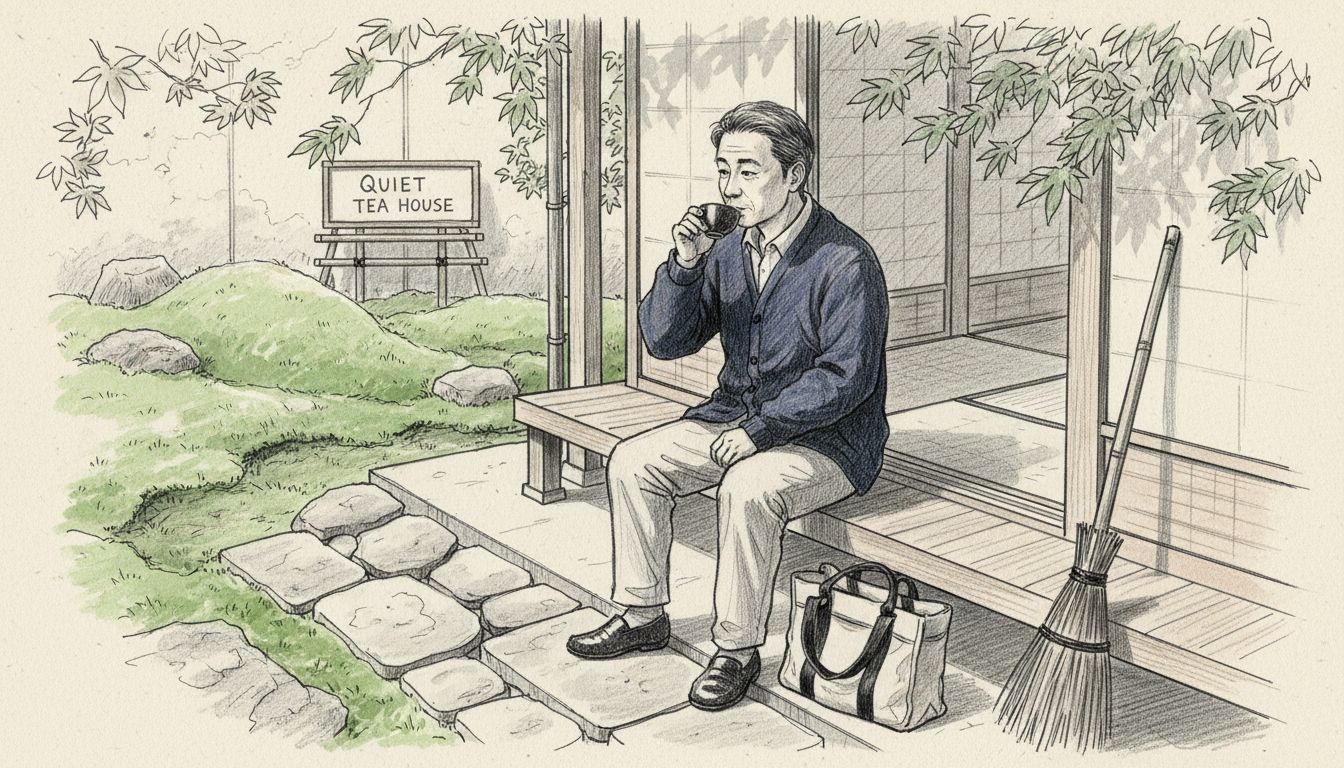
Micro-practices make Japanese mindfulness accessible for busy schedules. You can practice mindful tea drinking by noticing the cup’s warmth, the steam’s aroma, and each sip’s flavor. These small rituals embed presence and reflection into daily routines without requiring special equipment or training.
Core practices include:
- Zazen meditation for 20 to 40 minutes daily
- Mindful walking with attention to each step
- Traditional arts like calligraphy or pottery
- Tea ceremony or simplified tea rituals
- Reflection on daily Ikigai alignment
Pro Tip: Start with just five minutes of Zazen each morning. Consistency matters more than duration when building sustainable mindfulness habits.
Regular engagement in these practices supports emotional regulation and stress reduction. The mindfulness in Ikigai connection becomes apparent as you notice how present-moment awareness enhances your sense of purpose. Rather than treating mindfulness as separate from daily life, Japanese practices integrate awareness into everything you do.
Role of Ikigai in Japanese mindfulness and mental wellness
Ikigai means your reason for being, the intersection of what you love, what you’re good at, what the world needs, and what sustains you financially. This concept anchors Japanese mindfulness with clear life purpose and motivation. Unlike mindfulness approaches that focus solely on present awareness, Ikigai gives you a north star guiding your actions.
Scientific evidence supports Ikigai’s profound impact on longevity and mental health. Research demonstrates that Ikigai reduces mortality risk by 10-15% compared to individuals without a clear sense of purpose. This effect rivals the impact of major health interventions like blood pressure control or smoking cessation.
The mental wellness benefits extend beyond longevity. Studies show mindfulness practices integrated with purpose score 25% higher on psychological well-being scales than mindfulness without purpose integration. This boost reflects enhanced life satisfaction, reduced depression symptoms, and greater emotional resilience.
| Approach | Mortality Risk | Well-Being Score |
|---|---|---|
| Mindfulness with Ikigai | Baseline | 25% higher |
| Mindfulness without purpose | 10-15% higher | Baseline |
| No mindfulness practice | 15-20% higher | 30% lower |
This purpose integration differentiates Japanese mindfulness from Western approaches. While Western practices excel at reducing immediate stress through awareness techniques, they often lack the sustained motivation that comes from knowing why you practice. Ikigai provides that why, making your mindfulness journey personally meaningful.
The comprehensive Ikigai guide explains how to discover your unique purpose through reflection and exploration. Understanding your Ikigai transforms mindfulness from a stress management tool into a framework for building the life you genuinely want. The Ikigai benefits for well-being become apparent as you align daily actions with deeper values.
Concepts embedded in Japanese mindfulness: wabi-sabi and acceptance
Wabi-Sabi represents a cornerstone philosophy in Japanese aesthetics and mindfulness. This concept embraces beauty in imperfection, impermanence, and incompleteness. Rather than striving for flawless outcomes, Wabi-Sabi teaches you to appreciate the natural aging of materials, the asymmetry in design, and the transient nature of all experiences.
This acceptance directly counters perfectionism, a major source of modern anxiety. When you stop demanding perfect results from yourself, you reduce the chronic stress of falling short. Clinical research shows embracing imperfection through Wabi-Sabi reduces perfectionism anxiety by 25% in participants who practice acceptance techniques regularly.
The philosophy extends beyond aesthetics into daily mindset. You learn to accept that relationships change, careers evolve, and bodies age. This acceptance doesn’t mean resignation but rather realistic engagement with life’s natural cycles. You can pursue goals while simultaneously accepting that outcomes remain partially beyond your control.
Key Wabi-Sabi principles include:
- Finding beauty in weathered, aged objects
- Appreciating simplicity over complexity
- Accepting the impermanent nature of all things
- Valuing authenticity over artificial perfection
- Seeing cracks and repairs as part of an object’s story
Wabi-Sabi practices foster emotional resilience by teaching you to roll with life’s inevitable changes. When you expect imperfection, you’re less devastated by setbacks. This mindset helps balance the active pursuit of Ikigai with peaceful acceptance of circumstances you cannot change.
The advantages of Japanese philosophy become clear when you combine purposeful action with acceptance. You work toward meaningful goals without the crushing pressure of perfectionism. This balance supports sustained mental wellness by reducing the burnout that comes from relentless striving without acceptance of natural limitations.
Comparison with Western mindfulness practices
Japanese mindfulness emphasizes life purpose through Ikigai, acceptance of imperfection via Wabi-Sabi, and integration with traditional arts. These elements create a holistic system that addresses why you practice, not just how. The purpose component provides sustained motivation that carries you through difficult periods when meditation feels tedious or progress seems slow.
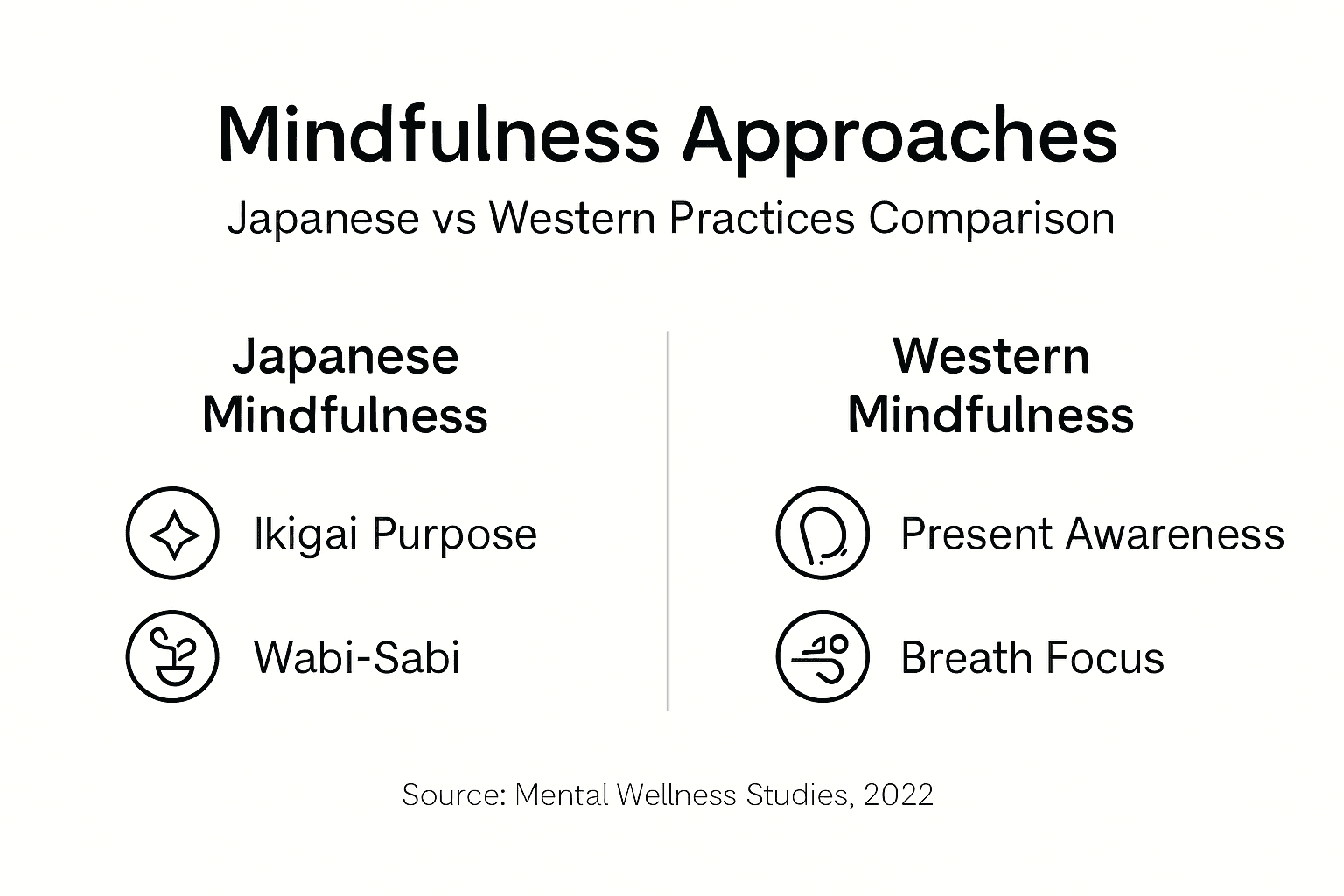
Western mindfulness typically focuses on present-moment awareness through techniques like body scans, breath focus, and mindful observation. These practices often originate from Buddhist meditation but are secularized for clinical settings. Western approaches excel at immediate stress reduction and have strong research support for treating anxiety and depression.
The cultural context differs significantly. Japanese mindfulness embeds practice within aesthetic traditions like tea ceremony, flower arranging, and calligraphy. These arts make mindfulness tangible and engaging. Western approaches tend toward psychological frameworks, treating mindfulness as a mental health intervention rather than a cultural practice.
| Aspect | Japanese Mindfulness | Western Mindfulness |
|---|---|---|
| Primary focus | Purpose, presence, acceptance | Present-moment awareness |
| Cultural basis | Zen Buddhism, traditional arts | Secularized Buddhist meditation |
| Key concepts | Ikigai, Wabi-Sabi, Zazen | MBSR, body scan, breath work |
| Application context | Daily life integration | Clinical/therapeutic settings |
| Balance | Active pursuit and passive acceptance | Primarily observation and awareness |
| Goal orientation | Purpose-driven living | Symptom reduction |
Both approaches offer valuable benefits. Western mindfulness provides accessible, evidence-based techniques that work in clinical settings. Japanese mindfulness offers cultural richness and purpose integration that can sustain practice over a lifetime. Understanding these differences helps you choose practices that match your needs and preferences.
The engagement style also varies. Japanese practices often involve physical activity through arts or tea ceremony, appealing to kinesthetic learners. Western practices emphasize stillness and internal observation, which some find easier to learn initially. Neither approach is superior, they simply serve different contexts and preferences effectively.
Common misconceptions about Japanese mindfulness
Many people mistakenly believe Japanese mindfulness consists only of Zen meditation. In reality, the system encompasses Ikigai for purpose, Wabi-Sabi for acceptance, traditional arts for presence, and daily micro-practices. Reducing Japanese mindfulness to meditation alone misses the integrated nature that makes it effective for sustained well-being.
-
Misconception: Japanese mindfulness seeks perfection. Reality: Wabi-Sabi explicitly values imperfection and impermanence as sources of beauty and wisdom. The practice teaches acceptance of flaws rather than their elimination.
-
Misconception: It only focuses on present-moment awareness. Reality: Japanese mindfulness uniquely couples present awareness with life purpose through Ikigai, providing both grounding and direction simultaneously.
-
Misconception: You must be Japanese or deeply understand Japanese culture to practice. Reality: While cultural context enriches practice, the core principles of purpose, presence, and acceptance translate across cultures effectively.
-
Misconception: Traditional arts like tea ceremony are merely aesthetic hobbies. Reality: These practices serve as mindfulness training that cultivates focus, patience, and appreciation for subtle details in everyday life.
-
Misconception: Japanese mindfulness requires hours of daily practice. Reality: Micro-practices like mindful tea drinking or brief Ikigai reflection integrate seamlessly into busy modern schedules.
Correcting these misconceptions prevents superficial or incomplete practice. Understanding the full scope of Japanese mindfulness helps you apply techniques appropriately and gain maximum benefit. The system works because elements reinforce each other, not because any single technique is magic.
Practical applications of Japanese mindfulness
You can integrate Japanese mindfulness into daily life through simple, accessible practices. Start each morning with five minutes reflecting on your Ikigai. Ask yourself how today’s activities connect to your deeper purpose. This brief check-in provides motivation and direction before the day’s demands take over.
Mindful tea drinking offers an easy entry point. Choose a quality tea and prepare it with full attention. Notice the water temperature, the leaves unfurling, the aroma rising. Sip slowly, experiencing each taste sensation. This five-minute ritual grounds you in the present moment without requiring special training or equipment.
Traditional arts provide deeper engagement for those ready to invest more time. Take a beginner’s class in Ikebana, calligraphy, or pottery. These practices train your attention while creating something beautiful. The process matters more than the product, teaching you to find satisfaction in the doing rather than only in outcomes.
Practical daily habits include:
- Morning Ikigai reflection for five minutes
- Mindful tea or coffee preparation and consumption
- Walking meditation during your commute
- Evening Wabi-Sabi practice by appreciating something imperfect
- Weekly engagement with a traditional art form
Pro Tip: Schedule your mindfulness practice at the same time daily. Consistency builds habits faster than sporadic intensive sessions.
Balance active purpose with passive acceptance throughout your day. Pursue work goals energetically while accepting that some factors remain beyond your control. Apply for the promotion and accept the outcome gracefully. This dual mindset reduces stress while maintaining motivation.
The advantages of Japanese philosophy manifest when practices become habitual. Small daily rituals compound over months and years into significant mental wellness improvements. You don’t need to overhaul your entire life. Start with one micro-practice and build from there as the benefits become apparent.
Explore Ikigai and transform your mindfulness journey
Ready to apply these Japanese mindfulness insights to your own life? Discovering your personal Ikigai provides the purpose foundation that enhances every mindfulness practice. Our comprehensive Ikigai test uses scientifically validated assessments to identify your unique intersection of passion, mission, vocation, and profession.

Thousands have used our platform to reduce anxiety and build more purposeful lives. Research shows Ikigai self-discovery for anxiety reduction delivers measurable mental wellness improvements within weeks. Understanding why take personality tests for self-discovery helps you approach the assessment with realistic expectations and openness.
Our tools integrate Japanese wisdom with modern psychology, giving you actionable insights for daily application. You’ll receive personalized guidance on aligning your activities with your deeper purpose. Join a community of individuals committed to meaningful living and sustained well-being through culturally informed mindfulness practices.
Frequently asked questions about Japanese mindfulness
What is the difference between Japanese and Western mindfulness?
Japanese mindfulness integrates life purpose through Ikigai, acceptance of imperfection via Wabi-Sabi, and traditional arts for presence cultivation. Western mindfulness emphasizes present-moment awareness and clinical applications for stress reduction. Japanese practices balance active pursuit with passive acceptance, while Western approaches focus primarily on observation and symptom management.
How does Ikigai improve mental wellness?
Ikigai provides a clear life purpose that anchors daily actions in meaningful direction. Research shows individuals with strong Ikigai experience 10 to 15% lower mortality risk and 25% higher psychological well-being scores. Purpose integration reduces depression, enhances resilience, and provides motivation that sustains mindfulness practice over decades.
Can I practice Japanese mindfulness without meditation experience?
Absolutely. Japanese mindfulness offers multiple entry points beyond seated meditation. Start with micro-practices like mindful tea drinking or daily Ikigai reflection. Engage with traditional arts like flower arranging that naturally cultivate presence. Build toward formal Zazen meditation as your comfort with stillness grows.
What are simple daily habits to start Japanese mindfulness?
Begin with five-minute morning Ikigai reflections connecting daily tasks to deeper purpose. Practice mindful preparation of your morning beverage, noticing sensations fully. Take a short mindful walk focusing on each step. Spend five minutes each evening appreciating something imperfect through Wabi-Sabi lens. These habits require no special equipment or training.
Does Japanese mindfulness require cultural knowledge to practice effectively?
While understanding cultural context enriches practice, the core principles of purpose, presence, and acceptance translate universally. You can benefit from Japanese mindfulness techniques without becoming an expert in Japanese culture. Start with fundamental practices and deepen cultural understanding gradually as your interest grows.