Feeling stuck between outside expectations and inner fulfillment is a common crossroads for people in their late twenties and thirties. The tension between high-achieving careers and the search for genuine meaning can leave you questioning what truly matters. The Japanese philosophy of ikigai offers more than a buzzword—it reveals how aligning passion, skill, and contribution brings lasting purpose. Explore proven insights that distinguish purpose from fleeting interests, and discover practical steps for creating a more intentional, purpose-driven life.
Table of Contents
Key Takeaways
| Point | Details |
| Purpose-Driven Life | A purpose-driven life aligns your daily actions with your core values and long-term vision, enhancing fulfillment and motivation. |
| Clarity and Action | Understanding what truly matters to you and taking small, concrete steps toward that vision leads to significant growth over time. |
| Ikigai Concept | The Japanese philosophy of ikigai emphasizes finding balance among what you love, what you’re skilled at, what the world needs, and what supports you financially. |
| Common Pitfalls | Avoid conflating passion with purpose, waiting for an epiphany, or succumbing to societal pressures; focus on authentic reflection and small, meaningful actions instead. |
What Is A Purpose Driven Life?
A purpose-driven life means organizing your days around what genuinely matters to you, not just chasing external markers of success. It’s the alignment between what you believe in, what you’re skilled at doing, and what the world actually needs from you. When your daily actions reflect your core values and long-term vision, you experience a different kind of energy. Work doesn’t feel like obligation. Challenges don’t feel like punishment. Even routine tasks carry weight because they’re connected to something larger than yourself.
Think of it this way: most people spend their twenties and thirties operating on autopilot. You go to college because it’s expected. You take a job because it pays well. You accumulate possessions because everyone else seems to. But then something shifts. Maybe you hit thirty and realize you don’t recognize yourself anymore. Maybe you’re successful on paper but feel hollow inside. This friction between external achievement and internal fulfillment is where purpose-driven living begins. It’s not about quitting your job tomorrow or abandoning financial stability. It’s about understanding what you actually want your life to stand for.
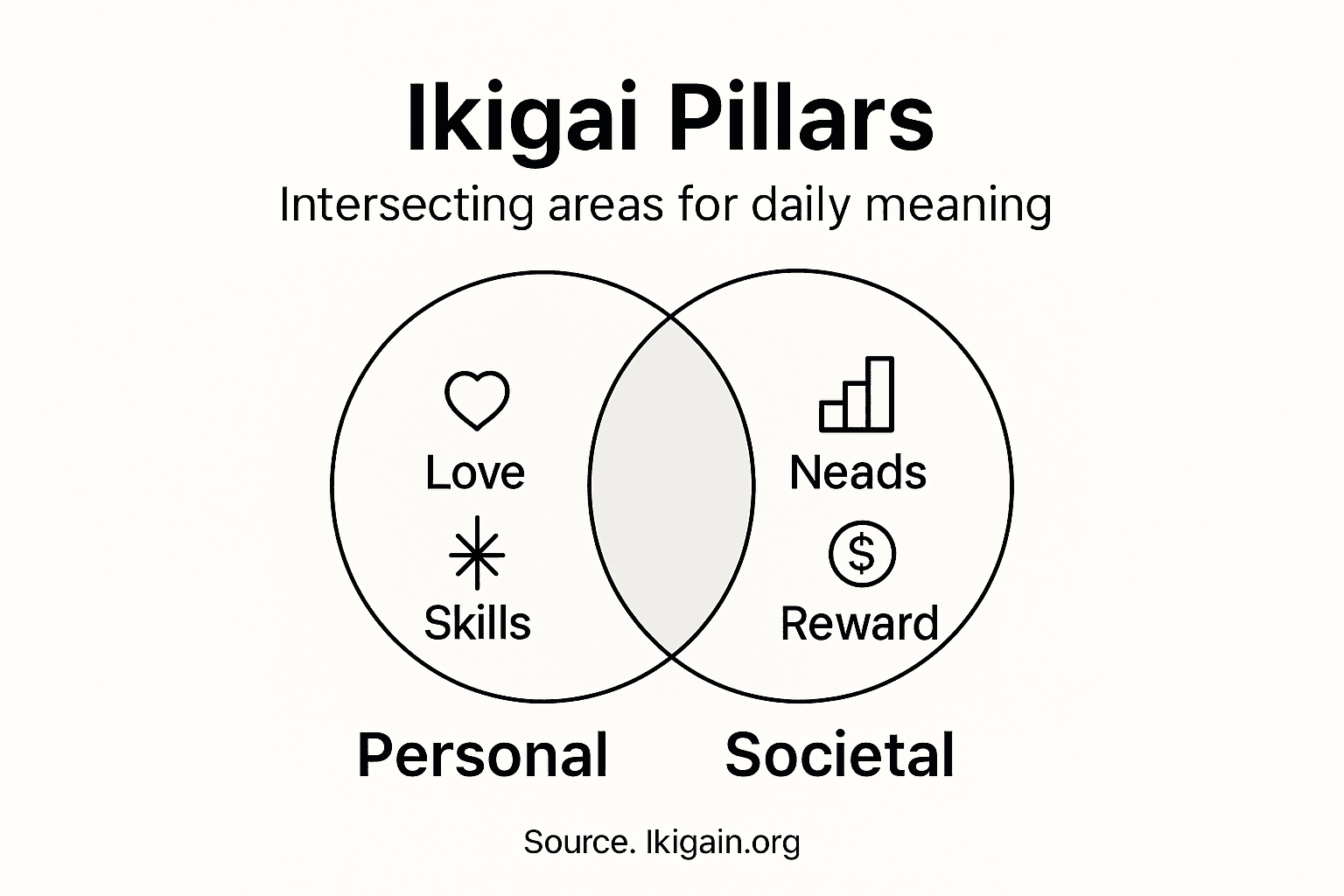
The Japanese concept of ikigai captures this perfectly. Ikigai sits at the intersection of four dimensions: what you love doing, what you’re genuinely good at, what the world needs, and what provides sustainable income or value. A purpose-driven life doesn’t require you to excel in all four simultaneously, but it means being honest about where you stand in each area. You might love creative writing but need to build skills. You might be excellent at project management but struggle to find meaning in it. You might feel called to help others but worry about financial security. These tensions are normal. They’re also the exact place where real growth happens.

What separates people living with purpose from those drifting is clarity plus action. Clarity means you’ve actually sat down and articulated what matters. Not what sounds impressive at dinner parties. Not what your parents think you should want. What you actually value when you’re honest with yourself. Action means you’ve made one small decision or taken one concrete step toward that vision. You’ve adjusted your resume. You’ve had a difficult conversation. You’ve enrolled in a course. You’ve set a boundary. These micro-commitments compound over time into a fundamentally different life trajectory.
The beauty of a purpose-driven life is that it doesn’t require dramatic overhaul. It requires direction. You’re already spending your time and energy on something. The question is whether that something reflects who you actually are and who you want to become. When you align your efforts with your values, productivity changes. Motivation changes. Your relationship with failure changes because setbacks feel worth enduring when they’re connected to something meaningful.
Pro tip: Start by writing three sentences about how you want to be remembered in five years, then identify one current decision or habit that either supports or contradicts that vision.
Distinguishing Purpose From Passion And Goals
You’ve probably heard these three words used interchangeably in career advice and life coaching, but they’re not the same thing. In fact, confusing them is one of the biggest reasons people feel stuck. Passion is that electric feeling you get when you’re doing something you absolutely love. It’s immediate, visceral, and often tied to specific activities or interests. You might be passionate about photography, cooking, or writing code. Passion is the spark. But purpose is different. Purpose is a deeper, more stable life aim that integrates your goals and values into something larger than any single activity. Purpose doesn’t fluctuate as much. It provides the container that gives your passions direction and meaning.
Here’s where it gets practical. Imagine you’re passionate about helping people, so you consider becoming a therapist. That passion is real and valuable. But therapy requires years of education, demands you sit in an office listening to problems for eight hours a day, and involves significant emotional labor. Your passion for helping doesn’t automatically mean you’ll enjoy the day-to-day work required to do it professionally. This is where many people derail. They chase the feeling of passion without understanding the actual path. Purpose, on the other hand, asks a different question: Am I the kind of person who wants to build my life around this? Does it align with who I am and what I value? Can I sustain this for decades, not just months? Goals are the concrete milestones that sit between passion and purpose. Goals are measurable. Complete your certification by June. Save three thousand dollars. Land a position at a specific organization. Goals give you checkpoints to track progress toward your larger purpose.
Think about your own life for a moment. You might have a passion for creative work, a purpose centered around building something meaningful, and a goal to complete a design project by next month. The passion energizes you. The purpose gives you reason. The goal gives you structure. Without all three working together, something breaks. Passion alone burns out because it lacks direction. Purpose without passion can feel hollow and obligatory. Goals without purpose feel arbitrary, like you’re checking boxes for someone else’s vision.
The most common mistake your age group makes is treating passion as a destination. You think if you just find your passion, everything else will fall into place. But passion is unstable currency. It rises and falls. What you’re passionate about at twenty-five might not move you at thirty-five. This doesn’t mean you failed. It means you grew. Your values shifted. Your understanding of yourself deepened. Purpose, by contrast, stays more consistent even as the specific activities change. You might be purposeful about contributing to your community through various roles. The community impact doesn’t change, but the method might shift from nonprofit work to business innovation to mentorship.
The process of distinguishing these three for yourself requires honest self-examination. Start by listing things you’re genuinely passionate about right now. Not things you think you should be passionate about. Not activities your Instagram feed suggests you enjoy. Actual things that make you lose track of time. Next, examine your values and beliefs. What kind of person do you want to be? What impact do you want to have? How do you want to spend your finite energy? That intersection points toward purpose. Finally, work backward from purpose to set goals. If your purpose is building financial independence and stability for your family, your goals might include developing a specific skill, increasing your income, or creating passive revenue streams. Your passion might be project management, so the path involves using that skill to achieve the larger purpose.
One critical insight: your passion and purpose don’t have to align perfectly. You might have a passion for gaming that doesn’t serve your purpose of contributing meaningfully to society. That’s fine. You can enjoy gaming as a hobby while building your purpose through work and relationships. Conversely, you might feel called to a purpose that requires developing skills outside your natural passions. That’s also fine. Most meaningful work involves growth areas alongside enjoyable ones.
Here’s how purpose, passion, and goals differ and work together:
| Dimension | Passion | Purpose | Goals |
| Core Focus | What energizes you right now | What drives your life direction | What you want to achieve |
| Lasting Impact | Often temporary and changes | Stable through life shifts | Specific and measurable steps |
| Decision Influence | Sparks interest and motivation | Anchors values and meaning | Provides structure and clarity |
| Example | Love of writing code | Commitment to lifelong learning | Finish a portfolio by June |
Pro tip: Write down one passion, one core value, and one long-term goal, then connect them with specific sentences that show how they relate to each other rather than treating them as separate pieces of your life.
Japanese Ikigai Philosophy And Life Fulfillment
Ikigai is not a trendy self-help concept imported from Japan. It’s a deeply rooted cultural philosophy that has shaped how Japanese people approach life for centuries. The term itself translates to “value of life” or “reason for being,” but that simple translation misses the richness of what it actually means. Ikigai emphasizes harmonious balance between personal joy, social contribution, and acceptance of life’s transient nature. It’s not about finding one magical thing that solves everything. It’s about understanding how different dimensions of your life can work together to create something coherent and meaningful. The Japanese have known for generations what Western psychology is only now confirming: that meaning comes from integration, not isolation.
What makes ikigai different from Western goal-setting frameworks is its emphasis on acceptance and impermanence. In Western culture, we’re taught to pursue happiness aggressively. Optimize. Maximize. Achieve. Reach the summit. But ikigai works differently. It acknowledges that life is constantly changing, that you won’t be perfect at everything, and that some things are beyond your control. This acceptance doesn’t lead to passivity. Instead, it creates space for genuine action. When you stop fighting against the natural flow of life, you can actually pay attention to what matters. You notice where your skills meet real needs. You see opportunities to contribute. You recognize the parts of your daily routine that genuinely nourish you. A Japanese carpenter doesn’t obsess about being the world’s greatest carpenter. They focus on doing their work with integrity, improving incrementally, and finding fulfillment in the craft itself. That’s ikigai in practice.
Research on ikigai reveals something powerful about how it actually functions in people’s lives. Life satisfaction, personal growth, and social recognition compose ikigai, creating a framework that extends far beyond individual happiness. Studies show that people with strong ikigai experience better health outcomes, greater longevity, and deeper well-being. This isn’t mystical. It makes sense neurologically and psychologically. When your daily activities serve a purpose beyond yourself, your body’s stress response changes. Your immune system functions better. Your motivation becomes self-sustaining rather than dependent on external rewards. For your age group specifically, this matters enormously. You’re at the exact point where you can build a life around ikigai rather than trying to retrofit it later. You’re old enough to have some direction but young enough that your choices still have decades of compound returns ahead.
The four pillars of ikigai work together like interlocking puzzle pieces. What you love doing provides the immediate sense of joy and engagement. What you’re skilled at doing grounds you in reality and builds confidence. What the world needs connects you to something larger than yourself. What you can be rewarded for ensures sustainability and reduces the guilt of self-care. In Japanese culture, these elements aren’t meant to be perfectly balanced at all times. Life seasons shift. Sometimes work demands more attention. Sometimes family needs take priority. Sometimes you’re learning new skills that don’t feel joyful yet. Ikigai is flexible enough to accommodate this reality while still providing direction.
For someone navigating career transitions in your twenties or thirties, ikigai offers something career coaches often miss: permission to think beyond the job title. It asks you to consider your whole life, not just your employment. You might be building ikigai through your work, but also through relationships, creative hobbies, community involvement, or spiritual practice. A software engineer might love their job but find deep meaning through mentoring junior developers. A parent might contribute socially through raising children while also pursuing skills in a completely different field. This multidimensional approach prevents the trap of expecting your career to provide all your meaning. It also means your career doesn’t have to be perfect to support a meaningful life.
The practical power of ikigai emerges when you stop treating it as an abstract concept and start using it as a decision-making framework. When you’re considering a job change, ask yourself: Does this serve my ikigai or move me away from it? When you’re allocating your limited time and energy, ask: Does this align with what I love, what I’m good at, what’s needed, and what sustains me? When you’re feeling disconnected or burnt out, ask: Which pillar of my ikigai have I neglected? These questions ground you in something real rather than letting you drift based on external validation or temporary emotional states. The goal isn’t to achieve perfect balance overnight. The goal is to move gradually toward greater alignment between your daily life and your authentic purpose.
Pro tip: Identify one activity you do regularly that touches all four ikigai pillars, even partially, then ask how you could deepen that activity’s role in your life this month.
Practical Steps To Discovering Your Purpose
Discovering your purpose isn’t a lightning bolt moment that happens once and then guides you forever. It’s an iterative process that unfolds over months and years as you gain self-knowledge and test your assumptions against reality. The good news is that you don’t need to figure everything out before taking action. You can discover your purpose while living it. Discovering purpose involves reflecting on interests, identifying strengths and core values, exploring new opportunities, and setting actionable goals. These steps work together to move you from abstract wondering to concrete direction. Start with reflection, which means actually sitting with yourself and paying attention to what comes naturally to you.
The reflection phase requires brutal honesty about three things. First, what activities genuinely absorb you? Not what you think should absorb you. Not what looks good on LinkedIn. What actually makes you lose track of time? Write down at least five things. Then examine what they have in common. Maybe you notice you’re drawn to activities involving problem-solving, creative expression, or helping others understand something. That pattern matters more than the activities themselves. Second, identify your core values by looking at moments when you felt genuinely satisfied. Not proud necessarily, but satisfied. Maybe it was finishing a project well. Maybe it was having an honest conversation with someone you care about. Maybe it was learning something completely new. What values were operating in those moments? Common ones include autonomy, contribution, growth, security, connection, or excellence. Write down your top five. Third, acknowledge your actual constraints and resources. You might value financial security right now more than adventure. You might have family obligations that shape what’s possible. You might have specific skills that open certain doors more easily than others. None of this disqualifies you from purpose. It just makes your purpose grounded in reality rather than fantasy.
Once you’ve reflected, the next step is exploration. This means deliberately exposing yourself to new experiences, conversations, and environments that could reveal direction. Talk to people doing work that interests you. Not LinkedIn messages asking for advice. Actual conversations where you ask what their day actually feels like. Take a class in something you’ve never tried. Volunteer for an organization aligned with values you identified. Work on a project that stretches you. Read widely in areas outside your normal consumption. Each exploration is a small experiment. You’re not committing your entire life. You’re testing whether something you thought sounded interesting actually resonates when you experience it. Many people skip this step because it feels inefficient. They want to think their way to certainty. But certainty comes from experience, not contemplation. Your twenties and thirties are the exact time to do this exploration because you have more flexibility than you’ll have later.
As you explore, you’ll notice certain patterns emerging. Certain types of work energize you. Certain types of relationships feel meaningful. Certain problems pull your attention. This is where you start setting actionable goals. Not vague aspirations like “find my purpose” or “be happy.” Specific, measurable goals that move you toward the direction you’re sensing. If you’re noticing you enjoy teaching, maybe your goal is to mentor two junior colleagues over the next six months. If you’re sensing you want more autonomy, maybe your goal is to propose one independent project to your current manager. If you’re realizing you want to contribute to environmental sustainability, maybe your goal is to research three organizations doing that work and have informational interviews at two of them. These goals are small enough to accomplish while being big enough to teach you something.
One critical insight: your purpose will likely evolve. The person you were at twenty-five had different priorities than the person you are now at thirty-two. The person you’ll be at forty-five will probably have shifted again. This isn’t failure. It’s growth. Your purpose might shift from individual achievement to team leadership. From financial accumulation to time freedom. From career focus to family focus. From one field entirely to another. The process of discovering and refining your purpose continues throughout your life. What matters is that you’re actively engaged in that process rather than sleepwalking through it.
A practical framework for this ongoing discovery involves regular check-ins. Every three months, ask yourself: Am I spending my time and energy in ways that align with my identified values? Have I learned anything new about myself that suggests my purpose is shifting? What’s one small action I can take this quarter that moves me closer to my purpose? This rhythm keeps you connected to your direction without requiring massive changes. It also creates accountability. You’re not just thinking about your purpose. You’re actively orienting your decisions around it.
One more thing: stay aligned with your inner motivations rather than external validation. This is genuinely hard in your age group because you’re often still proving yourself professionally and financially. But the people with the deepest purpose aren’t the ones who optimized for external markers. They’re the ones who stayed committed to what mattered to them despite external pressure to do something else. Your inner motivations are the compass. External validation is noise that can distract you from the actual direction.
Pro tip: Write down your top three values, identify one person in your network living in alignment with each value, and ask them to coffee this month to understand how their choices support those values.
Common Pitfalls And How To Avoid Them
The search for purpose is rarely a straight line. Most people encounter predictable obstacles that derail them from actually discovering what matters. Understanding these pitfalls in advance doesn’t guarantee you’ll avoid them, but it gives you a fighting chance to recognize when you’re caught in one. The first major pitfall is conflating passion with purpose. You feel excited about something and assume it’s your life’s calling. But passion is often temporary, contextual, and subject to changing circumstances. You might be passionate about rock climbing right now, but that doesn’t mean your purpose involves building a career around it. Common pitfalls in finding purpose include distraction by societal pressures and perfectionism, conflation of purpose with transient passions, and lack of structured guidance. This distinction matters because people often make major life decisions based on temporary enthusiasm, then feel disappointed when the novelty fades. The antidote is to test your passions over time. If rock climbing still matters to you in a year, if you’re willing to invest resources in it, if it aligns with your deeper values, then maybe it’s worth building around. But give it time before reorganizing your entire life.
Another common trap is waiting for the epiphany. You’re waiting for that one moment when everything becomes clear. A mystical experience. A dream. A conversation that changes everything. Sometimes those moments happen, but they’re rare and often overblown. More often, purpose emerges gradually through lived experience. You notice patterns. You accumulate small insights. You see how your choices compound. But there’s no thunder and lightning. This waiting trap particularly affects your age group because you’ve been conditioned to expect clarity. You did well in school when the path was defined. You’re used to external structures providing direction. But adulthood doesn’t work that way. The absence of an epiphany doesn’t mean you’re doing it wrong. It likely means you’re doing it right. Misconceptions such as expecting a single epiphany or a fixed purpose can derail the search for meaning. Purpose isn’t a destination you arrive at. It’s a direction you face and move toward, adjusting as you gain information.
Perfectionism is another silent killer. You want to find the perfect purpose before committing. The one thing that solves everything. The career that provides meaning, financial security, social status, and personal fulfillment all at once. While you’re waiting for perfect, life keeps moving. Years accumulate. Better to choose a good direction and adjust as you learn than to spend five years deliberating and end up nowhere. This doesn’t mean being reckless. It means accepting that your current best guess is better than infinite analysis. You can course-correct. You probably will course-correct. That’s healthy. What’s unhealthy is never committing to a direction because no option is flawless. Every choice involves tradeoffs. Accept that early. Choose anyway.
Societal pressure and external validation are constant background noise. Your parents think you should be more stable. Your peers seem to have it figured out. Social media shows everyone’s highlight reel. All of this creates pressure to pursue a purpose that looks impressive rather than one that actually matters to you. You might be drawn toward ambitious, high-status purposes because they’ll earn approval. But approval from others is a terrible compass for a life. The people around you don’t live your life. They don’t experience your daily reality. They have different values, different constraints, different dreams. What looks good to them might feel empty to you. Conversely, what excites you might seem risky or unconventional to them. You have to decide whose opinion actually matters. And honestly, the only opinion that should matter is yours paired with the perspective of people who know you deeply and have your actual best interests at heart, not your image.
One more significant pitfall is believing your purpose must be grandiose. It has to change the world. It has to be noteworthy. It has to justify your existence in some massive way. But purpose doesn’t work like that. You might find deep purpose in being an excellent parent. In building a sustainable career that supports your family. In contributing meaningfully to your local community. In creating beautiful work even if only a few people see it. In maintaining relationships that matter. None of these sound like TED talk material. All of them can provide genuine fulfillment. Your purpose doesn’t have to be earth-shattering to be real.
The antidote to all these pitfalls is structured reflection combined with action. Don’t just think about purpose in the shower. Schedule regular dedicated time for it. Spend an hour writing about what matters to you. What did you do this week that felt meaningful? What drained you? What are your actual values, not your aspirational ones? What constraints do you need to accept? Then take small actions aligned with your emerging understanding. Talk to people. Try things. Gather data. Let your purpose clarify through experience rather than speculation. Give yourself permission to be uncertain while still moving forward. That’s the balance that actually works.
Here is a structured summary of common pitfalls and practical solutions:
| Pitfall | Why It Happens | Solution Approach |
| Confusing passion for purpose | Passion fades faster than purpose | Test passions before major changes |
| Waiting for a sudden epiphany | Expecting instant clarity | Reflect regularly for insight |
| Perfectionism | Fear of imperfect choices | Commit to good, adjust as needed |
| Seeking external validation | Desire parental/peer approval | Prioritize personal values |
| Believing purpose must be major | Social pressure for big achievement | Value small, meaningful actions |
Pro tip: When you catch yourself waiting for the perfect clarity or worrying about external judgment, ask yourself one question: If no one would ever know what I chose, what would actually matter to me? Then build toward that answer, not away from it.
Discover Your Own Ikigai and Embrace a Purpose-Driven Life Today
The article explores the struggle many face in aligning passion, values, and daily actions to build a meaningful life. If you find yourself overwhelmed by fleeting passions or unsure how to translate your values into real goals, you are not alone. The challenge lies in gaining clarity and taking confident steps toward a purpose that sustains and energizes you over time. Concepts like ikigai highlight the importance of balance between what you love, what you are good at, what the world needs, and what supports your livelihood. This blueprint can seem hard to uncover without focused guidance.

At Ikigain.org, you can start a personalized journey to uncover your unique ikigai. Our comprehensive personality test analyzes your core passions, strengths, and values to provide tailored insights helping you transform abstract ideas into concrete life direction. By integrating Japanese wisdom with modern self-discovery approaches, the platform supports you in making intentional choices aligned with your authentic purpose. Don’t wait for clarity to magically appear. Take control now by visiting Ikigain.org and explore the tools designed to guide you beyond temporary passions toward lasting fulfillment. Your purpose-driven life begins with a single step in the right direction.
Frequently Asked Questions
What does it mean to live a purpose-driven life?
Living a purpose-driven life involves aligning your daily activities with your core values and long-term vision. It focuses on meaningful actions rather than external markers of success, resulting in greater satisfaction and motivation.
How can I discover my purpose in life?
To discover your purpose, engage in self-reflection to identify your passions, strengths, and values. Explore different experiences and set actionable goals that align with what you want to achieve in life.
What is the difference between purpose, passion, and goals?
Purpose is a stable life aim that integrates your values and direction, while passion is the excitement you feel towards specific activities. Goals are measurable milestones that help you track progress toward your larger purpose.
How can the concept of ikigai help me find meaning in my life?
Ikigai emphasizes the balance between what you love, what you are good at, what the world needs, and what you can be rewarded for. It offers a framework to integrate these elements for a fulfilling life, encouraging continuous reflection and adjustment as your circumstances change.