Most people assume happiness means chasing pleasure and avoiding pain, but philosophy reveals a much richer picture. Ancient thinkers like Aristotle and Epicurus offered contrasting visions: one rooted in virtue and flourishing, the other in pleasure and tranquility. Modern research confirms both approaches contribute to well-being, yet combining them yields the deepest satisfaction. This article explores major philosophical traditions around happiness, how they differ, and how you can apply their insights to build a more purposeful, meaningful life grounded in both pleasure and virtue.
Table of Contents
- Key takeaways
- Understanding the core philosophies of happiness
- Aristotle’s virtue ethics and the golden mean
- Bridging pleasure and meaning: the full-life approach
- Cultural and psychological nuances in happiness
- Applying philosophical insights to your personal growth
- Explore your purpose with Ikigain
- FAQ
Key Takeaways
| Point | Details |
|---|---|
| Hedonism vs eudaimonia | The article contrasts pleasure centered happiness with virtue centered flourishing and notes that both contribute to well being. |
| Pleasure plus meaning | Combining hedonic pleasure with eudaimonic meaning yields greater long term satisfaction. |
| Habitual virtue practice | Virtues develop through repetition and habituation rather than innate talent, building durable well being. |
| Golden mean and phronesis | Aristotle teaches that virtue lies between extremes and is guided by practical wisdom tailored to each context. |
Understanding the core philosophies of happiness
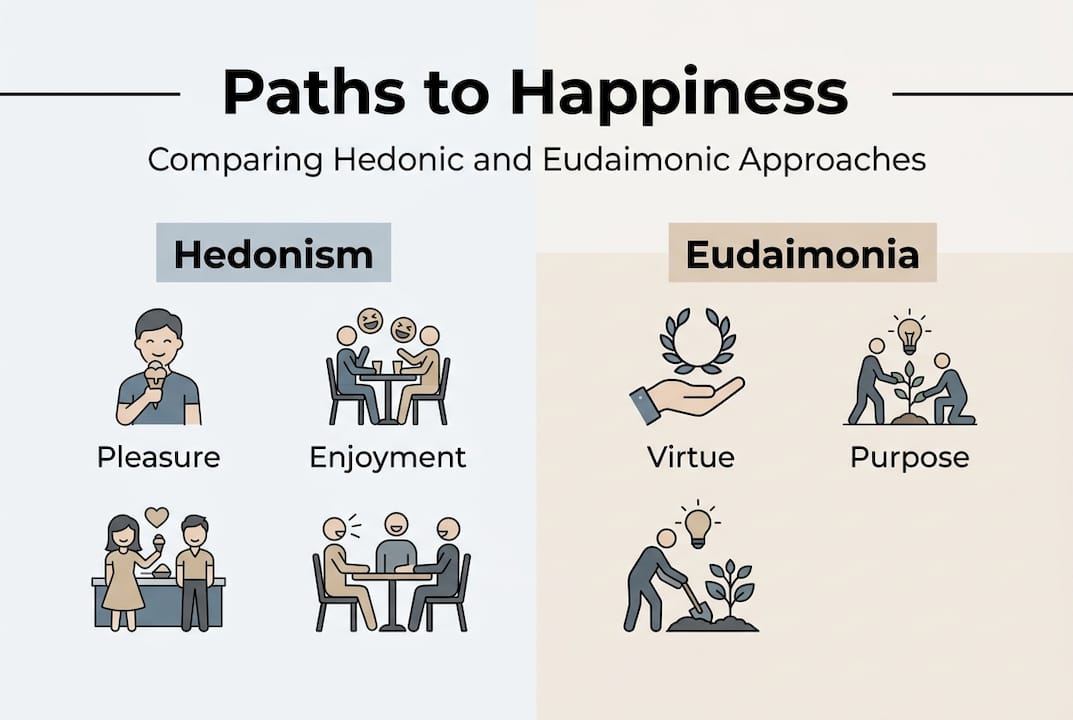
Philosophy divides happiness into two major camps: hedonism and eudaimonia. Hedonism, championed by Epicurus, defines happiness as maximizing pleasure and minimizing pain. Epicurus believed sensory delights, emotional comfort, and freedom from anxiety create the good life. This view emphasizes immediate gratification and the pursuit of enjoyable experiences. Contemporary theories of happiness contrast this pleasure-centered approach with Aristotle’s eudaimonia, which translates to flourishing or living well through virtue.
Eudaimonia focuses on character development and moral excellence rather than transient pleasures. Aristotle argued that happiness emerges from practicing virtues like courage, wisdom, and justice consistently over a lifetime. Unlike hedonic pleasure, which fades quickly, eudaimonic satisfaction builds as you align actions with your values and contribute meaningfully to your community. The key difference lies in time horizon and depth: hedonism seeks short-term enjoyment, while eudaimonia cultivates long-term fulfillment through purposeful action.
Examples of hedonic pleasures include savoring delicious food, enjoying entertainment, relaxing with friends, and experiencing physical comfort. These moments bring joy but don’t necessarily contribute to lasting growth. Eudaimonic virtues include courage to face challenges, wisdom to make sound decisions, justice in treating others fairly, and temperance in moderating desires. Practicing these virtues shapes character and creates a foundation for self discovery for purpose that transcends momentary satisfaction.
Pro Tip: Build a happiness foundation by identifying one virtue you want to strengthen this month, then practice it daily in small ways. Consistency transforms virtues from abstract ideals into lived habits that support durable well-being beyond fleeting pleasures.
Aristotle’s virtue ethics and the golden mean
Aristotle’s eudaimonia centers on the golden mean, the idea that virtue lies between two extremes. Courage, for instance, sits between cowardice and recklessness. Generosity balances stinginess and wastefulness. This middle path requires practical wisdom, or phronesis, to judge the right action in each situation. Beyond rules: finding eudaimonia with Aristotle’s virtue ethics explains how achieving this balance through habitual practice leads to flourishing.

Virtues develop through repetition, not innate talent. Just as you learn piano by practicing scales, you cultivate courage by repeatedly facing fears in appropriate ways. Aristotle emphasized habituation: performing virtuous acts until they become second nature. This process shapes character over time, making virtuous behavior feel natural rather than forced. The golden mean isn’t a rigid formula but a flexible guideline adjusted by practical wisdom based on context, relationships, and consequences.
Practical wisdom guides you to recognize which virtue applies in each moment and how much to express it. A generous act toward a stranger differs from generosity toward family. Phronesis helps you navigate these nuances, balancing competing values and choosing actions that promote flourishing for yourself and others. This wisdom grows through experience, reflection, and learning from mistakes. It transforms virtue from abstract principle into lived reality.
Aristotle wrote, “Virtue is a state of character concerned with choice, lying in a mean relative to us, this being determined by reason and in the way in which the person of practical wisdom would determine it.” This quote captures the dynamic nature of virtue: it’s not a fixed point but a reasoned response shaped by wisdom and circumstance.
To cultivate virtue through Aristotelian practice:
- Identify a specific virtue you want to develop, such as patience or honesty.
- Observe situations where this virtue applies and notice your current responses.
- Practice small acts embodying the virtue daily, even when uncomfortable.
- Reflect on outcomes and adjust your approach based on what promotes flourishing.
- Seek feedback from trusted others who model the virtue you’re developing.
- Gradually increase the difficulty of situations where you practice the virtue.
This systematic approach builds character progressively, creating the foundation for purposeful living tips that integrate virtue into everyday decisions. The golden mean becomes internalized through consistent practice and reflection.
Bridging pleasure and meaning: the full-life approach
Modern research validates what ancient philosophers debated: both pleasure and meaning contribute to happiness. Combined hedonic-eudaimonic training boosts life satisfaction more than pursuing either alone, demonstrating the full-life effect. Studies show that people who balance enjoyable experiences with meaningful pursuits report higher well-being than those focused exclusively on pleasure or virtue. This empirical finding bridges hedonism and eudaimonia, suggesting an integrated approach optimizes happiness.
| Dimension | Hedonic approach | Eudaimonic approach |
|---|---|---|
| Focus | Pleasure and comfort | Virtue and growth |
| Time frame | Short-term satisfaction | Long-term fulfillment |
| Motivation | Avoid pain, seek enjoyment | Develop character, contribute |
| Outcome | Temporary mood boost | Sustained meaning and purpose |
| Example | Watching a movie | Volunteering for a cause |
The full-life effect occurs when you intentionally combine both approaches. Enjoying a meal with friends provides hedonic pleasure, but deepens when the gathering also strengthens meaningful relationships. Pursuing a challenging career goal offers eudaimonic satisfaction through growth, but becomes richer when you also appreciate small victories along the way. This synergy creates resilience: pleasure sustains motivation during difficult virtue practice, while meaning prevents pleasure from feeling empty or shallow.
Research identifies health and internal locus of control as top predictors of happiness across both hedonic and eudaimonic dimensions. Physical well-being enables you to pursue both pleasure and virtue effectively. Internal locus of control, the belief that your actions shape outcomes, empowers you to cultivate virtues and create meaningful experiences rather than passively waiting for happiness to arrive. These factors support purpose-driven living benefits by providing the foundation for intentional life design.
Pro Tip: Design your weekly schedule to include both pleasurable activities and meaningful projects. Aim for a 60-40 split favoring meaning over pleasure to sustain long-term satisfaction while still enjoying life’s simple delights. This balance prevents burnout from constant striving while avoiding the emptiness of pure pleasure-seeking.
The full-life approach also recognizes that mindfulness and ikigai practices help you stay present during both pleasurable and meaningful moments, amplifying their impact on well-being. Mindfulness deepens hedonic experiences by reducing distraction and enhances eudaimonic pursuits by clarifying values and intentions.
Cultural and psychological nuances in happiness
Happiness isn’t universal. Cultural context shapes how people understand and pursue well-being. Understanding happiness, pleasure, and meaning reveals that Western cultures emphasize independence, personal achievement, and high-arousal positive emotions like excitement and enthusiasm. Eastern traditions prioritize harmony, interdependence, and low-arousal states like calm and contentment. These differences reflect deeper values about self, relationships, and the good life.
Western happiness often involves standing out, expressing individuality, and pursuing personal goals. Success means achieving more than others and experiencing intense positive emotions. This approach aligns with hedonism’s focus on maximizing personal pleasure and eudaimonia’s emphasis on individual virtue development. Eastern happiness centers on fitting in, maintaining group harmony, and balancing emotions. Success means contributing to collective well-being and experiencing peaceful equilibrium. This perspective values interdependence and relational virtue over individual achievement.
Psychological richness adds another dimension beyond simple happiness or meaning. A psychologically rich life includes diverse, interesting, perspective-changing experiences that stimulate growth without necessarily feeling pleasant or meaningful in the moment. Traveling to challenging destinations, reading difficult books, or engaging with unfamiliar cultures creates richness even when uncomfortable. This concept expands happiness beyond the pleasure-virtue dichotomy to include novelty, complexity, and intellectual stimulation.
Factors influencing happiness variations across individuals and cultures:
- Personal temperament and genetic predisposition to positive or negative emotions
- Socioeconomic conditions affecting access to resources and opportunities
- Religious and spiritual beliefs shaping values and life priorities
- Social support networks providing connection and belonging
- Life stage and developmental challenges influencing focus and concerns
- Historical and political context affecting collective mood and outlook
These nuances matter for personal development because they reveal that no single happiness formula works for everyone. Understanding japanese philosophy advantages helps you appreciate alternative approaches to well-being that might resonate more deeply than Western models. Similarly, recognizing your cultural background’s influence on happiness expectations allows you to consciously choose which elements to embrace and which to question.
The contrast between short-term hedonic pleasures and long-term eudaimonic satisfaction also varies by culture. Western societies often prioritize immediate gratification, while Eastern traditions emphasize patience and delayed rewards. This difference affects how people balance pleasure and meaning in daily life. Awareness of these patterns helps you design a happiness approach aligned with your values rather than unconsciously following cultural scripts about life fulfillment meaning.
Applying philosophical insights to your personal growth
Translating philosophical concepts into daily practice requires specific strategies. Beyond rules: finding eudaimonia with Aristotle’s virtue ethics suggests practicing virtues habitually, focusing on internal control, and seeking simple friendships to build purposeful living. Start by selecting one virtue from Aristotle’s ethics, such as courage or honesty, and commit to practicing it in small ways throughout your day. Notice opportunities to act virtuously and reflect on outcomes each evening.
Stoic philosophy emphasizes internal locus of control, the principle that you control your thoughts and actions but not external events. This focus builds resilience by directing energy toward what you can change rather than worrying about circumstances beyond your influence. When facing challenges, ask yourself what aspects lie within your control and concentrate effort there. This practice reduces anxiety and increases effectiveness by clarifying where to invest attention and energy.
Epicurean ideas about friendship offer another practical application. Epicurus valued simple, authentic connections over wealth or status. Cultivate relationships based on mutual respect, shared values, and genuine care rather than transactional benefits. These friendships provide emotional support, intellectual stimulation, and a sense of belonging that contributes to both hedonic pleasure and eudaimonic meaning. Quality matters more than quantity in building a supportive social network.
Daily mindfulness exercises and reflection prompts for purposeful living:
- Morning intention setting: Identify one virtue to practice today and one meaningful goal to advance.
- Midday check-in: Pause to notice whether current activities align with your values and adjust if needed.
- Evening gratitude: List three experiences that brought pleasure and three actions that expressed virtue.
- Weekly review: Assess progress on meaningful projects and plan adjustments for the coming week.
- Monthly reflection: Evaluate whether your balance of pleasure and meaning feels sustainable and fulfilling.
- Quarterly goal alignment: Review long-term aspirations and ensure daily habits support them effectively.
These practices integrate philosophical principles into concrete routines that shape character over time. They create feedback loops connecting daily actions to larger life purposes, making abstract concepts like eudaimonia tangible and actionable. Consistent practice transforms philosophical knowledge into lived wisdom that guides decisions and builds discover life fulfillment through intentional living.
Pro Tip: Pair philosophical practice with mindfulness to deepen both. Mindful awareness helps you notice opportunities for virtue, while philosophical frameworks give mindfulness purpose beyond stress reduction. This combination sustains meaningful happiness longer than chasing pleasure alone because it builds character alongside present-moment awareness.
The integration of philosophy and mindfulness also supports self discovery advantages by clarifying core values and aligning behavior with authentic self-understanding. As you practice virtues and reflect mindfully, patterns emerge revealing what truly matters to you beyond cultural conditioning or external expectations.
Explore your purpose with Ikigain
Philosophical insights about happiness become most powerful when applied to your unique life situation. Ikigain offers tools designed to help you discover your personal path to purposeful living. The Ikigai type test identifies your core passions, values, and strengths, providing clarity about where pleasure and meaning intersect in your life. This assessment goes beyond generic advice to offer personalized insights aligned with Japanese philosophy’s emphasis on finding your reason for being.

Understanding your Ikigai personality types reveals how you naturally balance hedonic and eudaimonic pursuits. Some types thrive on achievement and growth, while others find fulfillment through connection and contribution. Knowing your type helps you design a happiness approach that works with your temperament rather than against it. The platform also explores Japanese philosophy concepts like wabi-sabi, kaizen, and mono no aware that complement Western ideas about happiness with Eastern wisdom.
Ikigain’s resources support your journey toward:
- Discovering your unique purpose through scientifically-backed assessment tools
- Understanding personality patterns that influence your happiness and fulfillment
- Learning Japanese philosophical concepts that deepen mindfulness and meaning
These offerings bridge ancient wisdom and modern psychology, providing practical guidance for cultivating both pleasure and virtue in daily life. Whether you’re just beginning to explore purposeful living or seeking to deepen existing practices, Ikigain’s integrated approach helps you move from philosophical understanding to lived experience of happiness and flourishing.
FAQ
What is the difference between hedonism and eudaimonia?
Hedonism defines happiness as maximizing pleasure and minimizing pain, focusing on enjoyable experiences and sensory satisfaction. Eudaimonia views happiness as flourishing through virtue, emphasizing character development and meaningful contribution over temporary pleasure. The key distinction lies in time horizon: hedonism prioritizes short-term enjoyment, while eudaimonia cultivates long-term fulfillment through purposeful action aligned with values.
How can I cultivate virtue in everyday life?
Start by choosing one specific virtue to practice consistently, such as patience or honesty, and look for small opportunities to express it daily. Reflect each evening on how you practiced the virtue and what outcomes resulted, adjusting your approach based on what promotes flourishing. Mindfulness exercises help you notice moments requiring virtuous response, while practical wisdom develops through experience and learning from mistakes. Consistent practice transforms virtues from abstract ideals into natural habits that increase life fulfillment.
Why combine pleasure and meaning for happiness?
Research demonstrates that combining hedonic pleasure with eudaimonic meaning produces superior well-being compared to pursuing either alone, a phenomenon called the full-life effect. Pleasure sustains motivation during challenging virtue practice, while meaning prevents pleasure from feeling empty or shallow. This integrated approach creates resilience and depth that pure pleasure-seeking or rigid virtue focus cannot achieve. Balancing both dimensions addresses different aspects of human flourishing, leading to more sustainable and satisfying happiness.
How do cultural differences affect happiness?
Western cultures emphasize independence, personal achievement, and high-arousal positive emotions like excitement, while Eastern traditions prioritize harmony, interdependence, and low-arousal states like calm. These differences reflect deeper values about self, relationships, and the good life that shape how people pursue and experience happiness. Understanding your cultural context helps you consciously choose which happiness elements to embrace rather than unconsciously following scripts. Awareness of cultural patterns in balancing pleasure and meaning enables you to design an approach aligned with your authentic values and circumstances.