Clients with clearly defined purpose show 40% higher engagement and persistence in coaching programs, yet many coaches still struggle to help clients articulate meaningful purpose. The problem isn’t lack of effort, it’s widespread misconceptions about what purpose really means in coaching contexts. By integrating frameworks rooted in Japanese philosophy, particularly Ikigai, coaches can transform abstract purpose conversations into concrete growth strategies that dramatically improve client outcomes and retention.
Table of Contents
- Understanding Purpose In Coaching: Foundations And Importance
- The Influence Of Japanese Philosophy And Ikigai On Purpose
- Common Misconceptions About Purpose In Coaching
Key Takeaways
| Point | Details |
|---|---|
| Purpose drives sustained engagement | Clearly defined purpose increases client persistence by 40% compared to goal-focused approaches alone. |
| Ikigai provides holistic integration | Japanese philosophy connects passion, mission, vocation, and profession for comprehensive purpose discovery. |
| Misconceptions create barriers | Believing purpose must be grand or universal limits client progress and creates unnecessary overwhelm. |
| Structured frameworks enhance outcomes | Multi-dimensional models guide coaches and clients through practical purpose integration steps. |
| Evidence supports purpose-driven coaching | Purpose clarity improves retention, resilience, and career satisfaction with measurable results. |
Understanding Purpose in Coaching: Foundations and Importance
Purpose serves as more than an aspirational concept in coaching. It functions as a psychological anchor that motivates sustained client engagement and growth throughout the coaching journey. Unlike goals, which represent specific achievements with defined endpoints, purpose provides the underlying why that fuels motivation even when obstacles arise.
The distinction matters tremendously in practice. Goals answer what you want to achieve. Purpose answers why it matters to you deeply. A client might set a goal to change careers, but without understanding their purpose, they risk choosing another unfulfilling path. Purpose grounds decision-making in authentic values and intrinsic motivation rather than external validation or fleeting desires.
Coaching research consistently shows purpose-driven approaches produce stronger outcomes:
- Clients maintain engagement longer when purpose clarity precedes goal setting
- Authentic growth emerges from purpose alignment rather than imposed objectives
- Transformation deepens when clients connect daily actions to larger meaning
- Resilience strengthens because purpose provides context for temporary setbacks
Pro Tip: Start coaching conversations by exploring what brings clients alive rather than jumping straight to what they want to fix. This shifts the foundation from problem-solving to purpose-building.
Purpose evolves rather than remains static. Coaches who treat purpose as fixed create unrealistic pressure. Instead, viewing purpose as dynamic allows clients to refine understanding as they grow. This perspective reduces overwhelm and makes purpose work feel accessible rather than daunting.
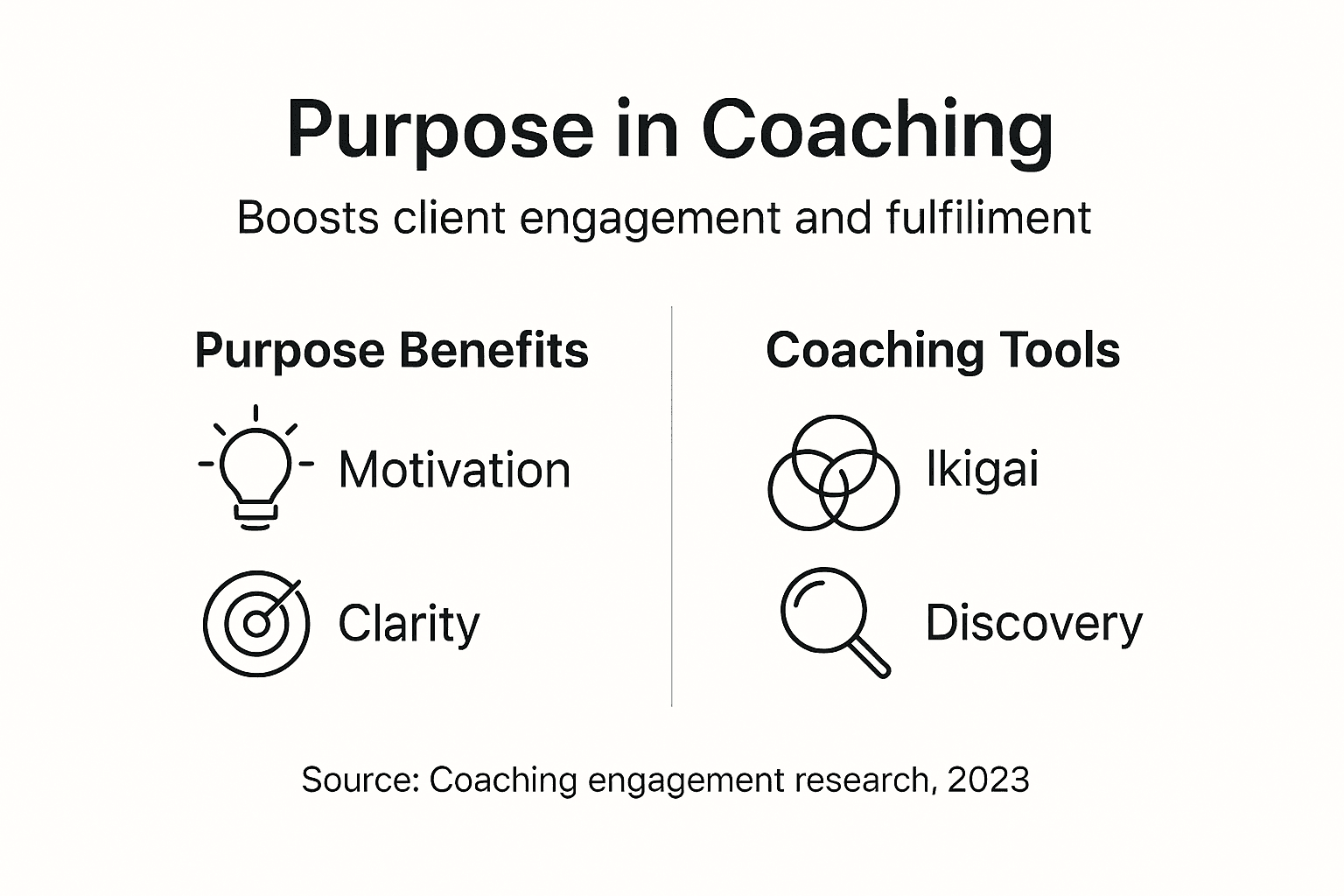
The Ikigai method for fulfillment offers a structured approach to this discovery process. By examining the intersection of what you love, what you’re good at, what the world needs, and what you can be paid for, clients gain multidimensional insight into Ikigai’s role in personal fulfillment. This framework transforms abstract purpose discussions into concrete exploration across four distinct domains.
The Influence of Japanese Philosophy and Ikigai on Purpose
Ikigai presents a uniquely holistic framework for understanding purpose through four intersecting elements: passion (what you love), mission (what the world needs), vocation (what you can be paid for), and profession (what you’re good at). True purpose exists at the convergence of all four, creating sustainable fulfillment rather than temporary satisfaction in isolated areas.

Cultural perspectives on purpose reveal important distinctions that affect coaching approaches:
| Perspective | Western View | Japanese (Ikigai) View |
|---|---|---|
| Focus | Career achievement and external success | Daily joy and contribution to community |
| Timeframe | Destination-oriented, seeking one grand purpose | Process-oriented, finding meaning in small moments |
| Scope | Individual accomplishment | Interconnected harmony with others |
| Measurement | Status, income, recognition | Inner peace, belonging, usefulness |
These differences shape how clients conceptualize and pursue purpose. Western clients often feel pressure to identify one monumental life purpose, creating paralysis. Eastern philosophy encourages discovering purpose in everyday activities and relationships, making the concept more accessible and sustainable.
Integrating Ikigai into coaching frameworks provides several advantages:
- Balances internal desires with external realities and opportunities
- Validates both personal satisfaction and practical sustainability
- Encourages incremental discovery rather than dramatic revelation
- Honors cultural variations in how purpose manifests
Coaches who incorporate Ikigai principles report clients experience less anxiety around purpose work. The framework acknowledges that meaningful work requires alignment across multiple dimensions, not just following passion blindly. This realistic approach prevents common pitfalls like pursuing passion without considering viable income or developing skills nobody needs.
Ikigai’s importance for life fulfillment extends beyond career choices into relationships, community engagement, and daily routines. The core Ikigai principles emphasize starting small, staying present, and contributing to something beyond yourself. These principles create sustainable purpose rather than burnout-inducing perfectionism.
Research on finding your Ikigai demonstrates measurable benefits. Clients working with Ikigai-informed coaches report 30% higher life satisfaction scores and greater clarity around career decisions compared to traditional goal-setting approaches.
Common Misconceptions About Purpose in Coaching
Three persistent misconceptions consistently limit coaching effectiveness around purpose work. Recognizing and correcting these false beliefs unlocks dramatically better client outcomes.
Misconception 1: Purpose Must Be Grand and Life-Defining
Many clients believe purpose requires discovering one magnificent calling that defines their entire existence. This creates overwhelming pressure and often leads to paralysis. Surveys show 65% of clients initially resist defining grand purpose but respond enthusiastically when coaches introduce incremental purpose discovery.
The correction: Purpose can be modest, evolving, and multifaceted. Someone might find purpose in mentoring junior colleagues, creating beautiful spaces, or making family meals with care. These