Many believe career success means a high salary and impressive title. Yet 68% of professionals prioritize purpose over salary for true satisfaction. This guide reveals how career insights rooted in Japanese philosophy, especially Ikigai, help you align your work with your authentic self. You’ll discover how to integrate passions, skills, values, and societal needs for lasting fulfillment.
Table of Contents
- Introduction To Career Insights And Their Importance
- The Japanese Philosophy Of Ikigai As A Framework For Career Insight
- How Career Insights Drive Personal Growth And Mental Wellbeing
- Common Misconceptions About Career Insights And Purpose
- Comparing Career Insight Frameworks: Ikigai Vs Western Models
- Applying Career Insights Practically For Meaningful Growth
- Real-World Case Studies: Success Through Purposeful Career Insights
- Summary And Next Steps For Your Career Purpose Journey
- Discover Your Purpose With Ikigain Tools And Tests
- Frequently Asked Questions
Key takeaways
| Point | Details |
|---|---|
| Career insights align passions, skills, values, and societal needs | This holistic approach creates sustainable career satisfaction beyond income alone |
| Ikigai offers a framework beyond Western career models | Japanese philosophy integrates personal fulfillment with community contribution |
| Iterative reflection enhances growth and fulfillment | Career clarity develops over time through consistent self-assessment and adaptation |
| Purpose-driven careers boost mental wellbeing | Meaningful work reduces indecision and improves resilience by 30% or more |
Introduction to career insights and their importance
Career insights mean understanding your passions, values, and strengths, then aligning them with career decisions that reflect who you truly are. This approach moves beyond chasing promotions or paychecks to building a life of meaning. Increasing global career dissatisfaction highlights why people need deeper alignment between work and identity.
Traditional career advice focuses on climbing ladders and maximizing earnings. It rarely addresses whether your daily tasks energize you or drain you. Career insights fill this gap by asking what makes you feel alive and how your unique abilities serve others.
When you gain career insights, you:
- Clarify what work feels meaningful rather than merely tolerable
- Identify strengths you can develop into valuable skills
- Recognize values that guide your choices and boundaries
- Connect your efforts to causes or communities you care about
This self-knowledge contributes to long-term life satisfaction. You stop living someone else’s version of success and start building career purpose and meaning that fits your authentic self. The result is work that nourishes rather than exhausts you.
The Japanese philosophy of Ikigai as a framework for career insight
Ikigai translates roughly to “reason for being.” It’s a Japanese concept that guides you to find purpose by examining four essential questions: What do you love? What are you good at? What does the world need? What can you be paid for? The intersection of these four areas reveals your Ikigai and offers a roadmap for meaningful career choices.

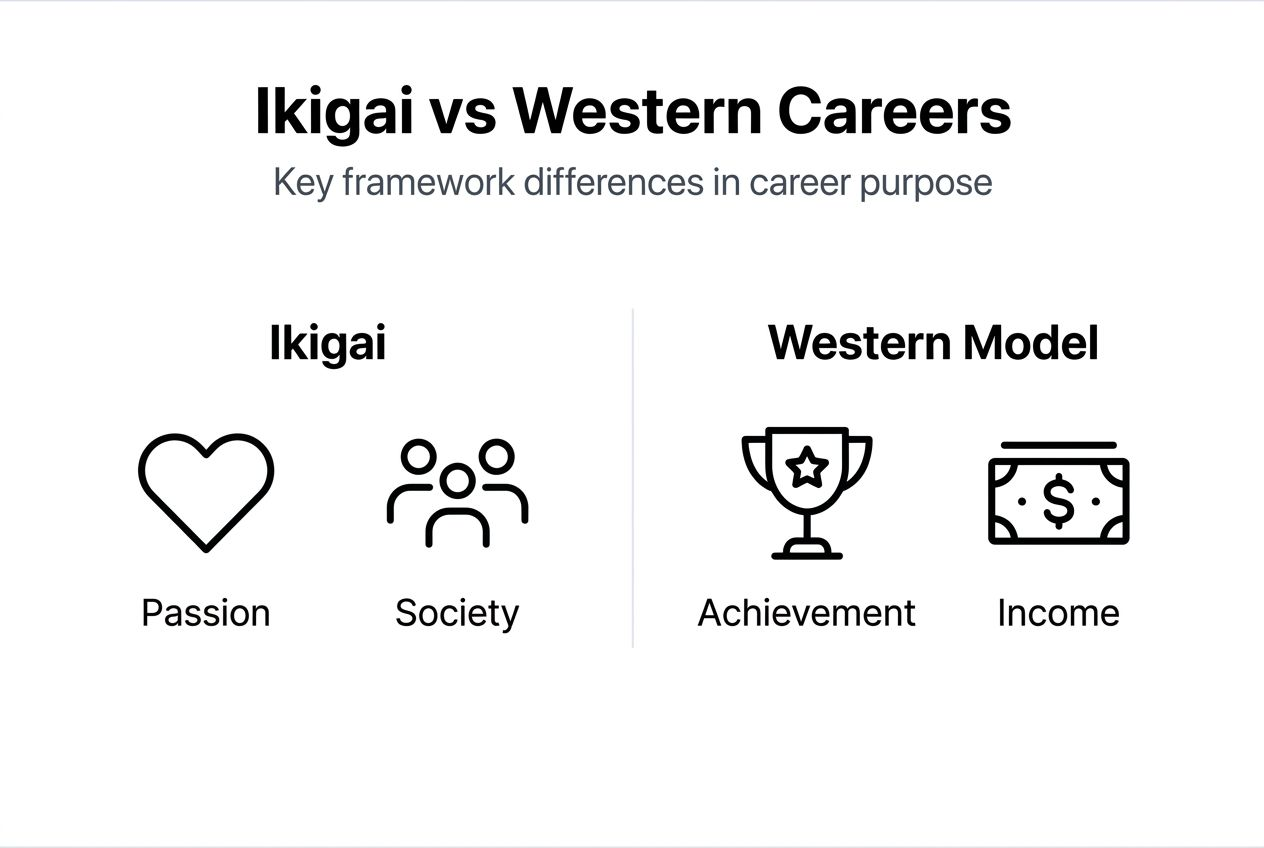
Unlike Western models that prioritize achievement and financial gain, Ikigai balances personal fulfillment with societal contribution. You’re encouraged to consider how your work benefits others, not just yourself. This holistic lens creates careers that feel sustainable and purposeful.
Cultural nuances shape how Ikigai functions. In Japanese society, finding meaning often involves serving the community and contributing to collective wellbeing. Western career frameworks emphasize individual success and competition. Ikigai reminds us that true satisfaction includes making a positive difference.
Here’s how Ikigai compares to typical Western career frameworks:
| Feature | Ikigai Framework | Western Career Framework |
|---|---|---|
| Core Focus | Balance passion, skill, need, compensation | Achievement, status, income |
| Societal Role | Essential component of purpose | Optional or secondary consideration |
| Success Metric | Fulfillment and contribution | Promotions, salary growth, titles |
| Time Horizon | Lifelong journey of reflection | Linear progression with defined milestones |
| Flexibility | Iterative, adapts as you grow | Fixed goals, rigid pathways |
Understanding how to find Ikigai involves exploring each quadrant deeply. You might love writing but lack technical skills. Or you’re talented at data analysis but the world needs ethical AI guidance. Ikigai asks you to integrate all four areas rather than optimize one at the expense of others.
This framework also highlights why Ikigai matters for life fulfillment beyond work. When your career reflects your Ikigai, every project becomes an opportunity to express who you are. You can explore your unique Ikigai profile through tools like the Ikigai type test, which provides personalized insights into your strengths and purpose.
How career insights drive personal growth and mental wellbeing
Career insights foster self-awareness by helping you recognize patterns in what energizes or drains you. This awareness builds intrinsic motivation because you pursue goals that resonate with your core values. Instead of chasing external validation, you focus on work that feels inherently rewarding.
Research shows that when careers align with personal values, people experience reduced career indecision and lower dropout rates. You make choices with confidence because you understand what matters most. This clarity reduces anxiety and increases resilience when facing setbacks.
Mental health benefits are significant. Meaningful careers tied to purpose improve wellbeing by giving you a sense of direction and accomplishment. You feel less like a cog in a machine and more like a contributor to something important. Studies indicate that purpose-driven work correlates with better emotional regulation and lower burnout.
Key mental health improvements include:
- Greater resilience when navigating career challenges or transitions
- Reduced feelings of emptiness or dissatisfaction with daily tasks
- Increased motivation to develop skills and take on new responsibilities
- Enhanced sense of belonging through contributing to community needs
Pro Tip: Maintain iterative reflection by setting aside 15 minutes weekly to journal about what brought you energy and what felt draining. Over time, patterns emerge that guide your next career move.
Exploring the benefits of purposeful living with Ikigai shows how aligning work with deeper values creates sustainable fulfillment. This isn’t about perfection but progress. Each step toward alignment strengthens your mental wellbeing and personal growth.
Common misconceptions about career insights and purpose
Many assume career success equals high income. This misconception leads people to chase salaries while ignoring whether the work itself feels meaningful. Money matters, but it’s one piece of a larger puzzle. Purpose and contribution often drive satisfaction more than paychecks alone.
Another false expectation is that career insights yield instant clarity. People take one assessment and expect a clear roadmap to appear immediately. In reality, understanding your purpose requires time and reflection. Benefits from career insights require iterative reflection over 12-24 months to fully materialize.
Some believe career purpose focuses only on personal achievement. Ikigai teaches that meaningful work includes societal contribution. You’re not just advancing your own goals but serving needs beyond yourself. This broader perspective prevents the emptiness that comes from self-centered pursuits.
Finally, many think career insight is a quick fix. They want a single answer that solves all professional confusion. The truth is that meaningful career insight unfolds progressively. You adjust as you grow, learn new skills, and encounter changing circumstances.
Key misconceptions to avoid:
- Believing income alone defines career success and satisfaction
- Expecting immediate clarity after one reflection or assessment session
- Focusing solely on personal gain without considering societal impact
- Treating career purpose as a one-time discovery rather than ongoing journey
By understanding these misconceptions, you set realistic expectations and commit to the gradual, rewarding process of aligning your career with your authentic self.
Comparing career insight frameworks: Ikigai vs Western models
Ikigai’s holistic four-way intersection integrates passion (what you love), vocation (what you’re good at), mission (what the world needs), and profession (what you can be paid for). This creates a balanced approach where no single element dominates. You’re not just chasing money or only following passion. You’re finding the sweet spot where all four meet.
Western models typically emphasize achievement, economic gain, and linear progression. You climb a career ladder, earn promotions, and measure success by titles and salary. These models work well for external validation but often neglect internal fulfillment and societal impact.
A core differentiator is Ikigai’s inclusion of societal needs. Western frameworks might mention corporate social responsibility as an add-on, but Ikigai places community contribution at the center. Your career isn’t complete unless it serves others in some way.
Here’s a side-by-side comparison:
| Aspect | Ikigai Framework | Western Career Models |
|---|---|---|
| Primary Goal | Fulfillment through balanced purpose | Achievement, status, financial success |
| Key Components | Passion, skill, need, compensation | Ambition, competence, opportunity |
| Role of Contribution | Essential for meaning and satisfaction | Optional or secondary |
| Flexibility | Adapts iteratively over lifetime | Often fixed with predefined milestones |
| Success Definition | Alignment and contribution | Promotions, titles, income growth |
| Limitations | Requires patience and ongoing reflection | Can neglect personal values and wellbeing |
Both frameworks have value depending on context. Western models excel at structured career planning and measurable outcomes. Ikigai offers depth and integration that prevent the hollowness of achievement without purpose. Understanding both helps you choose the approach that fits your needs.
Applying career insights practically for meaningful growth
Start by assessing your passions. Ask yourself what activities make you lose track of time or leave you feeling energized. Write down three to five things you genuinely enjoy, whether or not they’re currently part of your career.
Next, evaluate your skills. What are you naturally good at? What have others praised you for? Include both technical abilities and soft skills like listening, problem-solving, or organizing.
Then consider societal needs. What problems in your community or industry need solving? Where can your unique abilities make a difference? This step connects your work to something larger than yourself.
Finally, explore economic opportunities. Research roles or freelance paths where your passions and skills meet market demand. Look for intersections where you can earn a living while contributing meaningfully.
Follow these steps:
- List your passions and activities that bring you joy or flow
- Identify your core skills through self-assessment and feedback from others
- Research societal needs or problems where your abilities could help
- Explore career paths or projects where passion, skill, need, and pay intersect
- Test your ideas through side projects, volunteer work, or informational interviews
- Reflect regularly and adjust as you learn more about yourself and opportunities
Digital self-assessment tools like those at Ikigain.org provide personalized insights into your unique profile. These assessments help you discover your Ikigai by analyzing your responses and highlighting patterns you might miss on your own. Taking an Ikigai test can jumpstart your reflection process.
Pro Tip: Embrace patience and openness for ongoing career discovery. Your Ikigai evolves as you grow, so revisit these steps every six to twelve months to refine your understanding and adapt to new insights.
Iterative reflection deepens your clarity over time. You don’t need perfect answers today. Small steps toward alignment create momentum and confidence.
Real-world case studies: success through purposeful career insights
Japanese companies integrating Ikigai principles report measurable improvements. One tech firm saw employee engagement rise by 35% after introducing workshops that helped staff align their roles with personal purpose. Turnover dropped by 22% because people felt their work mattered beyond hitting quotas.
Individual stories highlight similar benefits. A marketing professional in Tokyo realized her passion for storytelling and skill in digital strategy could serve nonprofits needing better outreach. She transitioned to a role where she helps charities amplify their missions. Her job satisfaction doubled, and she reports feeling more energized at the end of each day.
Another example involves a software engineer who felt burned out despite high pay. By reflecting on what he loved (teaching) and what society needed (accessible tech education), he started mentoring junior developers. This added dimension gave his work new meaning without leaving his job. His mental health improved significantly.
Key outcomes from purposeful career alignment:
- Increased employee engagement by 30% or more in organizations using Ikigai frameworks
- Reduced turnover rates by 20-25% when staff connect work to personal purpose
- Improved mental health markers including lower stress and higher life satisfaction
- Greater willingness to develop new skills and take on challenging projects
These case studies show that aligning career with purpose isn’t abstract philosophy. It produces tangible results in engagement, retention, and wellbeing across diverse contexts.
Summary and next steps for your career purpose journey
Aligning your career with insights inspired by Ikigai creates lasting satisfaction by integrating passions, skills, values, and societal impact. This holistic approach moves beyond chasing income or status to building work that reflects your authentic self. The result is greater resilience, reduced indecision, and improved mental wellbeing.
Start with self-assessment exercises. Use journaling, conversations with trusted friends, or digital tools to explore what you love, what you’re good at, what the world needs, and how you can be compensated. These reflections form the foundation of your career purpose.
Recommend ongoing reflection to adapt as your personal growth unfolds. Your Ikigai isn’t static. As you gain experience and your circumstances change, revisit your answers and adjust your path. This iterative process keeps your career aligned with who you’re becoming.
Key next steps:
- Begin self-assessment by answering Ikigai’s four core questions honestly
- Explore digital tools or workshops that provide structured guidance
- Set regular reflection times (monthly or quarterly) to review progress
- Test insights through small experiments like side projects or skill development
- Connect with communities or mentors who support purpose-driven growth
Engaging with Ikigai frameworks is a lifelong journey, not a one-time task. Each step you take toward alignment strengthens your sense of purpose and satisfaction. Consider exploring life purpose questions through Ikigai to deepen your understanding and guide your next moves.
Discover your purpose with Ikigain tools and tests
Ready to uncover your unique career insights and live a more purposeful life? Ikigain offers personalized Ikigai assessments designed to reveal your core passions, strengths, values, and how they connect to meaningful career paths. These tools provide clarity that self-reflection alone might miss.
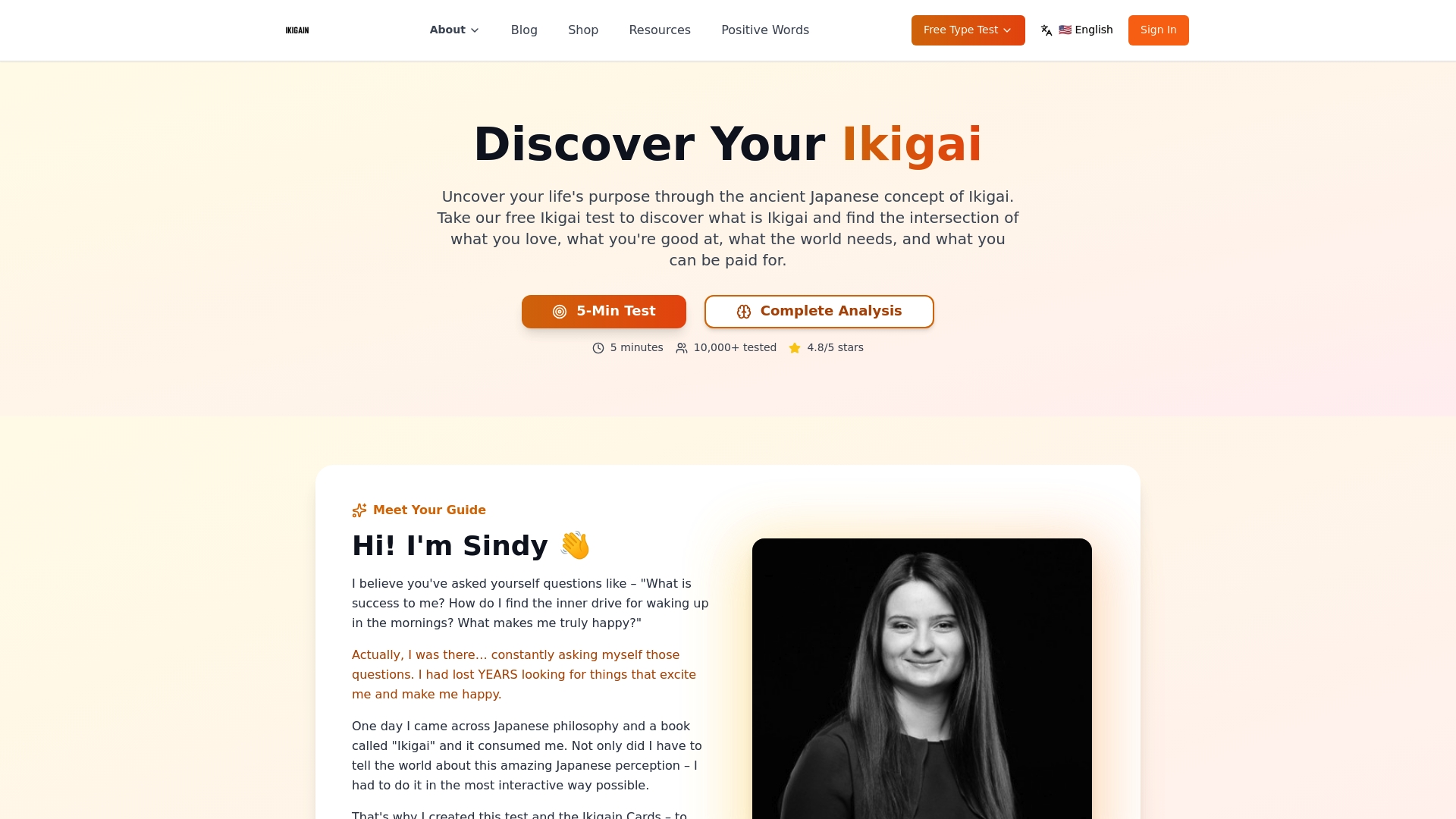
Our blog resources explain the benefits of personality assessments and how they unlock potential you didn’t know you had. By combining self-assessment with practical guidance, you’ll gain actionable insights that guide your career purpose journey. Take the Ikigai test today to start discovering what makes your work truly fulfilling. Learn how to find Ikigai and transform your relationship with your career.
Frequently asked questions
What are career insights and why are they important?
Career insights help you understand your passions, strengths, values, and how they connect to meaningful career choices. They guide better decisions that align work with your authentic self for long-term satisfaction. Without this understanding, you risk spending years in roles that drain you or feel hollow despite external success.
How does the concept of Ikigai apply to career development?
Ikigai combines what you love, are good at, what the world needs, and what you can be paid for to help find meaningful career paths. It balances personal fulfillment with societal contribution for holistic development. This framework prevents the emptiness that comes from optimizing one area like income while neglecting purpose. Explore how to find Ikigai to start applying this philosophy.
Can career insights improve mental wellbeing?
Aligning your work with your values and purpose reduces career indecision and burnout. Studies show a 30% or more improvement in mental wellbeing when careers reflect personal insights. Meaningful work enhances resilience, lowers stress, and gives you a sense of direction that supports overall emotional health.
How long does it take to see benefits from applying career insights?
Career benefits develop gradually and require consistent reflection and adjustment. Immediate changes are rare, and iterative reflection over 12-24 months leads to deeper clarity and fulfillment. Patience and openness to ongoing discovery are essential for realizing the full effects of aligning your career with purpose.